Overview
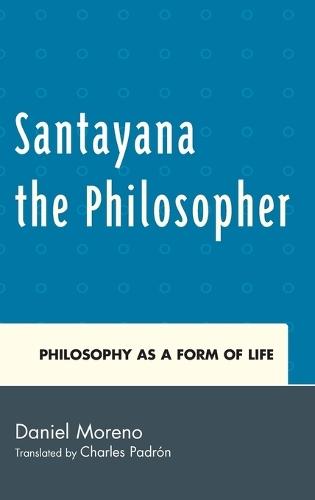
Regarding Santayana it has been claimed that he lacks a system while contradicting himself in outrageous ways. An attentive analysis of his complete œuvre, however, reveals something else entirely. It is not easy to classify a thinker as a Platonic materialist, an ironic nihilist, a spiritual atheist, and a conservative without political commitment, but, if one respects his own language, one discerns an astonishing, little-known Santayana, whose philosophical leitmotif consists in: 1) detecting the numerous “false steps,” logical and moral, supplied by the imagination when it confuses things with the names that designate them, or the world with the feelings that it provokes in the human animal—these errors assume diverse faces: pantheism, moralism, egotism, subjectivism, transcendentalism, Platonism, Puritanism, and utopianism; 2) avoiding these illusions in such a way as to keep the spiritual door open as a form of life to be lived out in an honest fashion; 3) recognizing the natural origin of these temptations and asking oneself what moves humans to succumb imperceptibly to these mistakes, at times tragic, at others comical, and what precautions one can take to remain cognizant of the deceitful leaps that can hijack one’s life; and 4) proposing as an alternative the radical distinction between essence and existence, which leads him to distinguish four realms of being: the realm of essence, the realm of matter, the realm of truth, and the realm of spirit. Essence as logical identity, matter as contingent existence, truth as frozen history, and spirit as the flames that part from contingency and approximate the eternal. An attempt has been made in this book to expand on and clarify these questions.
Full Product Details
Author: Daniel Moreno ,
Charles Padrón
Publisher: Associated University Presses
Imprint: Bucknell University Press,U.S.
Dimensions:
Width: 15.80cm
, Height: 2.30cm
, Length: 23.50cm
Weight: 0.481kg
ISBN: 9781611486551
ISBN 10: 1611486556
Pages: 230
Publication Date: 06 March 2015
Audience:
Professional and scholarly
,
Professional & Vocational
Format: Hardback
Publisher's Status: Active
Availability: Manufactured on demand

We will order this item for you from a manufactured on demand supplier.
Reviews
I give this book my highest endorsement. Daniel Moreno is one of the best Santayana scholars in the world, and his insights into the Spanish heritage and influence on Santayana are notable and remarkable. They provide a depth of understanding of Santayana's thought as well as persuasively enable English-speaking readers to understand what has been missed in much of American and English Santayana scholarship. The translation by Charles Padron is excellent and provides the much-needed acumen of an American scholar with a broad understanding of Santayana's works. -- Herman J. Saatkamp, Jr., President, The Richard Stockton College of New Jersey
I give this book my highest endorsement. Daniel Moreno is one of the best Santayana scholars in the world, and his insights into the Spanish heritage and influence on Santayana are notable and remarkable. They provide a depth of understanding of Santayana's thought as well as persuasively enable English-speaking readers to understand what has been missed in much of American and English Santayana scholarship. The translation by Charles Padron is excellent and provides the much-needed acumen of an American scholar with a broad understanding of Santayana's works. -- Herman J. Saatkamp, Jr., President, The Richard Stockton College of New Jersey Daniel Moreno's Santayana the Philosopher: Philosophy as a Form of Life as translated by Charles Padron is an exciting contribution to English-language Santayana studies. Like the metaphorical bridge that Moreno sees Santayana's work forming between Europe and the United States, this translation can connect the resurgent conversations about Santayana on both sides of the Atlantic. In viewing Santayana as a philosopher, Moreno takes seriously Santayana's questioning of dominant modes of philosophizing and rightly sees the spiritual as essential to Santayana's naturalistic conception of philosophy. The book is readable and engaging, and it displays the thoughtful enthusiasm of a well-informed scholar and the confident perspective of one with a deep concern for the subject matter. It promises to invigorate Santayana scholarship and make it in truth more international. -- Martin A. Coleman, Director and Editor, The Santayana Edition, Indiana University-Purdue University Indianapolis A major study of a major philosopher, elegantly translated from the Spanish. -- John Lachs, Centennial Professor of Philosophy, Vanderbilt University
I give this book my highest endorsement. Daniel Moreno is one of the best Santayana scholars in the world, and his insights into the Spanish heritage and influence on Santayana are notable and remarkable. They provide a depth of understanding of Santayana’s thought as well as persuasively enable English-speaking readers to understand what has been missed in much of American and English Santayana scholarship. The translation by Charles Padrón is excellent and provides the much-needed acumen of an American scholar with a broad understanding of Santayana’s works. -- Herman J. Saatkamp, Jr., former president, Stockton College of New Jersey Daniel Moreno's Santayana the Philosopher: Philosophy as a Form of Life as translated by Charles Padrón is an exciting contribution to English-language Santayana studies. Like the metaphorical bridge that Moreno sees Santayana's work forming between Europe and the United States, this translation can connect the resurgent conversations about Santayana on both sides of the Atlantic. In viewing Santayana as a philosopher, Moreno takes seriously Santayana's questioning of dominant modes of philosophizing and rightly sees the spiritual as essential to Santayana's naturalistic conception of philosophy. The book is readable and engaging, and it displays the thoughtful enthusiasm of a well-informed scholar and the confident perspective of one with a deep concern for the subject matter. It promises to invigorate Santayana scholarship and make it in truth more international. -- Martin A. Coleman, Director and Editor, The Santayana Edition, Indiana University-Purdue University Indianapolis A major study of a major philosopher, elegantly translated from the Spanish. -- John Lachs, Vanderbilt University
Author Information
Daniel Moreno teaches philosophy at the IES Miguel Servet (Zaragoza), has translated several of Santayana's texts into Spanish, and published numerous essays on Sanayana's thought. Charles Padrón serves on the editorial board of Limbo, a journal dedicated to the work of the philosopher George Santayana.