Overview
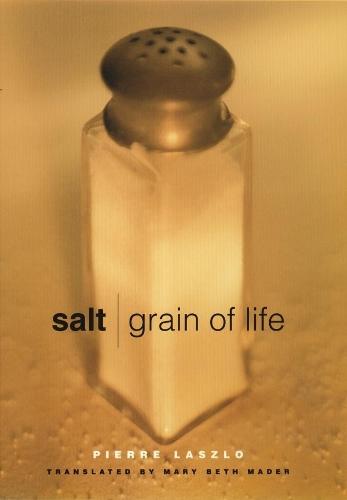
For the sake of salt, Rome created a system of remuneration (from which we get the word ""salary""), nomads domesticated the camel, the Low Countries revolted against their Spanish oppressors, and Gandhi marched against the tyranny of the British. Through the ages, salt has conferred status, preserved foods, and mingled in the blood, sweat, and tears of humanity. Today, chefs of haute cuisine covet it in its most exotic forms-underground salt deposits, Hawaiian black lava salt, glittery African crystals, and pink Peruvian salt from the sea carried in bricks on the backs of llamas. From proverbs to technical arguments, from anecdotes to examples of folklore, chemist and philosopher Pierre Laszlo takes us through the kingdom of ""white gold."" With ""enthusiasm and freshness"" (Le Monde) he mixes literary analysis, history, anthropology, biology, physics, economics, art history, political science, chemistry, ethnology, and linguistics to create a full body of knowledge about the everyday substance that rocked the world and brings zest to the ordinary. Laszlo explains the history behind Morton Salt's slogan ""When it rains, it pours!"" and looks into the plight of the salt miner, as well as spectroscopy and nuclear magnetic resonance. Salt is a tour de force about a chemical compound that is one of the very foundations of civilization.
Full Product Details
Author: Pierre Laszlo ,
Mary Beth Mader
Publisher: Columbia University Press
Imprint: Columbia University Press
Dimensions:
Width: 15.90cm
, Height: 2.10cm
, Length: 22.90cm
Weight: 0.425kg
ISBN: 9780231121989
ISBN 10: 0231121989
Pages: 256
Publication Date: 27 June 2001
Audience:
Professional and scholarly
,
Professional & Vocational
Format: Hardback
Publisher's Status: Active
Availability: Manufactured on demand

We will order this item for you from a manufactured on demand supplier.
Language: French
Reviews
Rich in fact and analysis...takes the seemingly trivial subject of salt and implies that it is not merely an essential element of life but that it is perhaps the veritable motor of human history. -- Gastronomica Offers a rich pickle barrel of facts and anecdotes about salt. -- London Review of Books Readers will never again think of salt... in the same simple way. -- The Washington Post Book World A breathless read... because of the suprising appeal and importance of the subject itself. -- Houston Chronicle History, chemistry, physics, economics, anthropology, technology... linguistics, art history... and culinary arts are all explored in this wonderful, multicultural Renaissance approach to the subject of salt... Salt is not just plain, and this book is a pleasure to read. -- Choice A slender, impish concoction... To say this is a quirky book is like saying Rita Hayworth was an okay-looking gal... Calvinesque in many ways -- filled with lightness, delightful tangents, postmodernist hijinks. -- The Globe and Mail A weirdly compelling blend of chemical analysis and anecdotal history. -- Teresa Weaver, The Atlanta Journal-Constitution I have been darting, delightedly, from one section to another -- from Salting Herring to extreme halophiles, to Spectroscopy. It is a marvellous mosaic leavened with great charm and lightness. -- Oliver Sacks The distinction between the scientific and the nonscientific blurs. One becomes astonished that every day one samples a chemical with such a rich cultural aura -- which is to say the wager by the author is a success. -- Le Monde Takes us through the astonishing history of this substance with lightness as well as learning... [his] observations are fascinating. -- Roy Herbert, NewScientist.com
Rich in fact and analysis...takes the seemingly trivial subject of salt and implies that it is not merely an essential element of life but that it is perhaps the veritable motor of human history. Gastronomica Offers a rich pickle barrel of facts and anecdotes about salt. London Review of Books Readers will never again think of salt... in the same simple way. The Washington Post Book World A breathless read... because of the suprising appeal and importance of the subject itself. Houston Chronicle History, chemistry, physics, economics, anthropology, technology... linguistics, art history... and culinary arts are all explored in this wonderful, multicultural Renaissance approach to the subject of salt... Salt is not just plain, and this book is a pleasure to read. Choice A slender, impish concoction... To say this is a quirky book is like saying Rita Hayworth was an okay-looking gal... Calvinesque in many ways -- filled with lightness, delightful tangents, postmodernist hijinks. The Globe and Mail A weirdly compelling blend of chemical analysis and anecdotal history. -- Teresa Weaver The Atlanta Journal-Constitution I have been darting, delightedly, from one section to another -- from Salting Herring to extreme halophiles, to Spectroscopy. It is a marvellous mosaic leavened with great charm and lightness. -- Oliver Sacks The distinction between the scientific and the nonscientific blurs. One becomes astonished that every day one samples a chemical with such a rich cultural aura -- which is to say the wager by the author is a success. Le Monde Takes us through the astonishing history of this substance with lightness as well as learning... [his] observations are fascinating. -- Roy Herbert NewScientist.com
Rich in fact and analysis...takes the seemingly trivial subject of salt and implies that it is not merely an essential element of life but that it is perhaps the veritable motor of human history. Gastronomica Offers a rich pickle barrel of facts and anecdotes about salt. London Review of Books Readers will never again think of salt... in the same simple way. The Washington Post Book World A breathless read... because of the suprising appeal and importance of the subject itself. Houston Chronicle History, chemistry, physics, economics, anthropology, technology... linguistics, art history... and culinary arts are all explored in this wonderful, multicultural Renaissance approach to the subject of salt... Salt is not just plain, and this book is a pleasure to read. Choice A slender, impish concoction... To say this is a quirky book is like saying Rita Hayworth was an okay-looking gal... Calvinesque in many ways--filled with lightness, delightful tangents, postmodernist hijinks. The Globe and Mail A weirdly compelling blend of chemical analysis and anecdotal history. -- Teresa Weaver The Atlanta Journal-Constitution I have been darting, delightedly, from one section to another--from Salting Herring to extreme halophiles, to Spectroscopy. It is a marvellous mosaic leavened with great charm and lightness. -- Oliver Sacks The distinction between the scientific and the nonscientific blurs. One becomes astonished that every day one samples a chemical with such a rich cultural aura--which is to say the wager by the author is a success. Le Monde Takes us through the astonishing history of this substance with lightness as well as learning... [his] observations are fascinating. -- Roy Herbert NewScientist.com
A chemist constructs a cultural history of sodium chloride and reveals its magnitude in human affairs. In a volume burdened with a plethora of introductory material (there's a foreword, preface, acknowledgments, and introduction-and each short chapter begins with an old-fashioned argument, as well), Laszlo makes it plain that salt is no ordinary white powder. (In fact, he reveals, pure salt is colorless.) He begins with a sort of pedagogical manifesto, declaring that all education, like his study, ought to be multidisciplinary, and then moves into some engaging chapters dealing with various uses (and abuses) of salt. Sailors once used it to disinfect wounds. It was one of the earliest means of preserving food. Many ancient trade routes involved the transportation of salt. The word (and concept of) salary has its origins in salt. We learn how seawater is desalinated, how salt was important in the history of Venice, how Gandhi employed it as a powerful symbol to rally his followers; we learn why the sea is salty (a puzzle: after all, only fresh water flows into it), why salt will clear a wine spill on a tablecloth, why salty foods make you thirsty, why salt will dispatch a slug and will both freeze ice cream and thaw an icy highway. Toward the end, he even waxes metaphysical. Although the volume for the most part is highly readable, Laszlo occasionally allows his erudition to obfuscate, as in one sentence that includes all the following: mitochondrial RNA sequences, lipid bilayer, glycerol, ether bonds, RNA-polymerases, prokaryotes, and eukaryotes. Yet he can also decline into the lowest puns-e.g., he follows a comment about Morton's attempts to prevent the problem of the hardening of salt with this: It being salt, they licked it. Readers may also find annoying the editorial decision to permit the translator's numerous notes to appear in the text instead of in unobtrusive footnotes. Displays broad interests and a wide-ranging intellect, but the style-often bland or dully didactic-could use a bit of seasoning. (Kirkus Reviews)
Author Information
Pierre Laszlo is an emeritus professor of chemistry at the University of Liege, Belgium, and the Ecole polytechnique near Paris, France. Of his many published works six have been translated into English, including Organic Reactions: Logic and Simplicity and Organic Chemistry Using Clays.