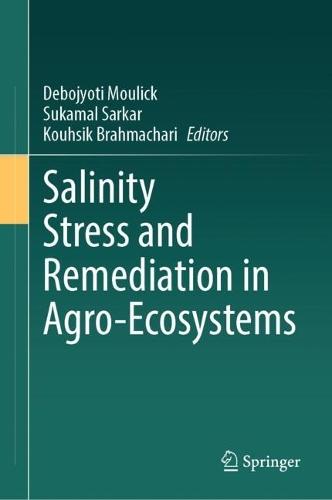
Overview
This book offers a comprehensive exploration of the causes, consequences, and solutions for salinity stress in agricultural systems. It delves into the physiological, biochemical, and molecular mechanisms through which crops respond to salinity, emphasizing the importance of understanding these processes for developing resilient crop varieties. The book also examines the effects of salinity on soil properties, including its influence on soil structure, nutrient dynamics, and microbial communities, which are integral to maintaining ecosystem functionality. It is designed to serve as a vital resource for researchers, academics, students, policymakers, and practitioners, offering cutting-edge insights, practical solutions, and real-world examples. Furthermore, the book addresses innovative strategies for remediation, ranging from the genetic improvement of crops for salt tolerance to soil amendment techniques and the management of saline water resources. It emphasizes the importance of agro-ecological approaches, such as integrated farming systems and agroforestry, in mitigating salinity's impacts and enhancing agricultural sustainability. By incorporating global case studies and policy frameworks, the book highlights successful practices and initiatives that can serve as models for addressing salinity challenges in diverse agro-ecosystems. By fostering a deeper understanding of salinity stress and its management, the book aims to empower stakeholders with the tools and knowledge needed to enhance resilience in saline-affected agro-ecosystems, thereby contributing to global food security and environmental sustainability.
Full Product Details
Author: Debojyoti Moulick ,
Sukamal Sarkar ,
Kouhsik Brahmachari
Publisher: Springer Nature Switzerland AG
Imprint: Springer Nature Switzerland AG
ISBN: 9783032240002
ISBN 10: 303224000
Pages: 501
Publication Date: 02 May 2026
Audience:
Professional and scholarly
,
Professional & Vocational
Format: Hardback
Publisher's Status: Active
Availability: Not yet available

This item is yet to be released. You can pre-order this item and we will dispatch it to you upon its release.
Author Information
Dr. Debojyoti Moulick is a highly distinguished scientist recognized in the 2025 Stanford University/Elsevier list of the world’s top 2% most influential scientists. With a multidisciplinary background in Microbiology and Biotechnology, he earned his M.Phil. and Ph.D. in Environmental Science from the University of Kalyani. His career is marked by significant academic milestones, including a Research Associateship (DBT-RA) from the Indian Institute of Science (IISc), Bangalore, and impactful research at ONGC’s Geochemistry Division. Dr. Moulick is widely acclaimed for his breakthrough in developing affordable, farmer-friendly mitigation strategies for arsenic-induced phytotoxicity in rice, alongside his extensive expertise in biomonitoring, seed priming technology, and grain quality analysis within soil-water-crop agroecosystems. A prolific scholar and editor, Dr. Moulick has published several edited volumes with leading houses. Having reviewed over 350 international papers, his research footprint is profound, with more than 2,570 citations and an h-index of 30 as of late 2025. Dr. Moulick continues to contribute to the global scientific community through his ongoing work in sustainable agricultural intensification and environmental resilience. Dr. Sukamal Sarkar is an agricultural scientist and Assistant Professor of Agronomy at Ramakrishna Mission Vivekananda Educational and Research Institute. A distinguished researcher, he is ranked among the Top 2% Scientists Worldwide (2025) by Stanford University and Elsevier, a testament to his global impact and citation influence. Dr. Sarkar specializes in cropping systems modelling, agro-meteorology, and climate-smart agriculture. His expertise lies in integrating long-term field experimentation with process-based simulation models, particularly the APSIM framework, to optimize decision support for coastal and dryland agro-ecosystems. Dr. Sarkar’s collaborative work with international partners like CSIRO and IRRI has led to significant advances in greenhouse gas mitigation and nutrient management. Before his academic tenure, he served as Assistant Director of Agriculture for the Government of West Bengal, bridging the gap between high-level research and large-scale extension programs. A prolific author with over 100 peer-reviewed publications, his work has garnered more than 3,700 citations (h-index 29). Currently, he leads multidisciplinary projects funded by international agencies (ACIAR, DFAT, SWISSAID, IRRI) aimed at strengthening climate resilience and sustainable livelihoods in vulnerable farming communities. Dr. Koushik Brahmachari serves as a Professor at the Department of Agronomy at Bidhan Chandra Krishi Viswavidyalaya (BCKV) and Former Registrar and Former Director of Extension Education, Bidhan Chandra Krishi Viswavidyalaya in West Bengal, India. With a prolific academic background, Dr. Brahmachari has contributed significantly to the field, boasting a publication record of over 125 scientific articles across esteemed national and international journals. His expertise extends beyond scholarly pursuits, as evidenced by his involvement in sixteen national and international research projects. These initiatives span various aspects of agricultural innovation, encompassing the development, testing, and widespread implementation of novel agricultural technologies and proven practices. Notably, Dr. Brahmachari has played a pivotal role in advancing agricultural sustainability in the Indian Sundarbans region of West Bengal, India. Over the course of more than a decade, he has been actively engaged in the dissemination of innovative technologies tailored to thrive in coastal saline environments. These efforts have been conducted under the auspices of ACIAR-supported research projects, further underscoring his commitment to impactful agricultural development.