Overview
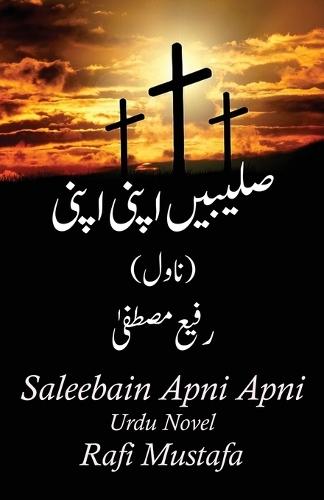
After the creation of Pakistan, the first twenty years appear to me as its golden age. Perhaps one may attribute this sentiment to the hues of nostalgia, for those were the years of my youth. In those days, college boys would gather in the Iranian cafés, discoursing on films, on girls, and on that revolution which was supposedly around the corner and awaited its hour to advance. The gulf between rich and poor seemed on the verge of dissolution, and it was believed that every stomach would be filled with bread, every body clothed, and every head sheltered beneath a roof. It was an age of hope, of ardor, and of liberty, when no man inquired of another his religion or his domicile. Friends were simply friends. There were neither Shias nor Sunnis, neither Ismailis nor Ahmadis, neither Christians nor Hindus - there were only friends. But alas, some evil fate seemed to cast its shadow upon Pakistan, and soon we wove around ourselves ramparts of hatred, injustice, and cruelty. Men began to be known not by their names or their own identities, but as Sindhi or Punjabi, black or white, majority or minority. Friendships ceased, enmities dissolved, and all withdrew into the confines of their separate enclosures. This tale belongs to that very golden age of Pakistan, which still glimmers through the corridors of my memory. Though many of its characters belong to the Christian community of Pakistan, they also exist in their own right as individuals. Among them are the virtuous and the flawed; their joys and sorrows are no different from our own; and their hearts beat with the same rhythm as ours. According to the Gospel, when Jesus Christ was led away to be crucified, he was compelled to bear his own cross to make him fell more humiliated. Saleebain Apni Apni or ""Each to His Own Cross"", is thus a metaphor: that every soul must shoulder the burden of its own afflictions. This novel is a singular journey, both intellectual and emotional. It does not merely recount the story of its characters; it urges the reader to turn inward, to confront the depths of his own being. It is at once a chronicle of personal love, religious identity, and social strife, and at the same time a sincere quest for harmony among faiths.
Full Product Details
Author: Rafi Mustafa
Publisher: Rafi Mustafa
Imprint: Rafi Mustafa
Dimensions:
Width: 14.00cm
, Height: 2.30cm
, Length: 21.60cm
Weight: 0.508kg
ISBN: 9781999563165
ISBN 10: 1999563166
Pages: 444
Publication Date: 05 January 2026
Audience:
General/trade
,
General
Format: Paperback
Publisher's Status: Active
Availability: In Print

This item will be ordered in for you from one of our suppliers. Upon receipt, we will promptly dispatch it out to you. For in store availability, please contact us.
Language: Urdu
Author Information
Rafi Mustafa came to Canada from Pakistan in 1966 and earned a Ph.D. in Chemistry from the University of British Columbia in 1969. In subsequent years, he was engaged in teaching and research at various universities in U.K., Pakistan, Sudan, and Canada. In 1978, he left academia and got into information technology. He is currently the CEO of an IT company, which he founded in 1991. He has been active on the boards of several non-profit Canadian organizations that carry out a range of projects to help underprivileged communities. Among these is IDRF, the International Development and Relief Foundation. He also served on the Advisory Committee of the Muslim Studies program of Emmanuel College at the University of Toronto.