Overview
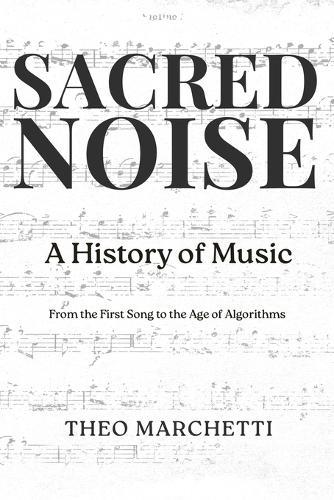
Someone carved a song into clay thirty-four centuries ago. We still don't know how it sounds.In a museum in Damascus sits a clay tablet the size of a smartphone-the oldest known piece of written music in the world. Cuneiform pressed into wet clay by a hand that has been dust for three thousand years. Five rival scholars have decoded it. Each one hears a different song. And that disagreement turns out to be the oldest question in the history of music: Who decides? Who decides what music is. Who decides what gets preserved, performed, distributed, heard. Who decides which sounds matter-and which are allowed to vanish. Sacred Noise follows the answer across thirty-four centuries, from that ancient hymn pressed into clay to the algorithmic playlists shaping what you hear right now. It is the story of who has controlled music-and who has fought to set it free. A medieval church spends a thousand years codifying the rules of sacred sound. A deaf composer in Vienna conducts a symphony he cannot hear while the orchestra has been told to ignore him. A man in New Jersey shouts into a cylinder of tinfoil and captures the human voice for the first time. A teenager with two turntables in a burned-out Bronx basement invents a culture that will dominate the coming century. A brother and sister, cross-legged on a bedroom floor with a laptop and a microphone, make the album that sweeps the Grammys. In every era, someone builds a wall around music. In every era, someone finds a way through. Spanning Neanderthal bone flutes, Gregorian chant, the courts of Vienna, the cotton fields of the Mississippi Delta, the birth of recorded sound, rock and roll, punk, hip-hop, Napster, streaming, and the rise of AI-generated music, Sacred Noise is a sweeping narrative history for anyone who has ever felt a song change the temperature of a room-and wondered who tried to stop it. The controllers are not always wrong. The liberators are not always clean. But the pattern holds: every attempt to own music has failed. Not because the attempts were weak, but because the impulse is stronger than any institution that has tried to contain it. For readers of: How Music Got Free, The Rest Is Noise, and Music: A Subversive History
Full Product Details
Author: Theo Marchetti
Publisher: Independently Published
Imprint: Independently Published
Dimensions:
Width: 15.20cm
, Height: 1.60cm
, Length: 22.90cm
Weight: 0.380kg
ISBN: 9798248404049
Pages: 280
Publication Date: 14 February 2026
Audience:
General/trade
,
General
Format: Paperback
Publisher's Status: Active
Availability: In Print

This item will be ordered in for you from one of our suppliers. Upon receipt, we will promptly dispatch it out to you. For in store availability, please contact us.