Overview
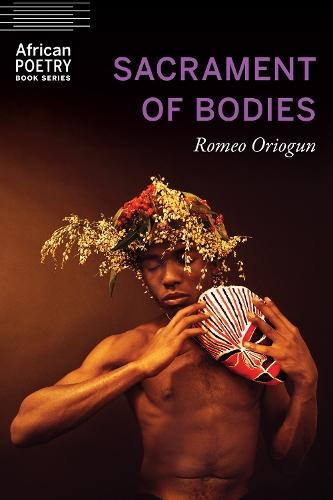
2021 Lambda Literary Awards Finalist In this groundbreaking collection of poems, Sacrament of Bodies, Romeo Oriogun fearlessly interrogates how a queer man in Nigeria can heal in a society where everything is designed to prevent such restoration. With honesty, precision, tenderness of detail, and a light touch, Oriogun explores grief and how the body finds survival through migration.
Full Product Details
Author: Romeo Oriogun
Publisher: University of Nebraska Press
Imprint: University of Nebraska Press
ISBN: 9781496219640
ISBN 10: 1496219643
Pages: 78
Publication Date: 01 March 2020
Audience:
General/trade
,
General
Format: Paperback
Publisher's Status: Active
Availability: In Print

This item will be ordered in for you from one of our suppliers. Upon receipt, we will promptly dispatch it out to you. For in store availability, please contact us.
Reviews
Sacrament of Bodies is a gorgeous book filled with fiery pain and ecstatic desire. These poems are spacious enough to hold all the contradictions: the violence waged against gay people and the body's insistence on love, the tenderness of flesh and the carnage of war, remembering and forgetting, silence and song. Romeo Oriogun has wrought complex, elegant poems that wrench beauty from all that would kill us. As he writes, 'I worship the day because it survived the night.' I admire these poems immensely. They make me stronger. -Ellen Bass, author of Indigo and Like a Beggar -- Ellen Bass Sacrament of Bodies is a very special book. But why? Because Romeo Oriogun has developed a style that is both personal and mythical, because these poems are sensual and spiritual at once, because they give us both a story and a song, a shout and a whisper. 'I have learnt to love every broken thing,' Oriogun tells us. I find that Oriogun's tension between the high style of a sermon and the earthiness of love songs gives these poems a particularly memorable touch. It is memorable also because it is able to give us a journey (through time, through forgetting, through elegy, through exile) that is both a story of a real man in real time and an incantation, a speaking in tongues. But it is his music that finally sways me, it's music that lifts it all, that makes out of truth-telling a song. The music works here because Oriogun is a master of incantation: 'I danced,' he tells us, 'as if I knew every song had a door.' Indeed. I love this beautiful, heart-wrenching, passionate book. -Ilya Kaminsky, author of Deaf Republic -- Ilya Kaminsky
It is inevitable that Sacrament of Bodies will become an influential work in contemporary poetry from Africa, especially with its centering of queer people. In Oriogun's journey, it feels like a book he needed to write. Where a weaker hand might falter under the sensitivity of such a subject, his is assured-skills he has been traversing beautifully into prose nonfiction. -Emmanuel Esomnofu, Open Country In African poetry, where queer poetry still appears on the margins, Sacrament of Bodies harnesses the expression and truth that appeals to those of us who feel the need to shout and have raw conversations about the rights of queer people. -Tikondwe Kaphagawani Chimkowola, Africa in Words It doesn't take a reader long to be captured by Romeo Oriogun's compelling voice, a voice which seems equal parts observer, prophet, and reformer-a voice possessing the strength to rejoice amid trauma or to create visions of any ruling tyrannical force as if it were glass, to be seen through or reflected. -Jordan Charlton, West Branch Sacrament of Bodies is a very special book. But why? Because Romeo Oriogun has developed a style that is both personal and mythical, because these poems are sensual and spiritual at once, because they give us both a story and a song, a shout and a whisper. 'I have learnt to love every broken thing,' Oriogun tells us. I find that Oriogun's tension between the high style of a sermon and the earthiness of love songs gives these poems a particularly memorable touch. It is memorable also because it is able to give us a journey (through time, through forgetting, through elegy, through exile) that is both a story of a real man in real time and an incantation, a speaking in tongues. But it is his music that finally sways me, it's music that lifts it all, that makes out of truth-telling a song. The music works here because Oriogun is a master of incantation: 'I danced,' he tells us, 'as if I knew every song had a door.' Indeed. I love this beautiful, heart-wrenching, passionate book. -Ilya Kaminsky, author of Deaf Republic Sacrament of Bodies is a gorgeous book filled with fiery pain and ecstatic desire. These poems are spacious enough to hold all the contradictions: the violence waged against gay people and the body's insistence on love, the tenderness of flesh and the carnage of war, remembering and forgetting, silence and song. Romeo Oriogun has wrought complex, elegant poems that wrench beauty from all that would kill us. As he writes, 'I worship the day because it survived the night.' I admire these poems immensely. They make me stronger. -Ellen Bass, author of Indigo and Like a Beggar
""It is inevitable that Sacrament of Bodies will become an influential work in contemporary poetry from Africa, especially with its centering of queer people. In Oriogun’s journey, it feels like a book he needed to write. Where a weaker hand might falter under the sensitivity of such a subject, his is assured—skills he has been traversing beautifully into prose nonfiction.""—Emmanuel Esomnofu, Open Country ""In African poetry, where queer poetry still appears on the margins, Sacrament of Bodies harnesses the expression and truth that appeals to those of us who feel the need to shout and have raw conversations about the rights of queer people.""—Tikondwe Kaphagawani Chimkowola, Africa in Words ""It doesn’t take a reader long to be captured by Romeo Oriogun's compelling voice, a voice which seems equal parts observer, prophet, and reformer—a voice possessing the strength to rejoice amid trauma or to create visions of any ruling tyrannical force as if it were glass, to be seen through or reflected.""—Jordan Charlton, West Branch “Sacrament of Bodies is a very special book. But why? Because Romeo Oriogun has developed a style that is both personal and mythical, because these poems are sensual and spiritual at once, because they give us both a story and a song, a shout and a whisper. ‘I have learnt to love every broken thing,’ Oriogun tells us. I find that Oriogun’s tension between the high style of a sermon and the earthiness of love songs gives these poems a particularly memorable touch. It is memorable also because it is able to give us a journey (through time, through forgetting, through elegy, through exile) that is both a story of a real man in real time and an incantation, a speaking in tongues. But it is his music that finally sways me, it’s music that lifts it all, that makes out of truth-telling a song. The music works here because Oriogun is a master of incantation: ‘I danced,’ he tells us, ‘as if I knew every song had a door.’ Indeed. I love this beautiful, heart-wrenching, passionate book.”—Ilya Kaminsky, author of Deaf Republic “Sacrament of Bodies is a gorgeous book filled with fiery pain and ecstatic desire. These poems are spacious enough to hold all the contradictions: the violence waged against gay people and the body’s insistence on love, the tenderness of flesh and the carnage of war, remembering and forgetting, silence and song. Romeo Oriogun has wrought complex, elegant poems that wrench beauty from all that would kill us. As he writes, ‘I worship the day because it survived the night.’ I admire these poems immensely. They make me stronger.”—Ellen Bass, author of Indigo and Like a Beggar
Sacrament of Bodies is a very special book. But why? Because Romeo Oriogun has developed a style that is both personal and mythical, because these poems are sensual and spiritual at once, because they give us both a story and a song, a shout and a whisper. 'I have learnt to love every broken thing,' Oriogun tells us. I find that Oriogun's tension between the high style of a sermon and the earthiness of love songs gives these poems a particularly memorable touch. It is memorable also because it is able to give us a journey (through time, through forgetting, through elegy, through exile) that is both a story of a real man in real time and an incantation, a speaking in tongues. But it is his music that finally sways me, it's music that lifts it all, that makes out of truth-telling a song. The music works here because Oriogun is a master of incantation: 'I danced,' he tells us, 'as if I knew every song had a door.' Indeed. I love this beautiful, heart-wrenching, passionate book. -Ilya Kaminsky, author of Deaf Republic -- Ilya Kaminsky Sacrament of Bodies is a gorgeous book filled with fiery pain and ecstatic desire. These poems are spacious enough to hold all the contradictions: the violence waged against gay people and the body's insistence on love, the tenderness of flesh and the carnage of war, remembering and forgetting, silence and song. Romeo Oriogun has wrought complex, elegant poems that wrench beauty from all that would kill us. As he writes, 'I worship the day because it survived the night.' I admire these poems immensely. They make me stronger. -Ellen Bass, author of Indigo and Like a Beggar -- Ellen Bass
Author Information
Romeo Oriogun was born in Lagos, Nigeria. He is the author of the chapbooks Burnt Men, The Origin of Butterflies, and Museum of Silence. He was the winner of the 2017 Brunel International African Prize and has received fellowships from Harvard University’s English Department, the IIE-Artist Protection Fund, Oregon Institute for Creative Research, and the Hutchins Institute of African and African American Research. He lives in Iowa, where he is an MFA candidate for poetry at the Iowa Writers’ Workshop.