Overview
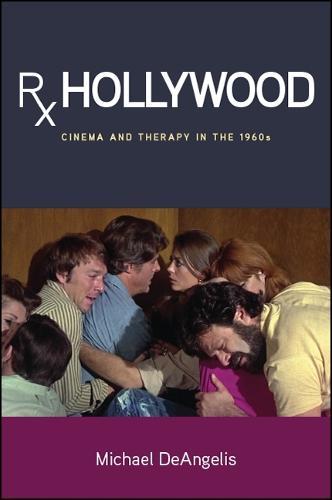
How films of the 1960s and early 1970s framed therapeutic issues as problems of human communication, and individual psychological problems as social ones. Rx Hollywood investigates how therapy surfaced in the themes, representations, and narrative strategies of a changing film industry. In the 1960s and early 1970s, American cinema was struggling to address adult audiences who were increasingly demanding films that confronted contemporary issues. Focusing upon five fields of therapeutic inquiry-therapist/patient dynamics, female ""frigidity"" and male impotence, marital discord, hallucinogenic drug use, and the dynamics of confession-Michael DeAngelis argues that the films of this period reveal an emergent, common tendency of therapy to work toward the formation of a stronger sense of interpersonal, community/social, and political engagement, counteracting alienation and social division in the spirit of connection and community. Prior to the 1960s, therapy had been considered an introspective process, one that emphasized contemplation and insight and prompted the patient to investigate memories and past traumas. In the 1960s, however, therapy would move toward more humanistic, client-centered, community, group, and encounter models that deemphasized the ""there and then"" of past feelings and experiences and embraced the ""here and now"" of the present. These kinds of therapy promised to heal the self through a process of reaching out, helping individuals to connect with communities, support networks, and other like-minded individuals who shared a needed sense of belonging. Drawing on a wide range of films, including Marnie, The Boston Strangler, The Chapman Report, Carnal Knowledge, Divorce American Style, Diary of a Mad Housewife, Guess Who's Coming to Dinner, and Five Easy Pieces, DeAngelis shows how American culture framed therapeutic issues as problems of human communication, developing treatment strategies that addressed individual psychological problems as social problems.
Full Product Details
Author: Michael DeAngelis
Publisher: State University of New York Press
Imprint: State University of New York Press
Dimensions:
Width: 15.20cm
, Height: 2.50cm
, Length: 22.90cm
Weight: 0.336kg
ISBN: 9781438468525
ISBN 10: 1438468520
Pages: 236
Publication Date: 02 January 2019
Audience:
Professional and scholarly
,
Professional & Vocational
Format: Paperback
Publisher's Status: Active
Availability: Manufactured on demand

We will order this item for you from a manufactured on demand supplier.
Author Information
Michael DeAngelis is Associate Professor of Media and Cinema Studies at DePaul University. He is the editor of Reading the Bromance: Homosocial Relationships in Film and Television and the author of Gay Fandom and Crossover Stardom: James Dean, Mel Gibson, and Keanu Reeves.