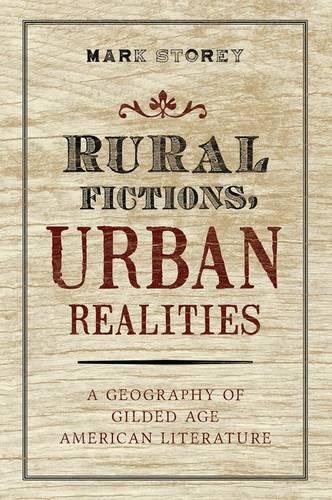
Full Product Details
Author: Mark Storey (Lecturer, Faculty of Arts, Lecturer, Faculty of Arts, University of Nottingham)
Publisher: Oxford University Press Inc
Imprint: Oxford University Press Inc
Dimensions:
Width: 23.40cm
, Height: 1.20cm
, Length: 15.60cm
Weight: 0.331kg
ISBN: 9780190272425
ISBN 10: 0190272422
Pages: 210
Publication Date: 07 January 2016
Audience:
College/higher education
,
Postgraduate, Research & Scholarly
Format: Paperback
Publisher's Status: Active
Availability: Manufactured on demand

We will order this item for you from a manufactured on demand supplier.
Reviews
Storey's book is persuasive and eye-opening, making a compelling case for the importance of rural fictions for our under- standing of modernity and the process of modernization. --Nineteenth-Century Literature In this ambitious first book, Storey demonstrates the importance of rural fictions as the means of complicating and refreshing our mostly one-eyed view of America's literary development. As such, Rural Fictions belongs with an emerging movement in nineteenth-century American literary studies that advocates a focus on a multidimensional modernity instead of on a singular, undeviating one... [It]provides both a new view of the literary past and a compelling reason to begin reading postbellum rural American literature. --Times Literary Supplement Meticulously researched and full of fascinating juxtapositions of literary and historical processes, Rural Fictions, Urban Realities bridges the divide between regionalism and modernization as it demonstrates how postbellum rural fiction documents the effects of urbanism well beyond the borders of actual cities. --Hsuan L. Hsu, author of Geography and the Production of Space in Nineteenth-Century American Literature By interrogating the spatial and literary configurations of urban and rural--and by dismantling their use as signposts for the modern and the pre-modern--Mark Storey redefines our understanding of the rural in fresh and exciting ways. Readers will learn much from this illuminating book. --Donna Campbell, author of Resisting Regionalism: Gender and Naturalism in American Fiction, 1885-1915 Self-aware, critically engaged, and often compelling -- and providing a welcome corrective to the shortcomings of regionalist studies -- Rural Fictions exposes our limited views on genre, period, and geography, and it should propel us to reconsider and reinvent them. --Karen Kilcup, Journal of American Studies This book reminds readers of how literary fictions can not only influence but also transform our understanding of key historical events. In essence, Storey highlights the power of stories to shape and be shaped by the realities of Gilded Age America's changing geographies. --Cara Erdheim, Studies in American Naturalism Recommended. --ChoiceThe virtues of the book are many... [T]he book is, chapter by chapter, a refreshingly innovative take on the field. --The New England Quarterly Mark Storey's nuanced study evokes and analyzes the continuing power of the country/city binary, at the same time showing us that rural fiction and urban modernity are inescapably connected, composing a single complex landscape. His thematic chapters--on such wide-ranging topics as train journeys, the country doctor, and lynch law--effortlessly integrate genre criticism and cultural history. --June Howard, author of Publishing the Family
"""Storey's book is persuasive and eye-opening, making a compelling case for the importance of rural fictions for our under- standing of modernity and the process of modernization.""--Nineteenth-Century Literature ""In this ambitious first book, Storey demonstrates the importance of rural fictions as the means of complicating and refreshing our mostly one-eyed view of America's literary development. As such, Rural Fictions belongs with an emerging movement in nineteenth-century American literary studies that advocates a focus on a multidimensional modernity instead of on a singular, undeviating one... [It]provides both a new view of the literary past and a compelling reason to begin reading postbellum rural American literature.""--Times Literary Supplement ""Meticulously researched and full of fascinating juxtapositions of literary and historical processes, Rural Fictions, Urban Realities bridges the divide between regionalism and modernization as it demonstrates how postbellum rural fiction documents the effects of urbanism well beyond the borders of actual cities.""--Hsuan L. Hsu, author of Geography and the Production of Space in Nineteenth-Century American Literature ""By interrogating the spatial and literary configurations of urban and rural--and by dismantling their use as signposts for the modern and the pre-modern--Mark Storey redefines our understanding of the rural in fresh and exciting ways. Readers will learn much from this illuminating book.""--Donna Campbell, author of Resisting Regionalism: Gender and Naturalism in American Fiction, 1885-1915 ""Self-aware, critically engaged, and often compelling -- and providing a welcome corrective to the shortcomings of regionalist studies -- Rural Fictions exposes our limited views on genre, period, and geography, and it should propel us to reconsider and reinvent them.""--Karen Kilcup, Journal of American Studies ""This book reminds readers of how literary fictions can not only influence but also transform our understanding of key historical events. In essence, Storey highlights the power of stories to shape and be shaped by the realities of Gilded Age America's changing geographies.""--Cara Erdheim, Studies in American Naturalism ""Recommended."" --Choice The virtues of the book are many... [T]he book is, chapter by chapter, a refreshingly innovative take on the field. --The New England Quarterly ""Mark Storey's nuanced study evokes and analyzes the continuing power of the country/city binary, at the same time showing us that rural fiction and urban modernity are inescapably connected, composing a single complex landscape. His thematic chapters--on such wide-ranging topics as train journeys, the country doctor, and lynch law--effortlessly integrate genre criticism and cultural history."" --June Howard, author of Publishing the Family ""In this ambitious first book, Storey demonstrates the importance of rural fictions as the means of complicating and refreshing our mostly one-eyed view of America's literary development. As such, Rural Fictions belongs with an emerging movement in nineteenth-century American literary studies that advocates a focus on a multidimensional modernity instead of on a singular, undeviating one... [It]provides both a new view of the literary past and a compelling reason to begin reading postbellum rural American literature.""--Times Literary Supplement ""Meticulously researched and full of fascinating juxtapositions of literary and historical processes, Rural Fictions, Urban Realities bridges the divide between regionalism and modernization as it demonstrates how postbellum rural fiction documents the effects of urbanism well beyond the borders of actual cities.""--Hsuan L. Hsu, author of Geography and the Production of Space in Nineteenth-Century American Literature ""By interrogating the spatial and literary configurations of urban and rural--and by dismantling their use as signposts for the modern and the pre-modern--Mark Storey redefines our understanding of the rural in fresh and exciting ways. Readers will learn much from this illuminating book.""--Donna Campbell, author of Resisting Regionalism: Gender and Naturalism in American Fiction, 1885-1915 ""Self-aware, critically engaged, and often compelling -- and providing a welcome corrective to the shortcomings of regionalist studies -- Rural Fictions exposes our limited views on genre, period, and geography, and it should propel us to reconsider and reinvent them.""--Karen Kilcup, Journal ofAmerican Studies ""This book reminds readers of how literary fictions can not only influence but also transform our understanding of key historical events. In essence, Storey highlights the power of stories to shape and be shaped by the realities of Gilded Age America's changing geographies.""--Cara Erdheim, Stud ""Mark Storey's nuanced study evokes and analyzes the continuing power of the country/city binary, at the same time showing us that rural fiction and urban modernity are inescapably connected, composing a single complex landscape. His thematic chapters--on such wide-ranging topics as train journeys, the country doctor, and lynch law--effortlessly integrate genre criticism and cultural history."" --June Howard, author of Publishing the Family ""Meticulously researched and full of fascinating juxtapositions of literary and historical processes, Rural Fictions, Urban Realities bridges the divide between regionalism and modernization as it demonstrates how postbellum rural fiction documents the effects of urbanism well beyond the borders of actual cities."" --Hsuan L. Hsu, author of Geography and the Production of Space in Nineteenth-Century American Literature ""By interrogating the spatial and literary configurations of urban and rural--and by dismantling their use as signposts for the modern and the pre-modern--Mark Storey redefines our understanding of the rural in fresh and exciting ways. Readers will learn much from this illuminating book."" --Donna Campbell, author of Resisting Regionalism: Gender and Naturalism in American Fiction, 1885-1915 ""Recommended."" --Choice The virtues of the book are many... [T]he book is, chapter by chapter, a refreshingly innovative take on the field. --The New England Quarterly"
Storey's book is persuasive and eye-opening, making a compelling case for the importance of rural fictions for our under- standing of modernity and the process of modernization. --Nineteenth-Century Literature In this ambitious first book, Storey demonstrates the importance of rural fictions as the means of complicating and refreshing our mostly one-eyed view of America's literary development. As such, Rural Fictions belongs with an emerging movement in nineteenth-century American literary studies that advocates a focus on a multidimensional modernity instead of on a singular, undeviating one... [It]provides both a new view of the literary past and a compelling reason to begin reading postbellum rural American literature. --Times Literary Supplement Meticulously researched and full of fascinating juxtapositions of literary and historical processes, Rural Fictions, Urban Realities bridges the divide between regionalism and modernization as it demonstrates how postbellum rural fiction documents the effects of urbanism well beyond the borders of actual cities. --Hsuan L. Hsu, author of Geography and the Production of Space in Nineteenth-Century American Literature By interrogating the spatial and literary configurations of urban and rural--and by dismantling their use as signposts for the modern and the pre-modern--Mark Storey redefines our understanding of the rural in fresh and exciting ways. Readers will learn much from this illuminating book. --Donna Campbell, author of Resisting Regionalism: Gender and Naturalism in American Fiction, 1885-1915 Self-aware, critically engaged, and often compelling -- and providing a welcome corrective to the shortcomings of regionalist studies -- Rural Fictions exposes our limited views on genre, period, and geography, and it should propel us to reconsider and reinvent them. --Karen Kilcup, Journal of American Studies This book reminds readers of how literary fictions can not only influence but also transform our understanding of key historical events. In essence, Storey highlights the power of stories to shape and be shaped by the realities of Gilded Age America's changing geographies. --Cara Erdheim, Studies in American Naturalism Recommended. --Choice The virtues of the book are many... [T]he book is, chapter by chapter, a refreshingly innovative take on the field. --The New England Quarterly Mark Storey's nuanced study evokes and analyzes the continuing power of the country/city binary, at the same time showing us that rural fiction and urban modernity are inescapably connected, composing a single complex landscape. His thematic chapters--on such wide-ranging topics as train journeys, the country doctor, and lynch law--effortlessly integrate genre criticism and cultural history. --June Howard, author of Publishing the Family In this ambitious first book, Storey demonstrates the importance of rural fictions as the means of complicating and refreshing our mostly one-eyed view of America's literary development. As such, Rural Fictions belongs with an emerging movement in nineteenth-century American literary studies that advocates a focus on a multidimensional modernity instead of on a singular, undeviating one... [It]provides both a new view of the literary past and a compelling reason to begin reading postbellum rural American literature. --Times Literary Supplement Meticulously researched and full of fascinating juxtapositions of literary and historical processes, Rural Fictions, Urban Realities bridges the divide between regionalism and modernization as it demonstrates how postbellum rural fiction documents the effects of urbanism well beyond the borders of actual cities. --Hsuan L. Hsu, author of Geography and the Production of Space in Nineteenth-Century American Literature By interrogating the spatial and literary configurations of urban and rural--and by dismantling their use as signposts for the modern and the pre-modern--Mark Storey redefines our understanding of the rural in fresh and exciting ways. Readers will learn much from this illuminating book. --Donna Campbell, author of Resisting Regionalism: Gender and Naturalism in American Fiction, 1885-1915 Self-aware, critically engaged, and often compelling -- and providing a welcome corrective to the shortcomings of regionalist studies -- Rural Fictions exposes our limited views on genre, period, and geography, and it should propel us to reconsider and reinvent them. --Karen Kilcup, Journal ofAmerican Studies This book reminds readers of how literary fictions can not only influence but also transform our understanding of key historical events. In essence, Storey highlights the power of stories to shape and be shaped by the realities of Gilded Age America's changing geographies. --Cara Erdheim, Stud Mark Storey's nuanced study evokes and analyzes the continuing power of the country/city binary, at the same time showing us that rural fiction and urban modernity are inescapably connected, composing a single complex landscape. His thematic chapters--on such wide-ranging topics as train journeys, the country doctor, and lynch law--effortlessly integrate genre criticism and cultural history. --June Howard, author of Publishing the Family Meticulously researched and full of fascinating juxtapositions of literary and historical processes, Rural Fictions, Urban Realities bridges the divide between regionalism and modernization as it demonstrates how postbellum rural fiction documents the effects of urbanism well beyond the borders of actual cities. --Hsuan L. Hsu, author of Geography and the Production of Space in Nineteenth-Century American Literature By interrogating the spatial and literary configurations of urban and rural--and by dismantling their use as signposts for the modern and the pre-modern--Mark Storey redefines our understanding of the rural in fresh and exciting ways. Readers will learn much from this illuminating book. --Donna Campbell, author of Resisting Regionalism: Gender and Naturalism in American Fiction, 1885-1915 Recommended. --Choice The virtues of the book are many... [T]he book is, chapter by chapter, a refreshingly innovative take on the field. --The New England Quarterly
Author Information
Mark Storey is Assistant Professor of English at the University of Warwick.