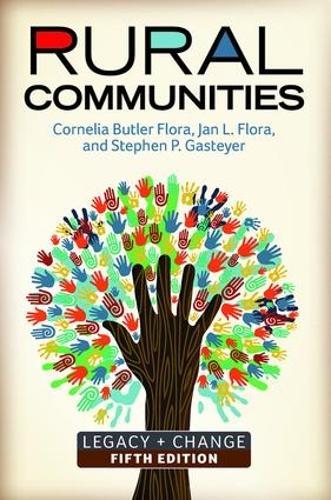
Full Product Details
Author: Cornelia Butler Flora ,
Jan L. Flora ,
Stephen P. Gasteyer
Publisher: Taylor & Francis Inc
Imprint: Westview Press Inc
Edition: 5th edition
Dimensions:
Width: 15.20cm
, Height: 2.60cm
, Length: 22.90cm
Weight: 0.739kg
ISBN: 9780813349718
ISBN 10: 0813349710
Pages: 504
Publication Date: 04 August 2015
Audience:
College/higher education
,
Tertiary & Higher Education
Format: Paperback
Publisher's Status: Active
Availability: In Print

This item will be ordered in for you from one of our suppliers. Upon receipt, we will promptly dispatch it out to you. For in store availability, please contact us.
Reviews
"""I have used this book since the first edition came out. The key strength of that edition and each edition that followed has been the conceptual framework of community capitals that helps students understand the connectivity between social, cultural, economic, and political issues and how they relate to the built and natural environments. This framework allows students to comprehend the complexity of community and to identify strengths and weaknesses in their own communities that can be used in promoting purposeful and positive change."" --Conner Bailey, Auburn University ""Rural Communities is the most complete textbook that I know of for the social science approach to understanding communities. The Floras are successful in combining basic concepts and theories of community with practical examples that students and professionals can use for their work and in their own communities. The book challenges students to take a critical look at communities, including underlying processes and structures that exist in all communities."" --Richard Maurer, University of Kentucky ""Rural Communities: Legacy and Change is a well-organized, highly readable text introducing students to rural sociology. The use of personal vignettes to illustrate key concepts and the theoretical Community Capitals Framework to facilitate discussion of critical components of rural communities help students come to understand the dynamics of stability and change in those communities."" --Liza Kuecker, Western New Mexico University ""...a cogent overview of the theory, issues, and applications that drive current-day rural studies. The book is very readable, and provides adequate, thorough coverage. If [undergraduate students] engage the material they will find a wealth of stories and case studies that illustrate and highlight the issues facing rural communities today."" --Ben Amsden, Plymouth State University ""The Floras have provided creative and useful sociological analysis of rural populations and rural living which is deeply and convincingly argued."" --Kathryn Hovey, New Mexico State University Praise for the Previous Editions: ""This text contributes to pedagogical effectiveness, student learning and empowered community practice. The text is well written, clearly organized, engaging, insightful and readable for a wide range of audiences."" --Teaching Sociology"
I have used this book since the first edition came out. The key strength of that edition and each edition that followed has been the conceptual framework of community capitals that helps students understand the connectivity between social, cultural, economic, and political issues and how they relate to the built and natural environments. This framework allows students to comprehend the complexity of community and to identify strengths and weaknesses in their own communities that can be used in promoting purposeful and positive change. --Conner Bailey, Auburn University Rural Communities is the most complete textbook that I know of for the social science approach to understanding communities. The Floras are successful in combining basic concepts and theories of community with practical examples that students and professionals can use for their work and in their own communities. The book challenges students to take a critical look at communities, including underlying processes and structures that exist in all communities. --Richard Maurer, University of Kentucky Rural Communities: Legacy and Change is a well-organized, highly readable text introducing students to rural sociology. The use of personal vignettes to illustrate key concepts and the theoretical Community Capitals Framework to facilitate discussion of critical components of rural communities help students come to understand the dynamics of stability and change in those communities. --Liza Kuecker, Western New Mexico University ...a cogent overview of the theory, issues, and applications that drive current-day rural studies. The book is very readable, and provides adequate, thorough coverage. If [undergraduate students] engage the material they will find a wealth of stories and case studies that illustrate and highlight the issues facing rural communities today. --Ben Amsden, Plymouth State University The Floras have provided creative and useful sociological analysis of rural populations and rural living which is deeply and convincingly argued. --Kathryn Hovey, New Mexico State University Praise for the Previous Editions: This text contributes to pedagogical effectiveness, student learning and empowered community practice. The text is well written, clearly organized, engaging, insightful and readable for a wide range of audiences. --Teaching Sociology This is a very readable book which both students and more advanced readers will appreciate. The authors present their material in a clear and systematic way. ... It will be of particular value to rural social workers and community practitioners who will benefit from its broad conceptual framework and extensive discussion of issues and challenges facing rural communities today. --Journal of Sociology and Social Welfare This book paints an illuminating picture of the complexity that is rural America today. A highly readable examination of the issues, this book sets a new standard for a publication that is both narratively approachable and theoretically rigorous. --Karl N. Stauber , president of the Northwest Area Foundation, St. Paul, Minnesota, and former Under Secretary, USDA This is an exciting, practical, well-researched, and usable framework for making a difference in rural communities. Highly recommended to anyone interested in understanding how rural communitites function and in being part of positive community development in rural America. --Dick Senese , Associate Dean, Community Development & Vitality, University of Minnesota Extension Service
I have used this book since the first edition came out. The key strength of that edition and each edition that followed has been the conceptual framework of community capitals that helps students understand the connectivity between social, cultural, economic, and political issues and how they relate to the built and natural environments. This framework allows students to comprehend the complexity of community and to identify strengths and weaknesses in their own communities that can be used in promoting purposeful and positive change. --Conner Bailey, Auburn University Rural Communities is the most complete textbook that I know of for the social science approach to understanding communities. The Floras are successful in combining basic concepts and theories of community with practical examples that students and professionals can use for their work and in their own communities. The book challenges students to take a critical look at communities, including underlying processes and structures that exist in all communities. --Richard Maurer, University of Kentucky Rural Communities: Legacy and Change is a well-organized, highly readable text introducing students to rural sociology. The use of personal vignettes to illustrate key concepts and the theoretical Community Capitals Framework to facilitate discussion of critical components of rural communities help students come to understand the dynamics of stability and change in those communities. --Liza Kuecker, Western New Mexico University ...a cogent overview of the theory, issues, and applications that drive current-day rural studies. The book is very readable, and provides adequate, thorough coverage. If [undergraduate students] engage the material they will find a wealth of stories and case studies that illustrate and highlight the issues facing rural communities today. --Ben Amsden, Plymouth State University The Floras have provided creative and useful sociological analysis of rural populations and rural living which is deeply and convincingly argued. --Kathryn Hovey, New Mexico State University Praise for the Previous Editions: This text contributes to pedagogical effectiveness, student learning and empowered community practice. The text is well written, clearly organized, engaging, insightful and readable for a wide range of audiences. --Teaching Sociology
Author Information
Cornelia Butler Flora is Charles F. Curtis Distinguished Professor of Sociology and Agriculture and Life Sciences at at Iowa State University.Jan L. Flora is professor in the Department of Sociology at Iowa State University.Stephen P. Gasteyer is assistant professor in the Department of Sociology at Michigan State University.