Overview
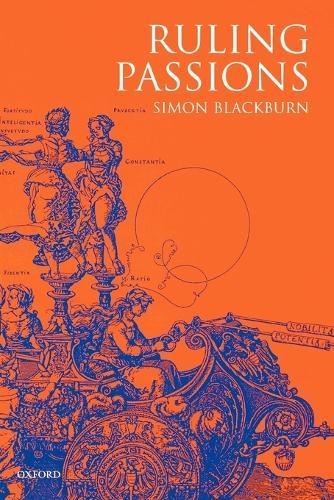
Simon Blackburn puts forward a compelling original philosophy of human motivation and morality. He maintains that we cannot get clear about ethics until we get clear about human nature. So these are the sorts of questions he addresses: Why do we behave as we do? Can we improve? Is our ethics at war with our passions, or is it an upshot of those passions? Blackburn seeks the answers in an exploration of guilt, shame, disgust, and other moral emotions; he draws also on game theory and cognitive science in his account of the structures of human motivation. Many philosophers have wanted a naturalistic ethics a theory that integrates our understanding of human morality with the rest of our understanding of the world we live in. What is special about Blackburn's naturalistic ethics is that it does not debunk the ethical by reducing it to the non-ethical. At the same time he banishes the spectres of scepticism and relativism that have haunted recent moral philosophy. Ruling Passions sets ethics in the context of human nature: it offers a solution to the puzzle of how ethics can maintain its authority even though it is rooted in the very emotions and motivations that it exists to control.
Full Product Details
Author: Simon Blackburn (Professor of Philosophy, Professor of Philosophy, University of Cambridge (from January 2001))
Publisher: Oxford University Press
Imprint: Oxford University Press
Dimensions:
Width: 15.60cm
, Height: 2.00cm
, Length: 23.30cm
Weight: 0.502kg
ISBN: 9780199241392
ISBN 10: 0199241392
Pages: 348
Publication Date: 30 November 2000
Audience:
Professional and scholarly
,
Professional and scholarly
,
Professional & Vocational
,
Professional & Vocational
Format: Paperback
Publisher's Status: Active
Availability: To order

Stock availability from the supplier is unknown. We will order it for you and ship this item to you once it is received by us.
Reviews
Executed with Blackburn's characteristic witty eloquence, with stylish literary references and many examples Mind Blackburn brings an amplitude of implicit thought, and an appeal to general experience, which give his case an authoritative force and persuasion beyond its technical and detailed arguments The Cambridge Quarterly This book is that rare thing: a work of philosophy beautifully written, able to engage the interest of those outside a narrow sphere of academic specialists, while attending to philosophical problems that most worry those who spend their professional life trying to solve them Ethics Blackburn's stimulating book makes a lively contribution. People interested in the issues it addresses will read it with profit Samuel Scheffler, Times Literary Supplement A fascinating book that seeks to clarify what we are doing when we make moral judgments Philosophy Ruling Passions gives us our humanity, providing some answers to those sceptics who find Kantian morality devoid of psychological realism Alex Klaushoefer, Times Higher Education Supplement
Executed with Blackburn's characteristic witty eloquence, with stylish literary references and many examples Mind Blackburn brings an amplitude of implicit thought, and an appeal to general experience, which give his case an authoritative force and persuasion beyond its technical and detailed arguments The Cambridge Quarterly This book is that rare thing: a work of philosophy beautifully written, able to engage the interest of those outside a narrow sphere of academic specialists, while attending to philosophical problems that most worry those who spend their professional life trying to solve them Ethics Blackburn's stimulating book makes a lively contribution. People interested in the issues it addresses will read it with profit Samuel Scheffler, Times Literary Supplement A fascinating book that seeks to clarify what we are doing when we make moral judgments Philosophy Ruling Passions gives us our humanity, providing some answers to those sceptics who find Kantian morality devoid of psychological realism Alex Klaushoefer, Times Higher Education Supplement
Author Information
Simon Blackburn is Professor of Philosophy at the University of Cambridge. Previously he was the Edna J. Koury Distinguished Professor of Philosophy at the University of North Carolina, Chapel Hill, and Adjunct Professor at the Australian National University's Research School of Social Sciences. From 1969 to 1990 he was Fellow and Tutor of Philosophy at Pembroke College, Oxford. From 1984 to 1990 he edited the journal Mind.