Overview
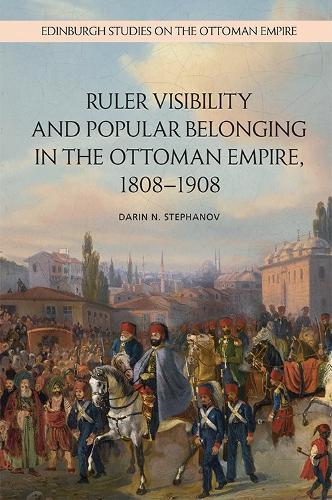
This book argues that the periodic ceremonial intrusion into the everyday lives of people across the Ottoman Empire, which the annual royal birthday and accession-day celebrations constituted, had multiple, far-reaching and largely unexplored consequences. On the one hand, it brought ordinary subjects into symbolic contact with the monarch and forged lasting vertical ties of loyalty to him, irrespective of language, location, creed or class. On the other hand, the rounds of royal celebration played a key role in the creation of new types of horizontal ties and ethnic group consciousness that crystallized into national movements and, after the empire's demise, national monarchies.
Full Product Details
Author: Darin N. Stephanov (Postdoctoral Researcher and Marie Curie COFUND Fellow, Aarhus Institute of Advanced Studies in Denmark)
Publisher: Edinburgh University Press
Imprint: Edinburgh University Press
Weight: 0.516kg
ISBN: 9781474441414
ISBN 10: 1474441416
Pages: 256
Publication Date: 16 November 2018
Audience:
College/higher education
,
Postgraduate, Research & Scholarly
Format: Hardback
Publisher's Status: Active
Availability: Manufactured on demand

We will order this item for you from a manufactured on demand supplier.
Reviews
"[...] the book constitutes an important contribution to the study of Ottoman and Balkan modernity. Stephanov has convincingly illustrated that the evolution of ruler visibility policies and royal ceremonies was a barometer of sociopolitical and sociocultural change in the late Ottoman Empire.--Andreas Lyberatos ""Turkish Historical Review"" The book provides fresh avenues to appreciate the evolution of social solidarity within the diverse Ottoman world. [...]Those interested in the formation of ethnonational consciousness in the Ottoman successor states (Bulgaria in particular), will profit from this original study.--Lucien Frary ""Ab Imperio"" This original study provides much food for thought on the 'unintended consequences' of a variety of ethno-nationalisms, including the ubiquitous personality cult within and outside the Ottoman/post-Ottoman orbit. Thus, this book will interest readers who are concerned about the growing prevalence of ethno-nationalism in the post-Cold War world and who hope to devise countervailing solutions before it is too late.-- ""Suraiya Faroqhi, Ibn Haldun University"""
[...] the book constitutes an important contribution to the study of Ottoman and Balkan modernity. Stephanov has convincingly illustrated that the evolution of ruler visibility policies and royal ceremonies was a barometer of sociopolitical and sociocultural change in the late Ottoman Empire.--Andreas Lyberatos Turkish Historical Review
Author Information
Darin Stephanov is a Postdoctoral Researcher and Marie Curie COFUND Fellow at the Aarhus Institute of Advanced Studies in Denmark. He has published articles in the Journal of Ottoman Studies and the Journal of Ottoman and Turkish Studies Association and has contributed several chapters to edited collections.