Overview
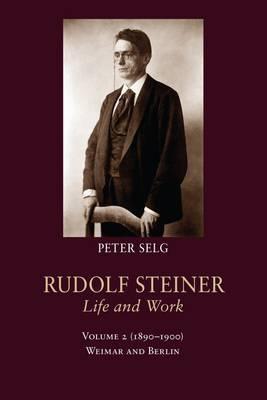
""It makes no sense to stop where Goethe stood. Yet we cannot progress unless we absorb Goethe deeply and allow ourselves to be wholly inspired by the impulses he brought into the world. This cannot be achieved as quickly as people today would like this to happen. There is nothing for it; anyone who was careless enough to live at the end of the nineteenth century must bear it."" - Rudolf Steiner, July 18, 1891 The first chapter of this volume looks at Rudolf Steiner's years in Weimar, beginning with his work at the Goethe Archives editing Goethe's scientific works. It was in this capacity that Steiner was able to comprehend the great spiritual depth of Goethe's life and work, which became the foundation for his own lifework. This chapter also looks at his social circles and the writing and publication of his works Truth and Knowledge (CW 3) and The Philosophy of Freedom (CW 4). It also highlights his encounter with the work of Friedrich Nietzsche, his visits to the Nietzsche Archives in Naumburg, and the writing of his book Friedrich Nietzsche: Fighter for Freedom (CW 5). Rudolf Steiner's time in Weimar comes to a close with the creation of his second book on Goethe: Goethe's World View (CW 6), a fruit of his work at the Archives. The second chapter focuses on Rudolf Steiner's time in Berlin, where he worked as editor of a cultural periodical, Magazin fur Litteratur, and accepted a position as lecturer at the Workers' School. There he was able to grow into his capacity as a teacher and where, although he encountered many ideological challenges, his insight into historical development found wide appreciation among students. The third chapter covers the turn of the century and Rudolf Steiner's inner transition to speaking and writing more openly of his esoteric observations on the evolution of consciousness, the ""I,"" and the training of cognition. His decisive 1899 essay, Individualism in Philosophy, marked this impulse, followed by invitations to lecture freely before the Theosophical Society, where Rudolf Steiner presented the esoteric nature of Goethe's fairy tale and the content of what later became his own books Mystics after Modernism (CW 7) and Christianity as Mystical Fact and the Mysteries of Antiquity (CW 8). Rudolf Steiner, Life and Work, volume 2 is a translation from German of chapters 4 and 5 of Rudolf Steiner. 1861-1925: Lebens- und Werkgeschichte. Band 1: 1861-1914 (Ita Wegman Institut, 2012).
Full Product Details
Author: Peter Selg ,
Margot M. Saar
Publisher: SteinerBooks, Inc
Imprint: SteinerBooks, Inc
Dimensions:
Width: 15.00cm
, Height: 2.20cm
, Length: 23.00cm
Weight: 0.662kg
ISBN: 9781621480860
ISBN 10: 1621480860
Pages: 336
Publication Date: 16 January 2015
Audience:
General/trade
,
General
Format: Hardback
Publisher's Status: Active
Availability: Available To Order

We have confirmation that this item is in stock with the supplier. It will be ordered in for you and dispatched immediately.
Language: English
Author Information
Peter Selg was born in 1963 in Stuttgart and studied medicine in Witten-Herdecke, Zurich, and Berlin. Until 2000, he worked as the head physician of the juvenile psychiatry department of Herdecke hospital in Germany. Dr. Selg is now director of the Ita Wegman Institute for Basic Research into Anthroposophy (Arlesheim, Switzerland) and professor of medicine at the Alanus University of Arts and Social Sciences (Germany). He lectures extensively and is the author of numerous books, including Seeing Christ in Sickness and Healing (2005); The Thera-peutic Eye (2008); A Grand Metamorphosis; (2008); The Figure of Christ (2009); Rudolf Steiner as a Spiritual Teacher (2010); and Rudolf Steiner and the Fifth Gospel (2010). He is married with five children.