Overview
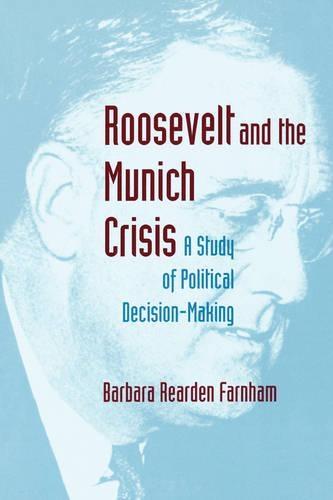
Franklin Roosevelt's intentions during the three years between Munich and Pearl Harbor have been a source of controversy among historians for years. This book offers both a theory of how the domestic political context affects foreign policy decisions in general and a re-interpretation of FDR's post-Munich policies based on the insights that the theory provides. Between 1936 and 1938, Roosevelt searched for ways to influence the deteriorating international situation. When Hitler's behaviour during the Munich crisis showed him to be incorrigibly aggressive, Roosevelt settled on aiding the democracies, a course to which he adhered until America's entry into the war. This policy attracted him because it allowed him to deal with a serious problem: the conflict between the need to stop Hitler and the domestic imperative to avoid any risk of American involvement in a war. Since existing theoretical approaches to value conflict ignore the influence of political factors on decision-making they offer little help in explaining Roosevelt's behaviour.As an alternative, this book develops a political approach to decision-making which focuses on the impact that awareness of the imperatives of th
Full Product Details
Author: Barbara Reardon Farnham
Publisher: Princeton University Press
Imprint: Princeton University Press
Edition: New edition
Volume: 90
Dimensions:
Width: 15.20cm
, Height: 1.80cm
, Length: 23.50cm
Weight: 0.482kg
ISBN: 9780691070742
ISBN 10: 0691070741
Pages: 328
Publication Date: 22 October 2000
Audience:
Professional and scholarly
,
College/higher education
,
Professional & Vocational
,
Tertiary & Higher Education
Format: Paperback
Publisher's Status: Active
Availability: Manufactured on demand

We will order this item for you from a manufactured on demand supplier.
Language: English
Reviews
A valiant and admirable effort to bring together international-relations theory and historical evidence (however anecdotal)... No book better re-creates Roosevelt's awareness of the aviation age; it belongs on the scholar's shelf. -- Warren F. Kimball The Times Literary Supplement Farnham argues with great clarity and commendable force that the Munich crisis played a decisive role in determining for Roosevelt that German aims in Europe ... posed a direct threat to long-term US security. Diplomacy and Statecraft Using her theory of political decision making, Farnham effectively weaves together the diverse and contradictory aspects of Roosevelt's policy into a coherent description of a president intent on acting to address American security needs but responsive to domestic political restraints... She makes a strong case, worthy of consideration. -- T. Michael Ruddy History It is refreshing to see a work that takes a different point of view and argues it vigorously, backed with ample evidence... [An] interesting and worthy read. -- Mark J. Rozell APSA Journal In this fine book, Barbara Farnham describes and explains Franklin D. Roosevelt's policies and actions toward the Munich crisis of 1938, its background, and its aftermath. She advances a clear thesis that she develops consistently throughout the book. She is perceptive, fair, and balanced in her analyses. -- Wayne S. Cole Diplomatic History [An] impressive scholarly achievement ...The book is very readable. -- Stephen G. Walker American Political Science Review
A valiant and admirable effort to bring together international-relations theory and historical evidence (however anecdotal)... No book better re-creates Roosevelt's awareness of the aviation age; it belongs on the scholar's shelf. -- Warren F. Kimball, The Times Literary Supplement Farnham argues with great clarity and commendable force that the Munich crisis played a decisive role in determining for Roosevelt that German aims in Europe ... posed a direct threat to long-term US security. -- Diplomacy and Statecraft Using her theory of political decision making, Farnham effectively weaves together the diverse and contradictory aspects of Roosevelt's policy into a coherent description of a president intent on acting to address American security needs but responsive to domestic political restraints... She makes a strong case, worthy of consideration. -- T. Michael Ruddy, History It is refreshing to see a work that takes a different point of view and argues it vigorously, backed with ample evidence... [An] interesting and worthy read. -- Mark J. Rozell, APSA Journal In this fine book, Barbara Farnham describes and explains Franklin D. Roosevelt's policies and actions toward the Munich crisis of 1938, its background, and its aftermath. She advances a clear thesis that she develops consistently throughout the book. She is perceptive, fair, and balanced in her analyses. -- Wayne S. Cole, Diplomatic History [An] impressive scholarly achievement ...The book is very readable. -- Stephen G. Walker, American Political Science Review
"""A valiant and admirable effort to bring together international-relations theory and historical evidence (however anecdotal)... No book better re-creates Roosevelt's awareness of the aviation age; it belongs on the scholar's shelf.""--Warren F. Kimball, The Times Literary Supplement ""Farnham argues with great clarity and commendable force that the Munich crisis played a decisive role in determining for Roosevelt that German aims in Europe ... posed a direct threat to long-term US security.""--Diplomacy and Statecraft ""Using her theory of political decision making, Farnham effectively weaves together the diverse and contradictory aspects of Roosevelt's policy into a coherent description of a president intent on acting to address American security needs but responsive to domestic political restraints... She makes a strong case, worthy of consideration.""--T. Michael Ruddy, History ""It is refreshing to see a work that takes a different point of view and argues it vigorously, backed with ample evidence... [An] interesting and worthy read.""--Mark J. Rozell, APSA Journal ""In this fine book, Barbara Farnham describes and explains Franklin D. Roosevelt's policies and actions toward the Munich crisis of 1938, its background, and its aftermath. She advances a clear thesis that she develops consistently throughout the book. She is perceptive, fair, and balanced in her analyses.""--Wayne S. Cole, Diplomatic History ""[An] impressive scholarly achievement ...The book is very readable.""--Stephen G. Walker, American Political Science Review"
A valiant and admirable effort to bring together international-relations theory and historical evidence (however anecdotal)... No book better re-creates Roosevelt's awareness of the aviation age; it belongs on the scholar's shelf. --Warren F. Kimball, The Times Literary Supplement Farnham argues with great clarity and commendable force that the Munich crisis played a decisive role in determining for Roosevelt that German aims in Europe ... posed a direct threat to long-term US security. -- Diplomacy and Statecraft Using her theory of political decision making, Farnham effectively weaves together the diverse and contradictory aspects of Roosevelt's policy into a coherent description of a president intent on acting to address American security needs but responsive to domestic political restraints... She makes a strong case, worthy of consideration. --T. Michael Ruddy, History It is refreshing to see a work that takes a different point of view and argues it vigorously, backed with ample evidence... [An] interesting and worthy read. --Mark J. Rozell, APSA Journal In this fine book, Barbara Farnham describes and explains Franklin D. Roosevelt's policies and actions toward the Munich crisis of 1938, its background, and its aftermath. She advances a clear thesis that she develops consistently throughout the book. She is perceptive, fair, and balanced in her analyses. --Wayne S. Cole, Diplomatic History [An] impressive scholarly achievement ...The book is very readable. --Stephen G. Walker, American Political Science Review
A valiant and admirable effort to bring together international-relations theory and historical evidence (however anecdotal)... No book better re-creates Roosevelt?s awareness of the aviation age; it belongs on the scholar?s shelf. --Warren F. Kimball, The Times Literary Supplement Farnham argues with great clarity and commendable force that the Munich crisis played a decisive role in determining for Roosevelt that German aims in Europe ... posed a direct threat to long-term US security. --Diplomacy and Statecraft Using her theory of political decision making, Farnham effectively weaves together the diverse and contradictory aspects of Roosevelt?s policy into a coherent description of a president intent on acting to address American security needs but responsive to domestic political restraints... She makes a strong case, worthy of consideration. --T. Michael Ruddy, History It is refreshing to see a work that takes a different point of view and argues it vigorously, backed with ample evidence... [An] interesting and worthy read. --Mark J. Rozell, APSA Journal In this fine book, Barbara Farnham describes and explains Franklin D. Roosevelt's policies and actions toward the Munich crisis of 1938, its background, and its aftermath. She advances a clear thesis that she develops consistently throughout the book. She is perceptive, fair, and balanced in her analyses. --Wayne S. Cole, Diplomatic History [An] impressive scholarly achievement ...The book is very readable. --Stephen G. Walker, American Political Science Review
Author Information
Barbara Rearden Farnham is Senior Associate at the Institute of War and Peace Studies.