Overview
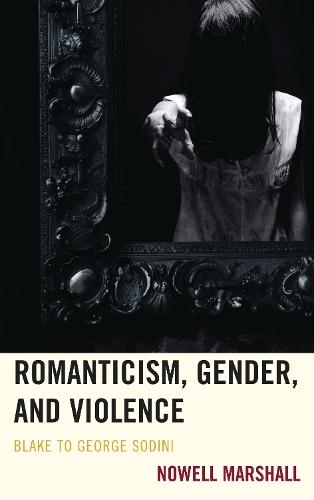
Combining queer theory with theories of affect, psychoanalysis, and Foucauldian genealogy, Romanticism, Gender, and Violence: Blake to George Sodini theorizes performative melancholia, a condition where, regardless of sexual orientation, overinvestment in gender norms causes subjects who are unable to embody those norms to experience socially expected (‘normal’) gender as something unattainable or lost. This perceived loss causes an ambivalence within the subject that can lead to self-inflicted violence (masochism, suicide) or violence toward others (sadism, murder). Reading a range of Romantic poetry and novels between 1790-1820, but ultimately moving beyond the period to show its contemporary cultural relevance through readings of Eliot’s The Mill on the Floss, Virginia Woolf’s Mrs. Dalloway, Andrew Holleran’s Dancer from the Dance, and George Sodini’s 2009 murder-suicide case, this study argues that we need to move beyond focusing on bullying, teens, and LGBT students and look at our cultural investment in gender normativity itself. Doing so allows us to recognize that the relationship between non-normative gender performance and violence is not simply a gay problem; it is a human problem that can affect people of any sex, sexuality, age, race, or ethnicity and one that we can trace back to the Romantic period. Bringing late 18th-century novels into conversation with both canonical and lesser-known Romantic poetry, allows us to see that, as people whose performance of gender occasionally exceeds the normal, we too often internalize these norms and punish ourselves or others for our inability to adhere to them. Contrasting paired chapters by male and female authors and including sections on failed romantic coupling, melancholic femininities, melancholic masculinities, failed gender performance and madness, and ending with a section titled After Romanticism, this study works on multiple levels to complicate previous understandings of gender and violence in Romanticism while also offering a model for contemporary issues relating to gender and violence among people who ‘fail’ to perform gender according to social norms.
Full Product Details
Author: Nowell Marshall
Publisher: Associated University Presses
Imprint: Bucknell University Press,U.S.
Dimensions:
Width: 15.90cm
, Height: 2.30cm
, Length: 23.90cm
Weight: 0.513kg
ISBN: 9781611484663
ISBN 10: 1611484669
Pages: 220
Publication Date: 22 July 2013
Audience:
College/higher education
,
Undergraduate
,
Postgraduate, Research & Scholarly
Format: Hardback
Publisher's Status: Active
Availability: Manufactured on demand

We will order this item for you from a manufactured on demand supplier.
Reviews
It is a rare thing-a work of literary criticism and history that also issues an important call to contemporary social change. . . .Marshall's message . . . is a welcome and timely one, and he succeeds in delivering it in a convincing and well-historicized medium of cultural analysis. . . .Nothing gets in the way of the power of Marshall's reading and the saliency of his argument. This is an ambitious, clever, and important book-a major contribution for those of us who study Romanticism, and an awakening for us all. * Eighteenth-Century Fiction * Marshall examines the effects of performative melancholia in Romantic authors from Blake to George Sodidi, citing examples from their recordings of loves lost and regretted, failures, abandonment, and madness. Marshall begins by refining performative melancholia, giving as its parameters coupling, failure, and melancholia; he tests his theory on Vision of the Daughters of Albion and Camilla, then covers feminine (Zofloya and Mill on the Floss) and masculine (The Giroux) melancholia. Then Marshal concentrates on extreme forms of abandonment and madness from Shelley and Wordsworth, and Amelia Opie's The Father and Daughter. Marshall closes with a fascinating foray into post-romanticism with Mrs. Dalloway and Dancer from the Dance by Holleran. * Book News, Inc. *
Marshall examines the effects of performative melancholia in Romantic authors from Blake to George Sodidi, citing examples from their recordings of loves lost and regretted, failures, abandonment, and madness. Marshall begins by refining performative melancholia, giving as its parameters coupling, failure, and melancholia; he tests his theory on Vision of the Daughters of Albion and Camilla, then covers feminine (Zofloya and Mill on the Floss) and masculine (The Giroux) melancholia. Then Marshal concentrates on extreme forms of abandonment and madness from Shelley and Wordsworth, and Amelia Opie's The Father and Daughter. Marshall closes with a fascinating foray into post-romanticism with Mrs. Dalloway and Dancer from the Dance by Holleran. Book News, Inc.
Author Information
Nowell Marshall is assistant professor of literary theory at Rider University in New Jersey.