Overview
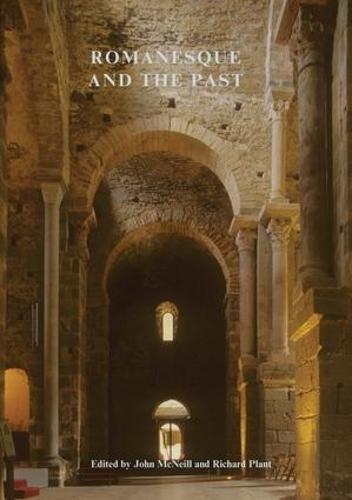
The nineteen papers collected in this volume explore a notable phenomenon, that of retrospection in the art and architecture of Romanesque Europe. They arise from a conference organized by the British Archaeological Association in 2010, and reflect its interest in how and why the past manifested itself in the visual culture of the 11th and 12th centuries. This took many forms, from the casual re-use of ancient material to a specific desire to re-present or emulate earlier objects and buildings. Central to it is a concern for the revival of Roman and early medieval forms, spolia, selective quotation, archaism and the construction of histories. The individual essays presented here cover a wide range of topics and media: the significance of consecration ceremonies in the creation of architectural memory, the rise of pictorial concepts in 12th-century chronicles, the creation of history in the Paris of Hugh of St-Victor, and the appeal of the works of Bernward of Hildesheim and of Hrabanus Maurus in the centuries after their deaths. There are studies of buildings and the ideological purpose behind them at Tarragona, Ripoll, Cluny, Pannonhalma (Hungary), La Roccelletta (Calabria), and Old St Peter's, comparative studies of Trier, Villenauxe and Glastonbury, and of Bury St Edmunds, Rievaulx and Canterbury, and wide-ranging papers on the tantalizing evidence for an engagement with an overseas past in Ireland, an Anglo-Saxon past in England, and a Milanese past among the aisleless cruciform churches of Augustinian Europe. The volume concludes with an assessment of the very concept of Romanesque.
Full Product Details
Author: John McNeill ,
Richard Plant
Publisher: Taylor & Francis Ltd
Imprint: Legenda
Dimensions:
Width: 21.00cm
, Height: 1.80cm
, Length: 29.70cm
Weight: 0.929kg
ISBN: 9781909662100
ISBN 10: 1909662100
Pages: 306
Publication Date: 30 August 2013
Audience:
General/trade
,
General
Format: Paperback
Publisher's Status: Active
Availability: In Print

This item will be ordered in for you from one of our suppliers. Upon receipt, we will promptly dispatch it out to you. For in store availability, please contact us.
Reviews
The British Archaeological Association could not have hoped for a more satisfying inaugural volume for their Romanesque series, and medievalists for diverse disciplines and interests should look forward to the next installment.--Robert Maxwell Speculum (04/01/2015)
Author Information
John McNeill teaches at Oxford University’s Department of Continuing Education, and is Honorary Secretary of the British Archaeological Association, for whom he has edited and contributed to volumes on Anjou, King’s Lynn and the Fens, the medieval cloister, and English medieval chantries. He has a particular interest in Romanesque architectural sculpture and the design of medieval monastic precincts. Richard Plant is Director of the Arts of Europe programme at Christie’s Education in London. He is Honorary Publicity Office for the British Archaeological Association and has published on Romanesque architecture in England and the Holy Roman Empire. His previous editorial experience was for The Rough Guide to Jazz (1995).