Overview
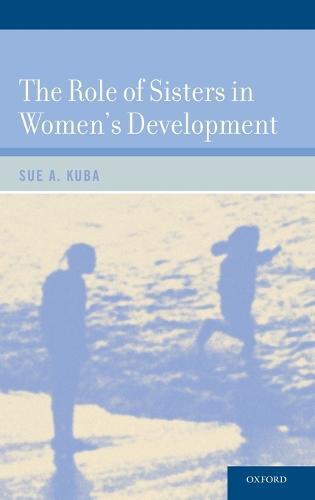
Psychological theory has traditionally overlooked or minimized the role of siblings in development, focusing instead on parent-child attachment relationships. The importance of sisters has been even more marginalized. Sue A. Kuba explores this omission in The Role of Sisters in Women's Development, seeking to broaden and enrich current understanding of the psychology of women. This unique work is distinguished by Kuba's phenomenological method of research, rooted in a single prompt: ""Tell me about your relationship with your sister."" Rich in detail, the responses (many of which are reproduced at length within the book) provide a complex picture of sister relationships across the lifespan. Integrating these stories with current literature about gender and family composition for sisters of difference (disabled and lesbian sisters) and ethnic sisters, this book provides useful recommendations for therapeutic understanding of the significance of sisters in everyday life, integrating diverse perspectives in order to address the ways clinicians can enhance psychological work with women clients. A valuable contribution to the field of mental health, The Role of Sisters in Women's Development is highly recommended for therapists who wish to broaden their inquiry into the sister connection, as well as anyone who wants to further understand the importance of sisterhood.
Full Product Details
Author: Sue A. Kuba (, Professor of Psychology at the California School of Professional Psychology)
Publisher: Oxford University Press Inc
Imprint: Oxford University Press Inc
Dimensions:
Width: 23.90cm
, Height: 3.10cm
, Length: 16.30cm
Weight: 0.748kg
ISBN: 9780195393347
ISBN 10: 0195393341
Pages: 416
Publication Date: 05 May 2011
Audience:
Professional and scholarly
,
Professional & Vocational
Format: Hardback
Publisher's Status: Active
Availability: To order

Stock availability from the supplier is unknown. We will order it for you and ship this item to you once it is received by us.
Reviews
<br> This book focuses on a neglected area of family connections: the psychological implications of having one or more sisters. Sue Kuba succeeds in bringing it to the fore and inserting it in traditional theoretical interpretations that have previously all but ignored this significant area of women's experience. The methodology makes vivid the experiences of sisters by using their words to describe the subtle and complicated emotions that circulate among sisters. This is a unique contribution to women's psychology, one that was long overdue. Clinicians will find useful information for their work in this book. But, in addition, any woman who has a sister will see herself in these pages and will understand better the significance of her sister in her own life. --Oliva M. Espin, Ph. D., Professor Emerita, Department of Women's Studies, San Diego State University<p><br> Dr. Kuba expertly explores the largely unexamined role of sisters on women's lives and identities. The women's accounts
This book focuses on a neglected area of family connections: the psychological implications of having one or more sisters. Sue Kuba succeeds in bringing it to the fore and inserting it in traditional theoretical interpretations that have previously all but ignored this significant area of women's experience. The methodology makes vivid the experiences of sisters by using their words to describe the subtle and complicated emotions that circulate among sisters. This is a unique contribution to women's psychology, one that was long overdue. Clinicians will find useful information for their work in this book. But, in addition, any woman who has a sister will see herself in these pages and will understand better the significance of her sister in her own life. --Oliva M. Espin, Ph. D., Professor Emerita, Department of Women's Studies, San Diego State University Dr. Kuba expertly explores the largely unexamined role of sisters on women's lives and identities. The women's accounts of their herstories, gathered in the research, vividly reveal the depth, diversity, commonalities, and enduring nature of sister relationships and their potential to heal, hurt, shape personality, and promote growth. Therapists will highly value Dr. Kuba's use of the research findings to elaborate theories on women's development and to illustrate how the sister relationship can be utilized as a healing force. --Mary Beth Kenkel, Ph.D., Dean and Professor, College of Psychology and Liberal Arts, Florida Institute of Technology A significant contribution to the study of women's development, this book not only highlights the importance of the sister role, it also reveals that issues such a birth order, age spacing, family complex and gender have a tremendous impact on women's sense of identity. Kuba demonstrates that a better understanding and integration of the sister relationship and its role in the development of women can enhance women's lives and the therapies that are utilized to assist them. --Elizabeth Davis-Russell, Ph.D., President and Professor of Psychology, Tubman University, Liberia, West Africa This book should certainly be of value to clinical psychologists. For me, as well as for others studying sibling relationships in the areas of developmental psychology, sociology, and family studies, the book demonstrates how important it is to go beyond questionnaires and scales to assess the sibling relationship and to examine the unbiased qualitative narratives of those actually experiencing the relationship in question. Finally, any reader of The Role of Sisters in Women's Development will come away with a greater understanding of the complexity and meaning of relationships between sisters. I certainly found this to be the case. -- Victor Cicirelli, PhD, Department of Psychological Sciences at Purdue University, PsycCRITIQUES Through her richly detailed descriptions of relationships between sisters, Sue Kuba offers an intimate portrait of women's development across the lifespan... As is The Role of Sisters in Women's Development reflects Kuba's stated goals and will be a useful resource for clinicians and graduate students, especially those interested in the psychological development of women or family process... In sum, Kuba's book would serve well as an additional library resource for feminist researchers, students in women or gender studies programs, and graduate students in clinical or family psychology programs. -- Lisa Fortlouis Wood, PhD, Psychology of Women Quarterly This book focuses on a neglected area of family connections: the psychological implications of having one or more sisters. Sue Kuba succeeds in bringing it to the fore and inserting it in traditional theoretical interpretations that have previously all but ignored this significant area of women's experience. The methodology makes vivid the experiences of sisters by using their words to describe the subtle and complicated emotions that circulate among sisters. This is a unique contribution to women's psychology, one that was long overdue. Clinicians will find useful information for their work in this book. But, in addition, any woman who has a sister will see herself in these pages and will understand better the significance of her sister in her own life. --Oliva M. Espin, Ph. D., Professor Emerita, Department of Women's Studies, San Diego State University Dr. Kuba expertly explores the largely unexamined role of sisters on women's lives and identities. The women's accounts of their herstories, gathered in the research, vividly reveal the depth, diversity, commonalities, and enduring nature of sister relationships and their potential to heal, hurt, shape personality, and promote growth. Therapists will highly value Dr. Kuba's use of the research findings to elaborate theories on women's development and to illustrate how the sister relationship can be utilized as a healing force. --Mary Beth Kenkel, Ph.D., Dean and Professor, College of Psychology and Liberal Arts, Florida Institute of Technology A significant contribution to the study of women's development, this book not only highlights the importance of the sister role, it also reveals that issues such a birth order, age spacing, family complex and gender have a tremendous impact on women's sense of identity. Kuba demonstrates that a better understanding and integration of the sister relationship and its role in the development of women can enhance women's lives and the therapies that are utilized to assist them. --Elizabeth Davis-Russell, Ph.D., President and Professor of Psychology, Tubman University, Liberia, West Africa This book should certainly be of value to clinical psychologists. For me, as well as for others studying sibling relationships in the areas of developmental psychology, sociology, and family studies, the book demonstrates how important it is to go beyond questionnaires and scales to assess the sibling relationship and to examine the unbiased qualitative narratives of those actually experiencing the relationship in question. Finally, any reader of The Role of Sisters in Women's Development will come away with a greater understanding of the complexity and meaning of relationships between sisters. I certainly found this to be the case. -- Victor Cicirelli, PhD, Department of Psychological Sciences at Purdue University, PsycCRITIQUES Through her richly detailed descriptions of relationships between sisters, Sue Kuba offers an intimate portrait of women's development across the lifespan... As is The Role of Sisters in Women's Development reflects Kuba's stated goals and will be a useful resource for clinicians and graduate students, especially those interested in the psychological development of women or family process... In sum, Kuba's book would serve well as an additional library resource for feminist researchers, students in women or gender studies programs, and graduate students in clinical or family psychology programs. -- Lisa Fortlouis Wood, PhD, Psychology of Women Quarterly
Author Information
Sue A. Kuba, Ph. D. is a licensed psychologist and a professor of psychology at the California School of Professional Psychology, Alliant International University. She has studied and implemented research using phenomenological methodology for over 30 years. Her clinical work focuses on the importance of women's relationships in family life. She has trained hundreds of psychologists and graduate students in courses about the psychology of women, women's health, research methods, and the importance of cultural applications for clinical work.