Overview
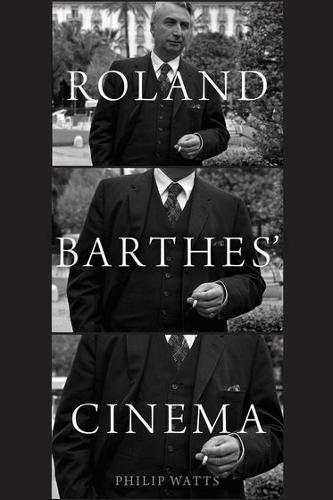
The most famous name in French literary circles from the late 1950s till his death in 1981, Roland Barthes maintained a contradictory rapport with the cinema. As a cultural critic, he warned of its surreptitious ability to lead the enthralled spectator toward an acceptance of a pre-given world. As a leftist, he understood that spectacle could be turned against itself and provoke deep questioning of that pre-given world. And as an extraordinarily sensitive human being, he relished the beauty of images and the community they could bring together.
Full Product Details
Author: Philip Watts (Professor of French, Professor of French, Columbia University) ,
Dudley Andrew (R. Selden Rose Professor of Film and Comparative Literature, R. Selden Rose Professor of Film and Comparative Literature, Yale University) ,
Yves Citton (, University of Grenoble) ,
Vincent Debaene (Associate Professor of French, Associate Professor of French, Columbia University)
Publisher: Oxford University Press Inc
Imprint: Oxford University Press Inc
Dimensions:
Width: 13.70cm
, Height: 1.30cm
, Length: 20.60cm
Weight: 0.240kg
ISBN: 9780190277550
ISBN 10: 0190277556
Pages: 216
Publication Date: 14 April 2016
Audience:
College/higher education
,
Postgraduate, Research & Scholarly
Format: Paperback
Publisher's Status: Active
Availability: Manufactured on demand

We will order this item for you from a manufactured on demand supplier.
Reviews
this is a rich and nuanced intervention which changes how we see Roland Barthes and film. Neil Badmington, Times Literary Supplement Philip Watts' probing of Barthes' advance-retreat relationship to the movies is wise, sensitive and stimulating-in fact, brilliant. Even rarer is the warmth, clarity and goodwill he expresses toward the often antagonistic figures who championed French theory. The addition of several previously unavailable pieces by Barthes makes this an irresistible volume. Philip Lopate, author of To Show and To Tell: The Craft of Literary Nonfiction Philip Watts' ground breaking work on Roland Barthes and cinema is a gift to film studies, to literary studies, and to theory. No other critic could match Watts in combining close textual analysis with historical insight. His encounter with Barthes' resistance to cinema shows a deep and refined critical vision, leavened by wit that Barthes would have appreciated. Alice Kaplan, author of Dreaming in French: The Paris Years of Jacqueline Bouvier Kennedy, Susan Sontag, and Angela Davis Watts saw another Barthes besides the semiologist, the structuralist, the demystifier and the Brechtian Barthes, a Barthes who had always been in love with the image and with a particular aesthetics of daily life... Jacques Ranciere [A] thoughtful bookWatts approach uncovers unexpected riches in what have seemed to be minor moments in Barthes work. The book has chapters on film and myth, on film and perception, on Barthes and Bazin, on film and utopian politics, on film theory, on melodrama Roland Barthes Cinema also includes new translations (by Deborah Glassman) of nine of Barthes less well-known articles on film. s
[A] thoughtful bookWatts approach uncovers unexpected riches in what have seemed to be minor moments in Barthes work. The book has chapters on film and myth, on film and perception, on Barthes and Bazin, on film and utopian politics, on film theory, on melodrama Roland Barthes Cinema also includes new translations (by Deborah Glassman) of nine of Barthes less well-known articles on film. s Watts saw another Barthes besides the semiologist, the structuralist, the demystifier and the Brechtian Barthes, a Barthes who had always been in love with the image and with a particular aesthetics of daily life.... * Jacques Ranciere * Philip Watts' ground breaking work on Roland Barthes and cinema is a gift to film studies, to literary studies, and to theory. No other critic could match Watts in combining close textual analysis with historical insight. His encounter with Barthes' resistance to cinema shows a deep and refined critical vision, leavened by wit that Barthes would have appreciated. * Alice Kaplan, author of Dreaming in French: The Paris Years of Jacqueline Bouvier Kennedy, Susan Sontag, and Angela Davis * Philip Watts' probing of Barthes' advance-retreat relationship to the movies is wise, sensitive and stimulating-in fact, brilliant. Even rarer is the warmth, clarity and goodwill he expresses toward the often antagonistic figures who championed French theory. The addition of several previously unavailable pieces by Barthes makes this an irresistible volume. * Philip Lopate, author of To Show and To Tell: The Craft of Literary Nonfiction * this is a rich and nuanced intervention which changes how we see Roland Barthes and film. * Neil Badmington, Times Literary Supplement *
this is a rich and nuanced intervention which changes how we see Roland Barthes and film. Neil Badmington, Times Literary Supplement Philip Watts' probing of Barthes' advance-retreat relationship to the movies is wise, sensitive and stimulating-in fact, brilliant. Even rarer is the warmth, clarity and goodwill he expresses toward the often antagonistic figures who championed French theory. The addition of several previously unavailable pieces by Barthes makes this an irresistible volume. Philip Lopate, author of To Show and To Tell: The Craft of Literary Nonfiction Philip Watts' ground breaking work on Roland Barthes and cinema is a gift to film studies, to literary studies, and to theory. No other critic could match Watts in combining close textual analysis with historical insight. His encounter with Barthes' resistance to cinema shows a deep and refined critical vision, leavened by wit that Barthes would have appreciated. Alice Kaplan, author of Dreaming in French: The Paris Years of Jacqueline Bouvier Kennedy, Susan Sontag, and Angela Davis Watts saw another Barthes besides the semiologist, the structuralist, the demystifier and the Brechtian Barthes, a Barthes who had always been in love with the image and with a particular aesthetics of daily life... Jacques Ranciere
Philip Watts' probing of Barthes' advance-retreat relationship to the movies is wise, sensitive and stimulating-in fact, brilliant. Even rarer is the warmth, clarity and goodwill he expresses toward the often antagonistic figures who championed French theory. The addition of several previously unavailable pieces by Barthes makes this an irresistible volume. Philip Lopate, author of To Show and To Tell: The Craft of Literary Nonfiction Philip Watts' ground breaking work on Roland Barthes and cinema is a gift to film studies, to literary studies, and to theory. No other critic could match Watts in combining close textual analysis with historical insight. His encounter with Barthes' resistance to cinema shows a deep and refined critical vision, leavened by wit that Barthes would have appreciated. Alice Kaplan, author of Dreaming in French: The Paris Years of Jacqueline Bouvier Kennedy, Susan Sontag, and Angela Davis Watts saw another Barthes besides the semiologist, the structuralist, the demystifier and the Brechtian Barthes, a Barthes who had always been in love with the image and with a particular aesthetics of daily life... Jacques Ranciere
Author Information
Philip Watts was Professor of French at Columbia University and Chair of the department from 2008 to 2012.