|
|
|||
|
||||
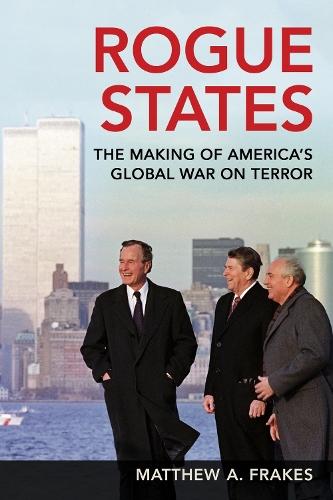
OverviewIn Rogue States, Matthew A. Frakes reveals the connection between US national security strategy at the end of the Cold War and the beginning of the War on Terror. Throughout a series of crises from 1981 to 1991, the administrations of Ronald Reagan and George H. W. Bush recognized that emerging threats to global security – terrorism, regional aggression, weapons of mass destruction, and narcotics trafficking – converged into a single growing phenomenon that they eventually called ""rogue states."" In confronting Libya, Panama, and Iraq, Reagan and Bush created the strategies that drove US national security after 9/11. Frakes argues that Reagan and Bush's improvised responses to crises of terrorism, aggression, and the proliferation of weapons of mass destruction – culminating in the Gulf War of 1991 – established a lasting enforcement role for the United States against rogue states in the post–Cold War world. The effort to redefine US national security around this threat created a new framework to guide the country's approach to global security after the Cold War – one that ensured after 9/11 that the War on Terror became a war on rogue states. Full Product DetailsAuthor: Matthew A. FrakesPublisher: Cornell University Press Imprint: Cornell University Press ISBN: 9781501785719ISBN 10: 1501785710 Pages: 258 Publication Date: 15 March 2026 Audience: General/trade , General Format: Hardback Publisher's Status: Active Availability: Not yet available This item is yet to be released. You can pre-order this item and we will dispatch it to you upon its release. Table of ContentsReviewsAuthor InformationMatthew A. Frakes is a historian of US foreign relations and national security and Assistant Professor in the Salmon P. Chase Center for Civics, Culture, and Society at the Ohio State University. Tab Content 6Author Website:Countries AvailableAll regions |
||||