Overview
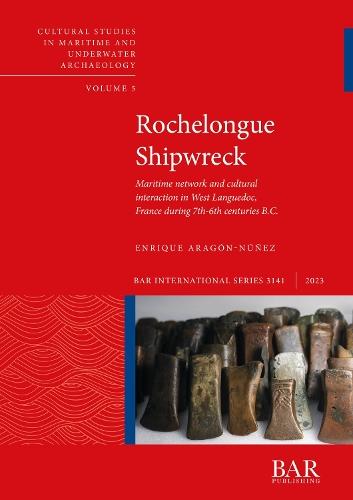
The Rochelongue site has yielded a remarkable assembly of mostly metallic objects from both local and foreign provenances. This allows for an investigation into the connectivity in the western Mediterranean through the lens of regional and long-distance maritime trade networks. This research uses an interdisciplinary approach to the archaeological metals assemblage - combining geographic, material culture, and network science - in order to make a more definitive interpretation of the site and its broader effect on maritime connectivity. The investigation utilises a novel approach by conceptualising the site as a more generic 'contact site' (representative of a contact zone), instead of remaining mired in old debates over shipwreck versus ritual deposit. Results based on the interdisciplinary analysis allow for a discussion regarding the inter-regional phenomenon in the Catalonia-Languedoc area. This highlights the role of Indigenous populations in a long-distance trading context, stimulated by sea connectivity. The Rochelongue shipwreck evidences a trans-Mediterranean network of varying intensities, which largely determines the levels of impact on the connected cultures from Iberian Peninsula to Central Mediterranean Sea.
Full Product Details
Author: Enrique Aragón-Núñez
Publisher: BAR Publishing
Imprint: BAR Publishing
ISBN: 9781407360379
ISBN 10: 140736037
Pages: 156
Publication Date: 31 August 2023
Audience:
Professional and scholarly
,
Professional & Vocational
Format: Paperback
Publisher's Status: Active
Availability: Available To Order

We have confirmation that this item is in stock with the supplier. It will be ordered in for you and dispatched immediately.
Reviews
'This manuscript represents a novel approach within the discipline of maritime archaeology and, especially, underwater archaeology. I am not aware of any comparable research emanating from the underwater source material.' Professor Kristin Ilves, University of Helsinki 'The synthesis of the assemblage and additional data the author has contributed from his own qualitative and quantitative analytical methods are of great value to the discussion of inter- and intra-regional trade in the western Mediterranean during this period.' Catherine Steidl, University of Colorado Boulder 'It is a significant contribution, not only for the publication of previously unpublished legacy data, but also for the ambitious approach to the multi-modal examination of the evidence.' Associate Professor Ulrike Krotscheck, The Evergreen State College
Author Information
Enrique Aragón-Núñez is a lecturer at the University of Almeria, Spain and an associate lecturer in History and Archaeology at Flinders University, Adelaide SA. He is Research Director of Intitut Balear d'Estudis en Arqueologia Maritima (IBEAM), with extensive experience in maritime and underwater cultural heritage and its implications for understanding maritime connectivity and cultural interaction.