Awards
- Winner of Finalist, George Perkins Marsh Prize of the American Society for Environmental History.
- Winner of Winner, Ottoman and Turkish Studies Association Book Prize Finalist, George Perkins Marsh Prize of the American Society for Environmental History.
Overview
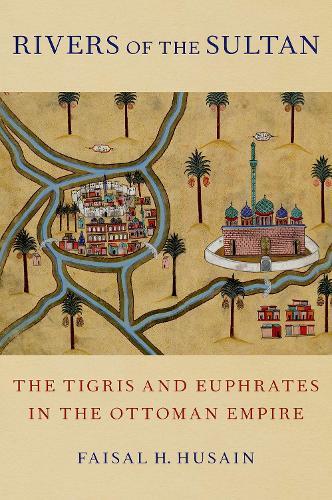
The Tigris and Euphrates rivers run through the heart of the Middle East and merge in the area of Mesopotamia known as the ""cradle of civilization."" In their long and volatile political history, the sixteenth century ushered in a rare era of stability and integration. A series of military campaigns between the Mediterranean Sea and the Persian Gulf brought the entirety of their flow under the institutional control of the Ottoman Empire, then at the peak of its power and wealth. Rivers of the Sultan tells the history of the Tigris and Euphrates during the early modern period. Under the leadership of Sultan Süleyman I, the rivers became Ottoman from mountain to ocean, managed by a political elite that pledged allegiance to a single household, professed a common religion, spoke a lingua franca, and received orders from a central administration based in Istanbul. Faisal Husain details how Ottoman unification institutionalized cooperation among the rivers' dominant users and improved the exploitation of their waters for navigation and food production. Istanbul harnessed the energy and resources of the rivers for its security and economic needs through a complex network of forts, canals, bridges, and shipyards. Above all, the imperial approach to river management rebalanced the natural resource disparity within the Tigris-Euphrates basin. Istanbul regularly organized shipments of grain, metal, and timber from upstream areas of surplus in Anatolia to downstream areas of need in Iraq. Through this policy of natural resource redistribution, the Ottoman Empire strengthened its presence in the eastern borderland region with the Safavid Empire and fended off challenges to its authority. Placing these world historic bodies of water at its center, Rivers of the Sultan reveals intimate bonds between state and society, metropole and periphery, and nature and culture in the early modern world.
Full Product Details
Author: Faisal H. Husain (Assistant Professor of History, Assistant Professor of History, Pennsylvania State University)
Publisher: Oxford University Press Inc
Imprint: Oxford University Press Inc
Dimensions:
Width: 15.20cm
, Height: 2.30cm
, Length: 23.60cm
Weight: 0.544kg
ISBN: 9780197547274
ISBN 10: 0197547273
Pages: 278
Publication Date: 03 August 2021
Audience:
Professional and scholarly
,
Professional & Vocational
Format: Hardback
Publisher's Status: Active
Availability: To order

Stock availability from the supplier is unknown. We will order it for you and ship this item to you once it is received by us.
Reviews
Rivers of the Sultan... offers a fascinating glimpse into the political, social and economic histories of the Tigris and Euphrates rivers. * Usman Butt, Middle East Monitor * Faisal Husain sets himself a truly formidable goal: to write an integrated history of the Ottoman Empire in the Tigris-Euphrates watershed. To succeed requires a polymath's grasp of hydrology, botany, irrigation, grazing, shipping, climate, fiscal affairs, and political structures. Against the odds, he triumphs and with a verve and elegance of exposition that makes this a model of interdisciplinary, environmental history. * James C. Scott, Yale University * Original and deeply researched, Rivers of the Sultan is both an important new history of Ottoman Iraq and a major contribution to Middle East environmental history. Combining ecological, social, and political perspectives, it offers vital insights into the nature and transformation of Ottoman rule. * Sam White, author of The Climate of Rebellion in the Early Modern Ottoman Empire * In this exemplary study, Faisal H. Husain analyzes the Ottoman Empire's management of the Tigris and Euphrates. Rivers of the Sultan reconstructs insightfully the ecological relations between the imperial center and its Eastern periphery and brings to life a lively history of various historical actors, from Ottoman governors, to cultivators of crops, to tribal confederations, who benefited from the rivers and their management. The book reminds us how the maintenance of law and order, the control of wealth, the politics of infrastructure, and the movements of grains and arms were deeply intertwined into the history of water itself. A fascinating exploration of irrigation, wetland exploitation as well as of natural disaster, famine and floods, this book changes the ways in which we evaluate Iraq's past and present. * Orit Bashkin, University of Chicago *
Husain is able to tackle long-term and large-scale questions even though he starts from a well-focused time and place. His excellent work opens paths and provides a model for other scholars. * Resat Kasaba, Journal of Interdisciplinary History * Rivers of the Sultan... offers a fascinating glimpse into the political, social and economic histories of the Tigris and Euphrates rivers. * Usman Butt, Middle East Monitor * Faisal Husain sets himself a truly formidable goal: to write an integrated history of the Ottoman Empire in the Tigris-Euphrates watershed. To succeed requires a polymath's grasp of hydrology, botany, irrigation, grazing, shipping, climate, fiscal affairs, and political structures. Against the odds, he triumphs and with a verve and elegance of exposition that makes this a model of interdisciplinary, environmental history. * James C. Scott, Yale University * Original and deeply researched, Rivers of the Sultan is both an important new history of Ottoman Iraq and a major contribution to Middle East environmental history. Combining ecological, social, and political perspectives, it offers vital insights into the nature and transformation of Ottoman rule. * Sam White, author of The Climate of Rebellion in the Early Modern Ottoman Empire * In this exemplary study, Faisal H. Husain analyzes the Ottoman Empire's management of the Tigris and Euphrates. Rivers of the Sultan reconstructs insightfully the ecological relations between the imperial center and its Eastern periphery and brings to life a lively history of various historical actors, from Ottoman governors, to cultivators of crops, to tribal confederations, who benefited from the rivers and their management. The book reminds us how the maintenance of law and order, the control of wealth, the politics of infrastructure, and the movements of grains and arms were deeply intertwined into the history of water itself. A fascinating exploration of irrigation, wetland exploitation as well as of natural disaster, famine and floods, this book changes the ways in which we evaluate Iraq's past and present. * Orit Bashkin, University of Chicago *
Faisal Husain sets himself a truly formidable goal: to write an integrated history of the Ottoman Empire in the Tigris-Euphrates watershed. To succeed requires a polymath's grasp of hydrology, botany, irrigation, grazing, shipping, climate, fiscal affairs, and political structures. Against the odds, he triumphs and with a verve and elegance of exposition that makes this a model of interdisciplinary, environmental history. * James C. Scott, Yale University * Original and deeply researched, Rivers of the Sultan is both an important new history of Ottoman Iraq and a major contribution to Middle East environmental history. Combining ecological, social, and political perspectives, it offers vital insights into the nature and transformation of Ottoman rule. * Sam White, author of The Climate of Rebellion in the Early Modern Ottoman Empire * In this exemplary study, Faisal H. Husain analyzes the Ottoman Empire's management of the Tigris and Euphrates. Rivers of the Sultan reconstructs insightfully the ecological relations between the imperial center and its Eastern periphery and brings to life a lively history of various historical actors, from Ottoman governors, to cultivators of crops, to tribal confederations, who benefited from the rivers and their management. The book reminds us how the maintenance of law and order, the control of wealth, the politics of infrastructure, and the movements of grains and arms were deeply intertwined into the history of water itself. A fascinating exploration of irrigation, wetland exploitation as well as of natural disaster, famine and floods, this book changes the ways in which we evaluate Iraq's past and present. * Orit Bashkin, University of Chicago *
In this superb study, Husain attributes the Ottoman success in capturing and controlling this vast region in part to the empire's ability to harness the waters of the Tigris and Euphrates and manage the ecology of the area.... To write on such a complex topic with authority and clarity, Husain performed extensive research...[and is] well versed in the intricacies of environmental science, including hydrology, botany, and the study of germs and diseases. He demonstrates that a proper understanding of how environmental conditions influenced historical change requires studying the interaction between humans, rivers, climate, and disease. The utility of his interdisciplinary approach is in full display....Husain is able to tackle long-term and large-scale questions even though he starts from a well-focused time and place. His excellent work opens paths and provides a model for other scholars. * Reşat Kasaba, Journal of Interdisciplinary History * An empirically rich and methodologically sophisticated study that makes high-stakes contributions to various historiographies...In certain cases, the strength of some of Husain's arguments come from his ability to situate Ottoman practices of environmental management within larger contexts that non- specialists can appreciate....Husain deserves much credit for being able to weave such a remarkably complex (and fascinating) story for a region of the Ottoman Empire whose history is notoriously difficult to examine on account of a dearth of archival sources, particularly in Iraq—one of the many unfortunate results of wars in recent decades....Written in lucid and accessible prose, Rivers of the Sultan also serves as a model for how to write the environmental history of rivers. * Isacar Bola~nos, Journal of Indian Ocean World Studies * Faisal Husain redresses the silence on the first two centuries of Ottoman rule, the sixteenth and seventeenth centuries, with this impressive study....Husain relates this fascinating tale of environmental control and ecological disaster in a clear and compelling style. His marshalling of diverse sources is impressive and convincing. Although this is ostensibly on the Ottoman administration of Iraq, its value transcends that region in providing key insights into how the empire managed its diverse and far-flung territories. It is also a cautionary tale for the present, arguing that the ecological future of climatically challenged regions requires, if not an overarching imperial control, then multinational cooperation. * Bruce Masters, American Historical Review * Husain is able to tackle long-term and large-scale questions even though he starts from a well-focused time and place. His excellent work opens paths and provides a model for other scholars. * Reşat Kasaba, Journal of Interdisciplinary History * Rivers of the Sultan... offers a fascinating glimpse into the political, social and economic histories of the Tigris and Euphrates rivers. * Usman Butt, Middle East Monitor * Faisal Husain sets himself a truly formidable goal: to write an integrated history of the Ottoman Empire in the Tigris-Euphrates watershed. To succeed requires a polymath's grasp of hydrology, botany, irrigation, grazing, shipping, climate, fiscal affairs, and political structures. Against the odds, he triumphs and with a verve and elegance of exposition that makes this a model of interdisciplinary, environmental history. * James C. Scott, Yale University * Original and deeply researched, Rivers of the Sultan is both an important new history of Ottoman Iraq and a major contribution to Middle East environmental history. Combining ecological, social, and political perspectives, it offers vital insights into the nature and transformation of Ottoman rule. * Sam White, author of The Climate of Rebellion in the Early Modern Ottoman Empire * In this exemplary study, Faisal H. Husain analyzes the Ottoman Empire's management of the Tigris and Euphrates. Rivers of the Sultan reconstructs insightfully the ecological relations between the imperial center and its Eastern periphery and brings to life a lively history of various historical actors, from Ottoman governors, to cultivators of crops, to tribal confederations, who benefited from the rivers and their management. The book reminds us how the maintenance of law and order, the control of wealth, the politics of infrastructure, and the movements of grains and arms were deeply intertwined into the history of water itself. A fascinating exploration of irrigation, wetland exploitation as well as of natural disaster, famine and floods, this book changes the ways in which we evaluate Iraq's past and present. * Orit Bashkin, University of Chicago * Rivers of the Sultan is a significant contribution to defining intra-imperial relations by grounding the analysis in environmental studies. * Annie Greene, University of Chicago, USA, International Journal of Maritime History *
Author Information
Faisal H. Husain is Assistant Professor of History at the Pennsylvania State University. His articles have won prizes from the American Society for Environmental History and the Ottoman and Turkish Studies Association.