Overview
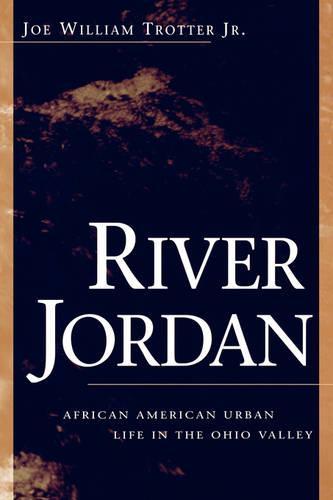
Since the nineteenth century, the Ohio River has represented a great divide for African Americans. It provided a passage to freedom along the underground railroad, and during the industrial age, it was a boundary between the Jim Crow South and the urban North. The Ohio became known as the ""River Jordan,"" symbolizing the path to the promised land. In the urban centers of Pittsburgh, Cincinnati, Louisville, and Evansville, blacks faced racial hostility from outside their immediate neighborhoods as well as class, color, and cultural fragmentation among themselves. Yet despite these pressures, African Americans were able to create vibrant new communities as former agricultural workers transformed themselves into a new urban working class. Unlike most studies of black urban life, Trotter's work considers several cities and compares their economic conditions, demographic makeup, and political and cultural conditions. Beginning with the arrival of the first blacks in the Ohio Valley, Trotter traces the development of African American urban centers through the civil rights movement and the developments of recent years.
Full Product Details
Author: Joe William Trotter
Publisher: The University Press of Kentucky
Imprint: The University Press of Kentucky
Dimensions:
Width: 15.20cm
, Height: 1.20cm
, Length: 22.90cm
Weight: 0.330kg
ISBN: 9780813109503
ISBN 10: 0813109507
Pages: 218
Publication Date: 19 March 1998
Audience:
General/trade
,
College/higher education
,
General
,
Undergraduate
Format: Paperback
Publisher's Status: Active
Availability: Out of print, replaced by POD

We will order this item for you from a manufatured on demand supplier.
Reviews
As a general study of black urban life and with particular important insights into the complexity of the Ohio Valley region, River Jordan is essential reading. -- Ohio Valley History A wide-ranging work of synthesis, covering such themes as the migration of rural southern blacks, the participation of blacks in the urban political economy and their role in the struggle for justice. -- Northwest Ohio Quarterly In a tightly crafted synthesis of African American history in the Ohio Valley, Joe Trotter examines black life in four important urban communities: Cincinnati, Evansville, Louisville, and Pittsburgh. -- Journal of Appalachian Studies Covers substantial intellectual territory.... Represents a novel and creative approach to black urban history. It provides an important model for future scholars. -- Journal of American History Contributes greatly to our understanding of urban problems. -- Pennsylvania History Successfully synthesizes the work on the urban life of African Americans.... An excellent book. -- Ohio History Illuminates the impact of the Ohio River in the context of the larger American story. -- Now & Then Synthesizes the scholarship of the past two decades that has examined blacks who lived in Pittsburgh, Cincinnati, Louisville, and Evansville. -- Journal of Illinois History Covers substantial intellectual territory. -- Journal of American History Summarizes most of the existing scholarship on four African American cities: Pittsburgh, Cincinnati, Louisville, and Evansville. -- Indiana Magazine of History By illuminating the connections among racism, deindustrialization, and the continuing transformation of rural southern blacks into new urban workers, Trotter contributes significantly to our understanding of the contemporary urban crisis. -- Henry L. Taylor, SUNY Buffalo The Ohio River Valley traditionally has held a major symbolic significance for African Americans as the cultural and geographic line of demarcation between slavery and freedom, oppression and opportunity, despair and hope. Trotter searches for regional themes of the black experience in Pittsburgh, Cincinnati, Louisville, and Evansville. -- Choice Presents a comprehensive overview of African-American urban life from colonial days to about 1960. -- American Historical Review
Contributes greatly to our understanding of urban problems. -- Pennsylvania History Successfully synthesizes the work on the urban life of African Americans.... An excellent book. -- Ohio History Synthesizes the scholarship of the past two decades that has examined blacks who lived in Pittsburgh, Cincinnati, Louisville, and Evansville. -- Journal of Illinois History In a tightly crafted synthesis of African American history in the Ohio Valley, Joe Trotter examines black life in four important urban communities: Cincinnati, Evansville, Louisville, and Pittsburgh. -- Journal of Appalachian Studies Covers substantial intellectual territory.... Represents a novel and creative approach to black urban history. It provides an important model for future scholars. -- Journal of American History Summarizes most of the existing scholarship on four African American cities: Pittsburgh, Cincinnati, Louisville, and Evansville. -- Indiana Magazine of History The Ohio River Valley traditionally has held a major symbolic significance for African Americans as the cultural and geographic line of demarcation between slavery and freedom, oppression and opportunity, despair and hope. Trotter searches for regional themes of the black experience in Pittsburgh, Cincinnati, Louisville, and Evansville. -- Choice As a general study of black urban life and with particular important insights into the complexity of the Ohio Valley region, River Jordan is essential reading. -- Ohio Valley History Illuminates the impact of the Ohio River in the context of the larger American story. -- Now & Then A wide-ranging work of synthesis, covering such themes as the migration of rural southern blacks, the participation of blacks in the urban political economy and their role in the struggle for justice. -- Northwest Ohio Quarterly Covers substantial intellectual territory. -- Journal of American History By illuminating the connections among racism, deindustrialization, and the continuing transformation of rural southern blacks into new urban workers, Trotter contributes significantly to our understanding of the contemporary urban crisis. -- Henry L. Taylor, SUNY Buffalo Presents a comprehensive overview of African-American urban life from colonial days to about 1960. -- American Historical Review
<p> Contributes greatly to our understanding of urban problems. -- Pennsylvania History
Contributes greatly to our understanding of urban problems. -- Pennsylvania History
Contributes greatly to our understanding of urban problems. -- <i>Pennsylvania History</i></p>
Author Information
Joe William Trotter Jr. is Giant Eagle Professor of History and Social Justice and director of the Center for Africanamerican Urban Studies and the Economy (CAUSE) at Carnegie Mellon University. He is the author or coauthor of numerous publications, including Race and Renaissance: African Americans in Pittsburgh since World War II, Black Milwaukee: The Making of an Industrial Proletariat, 1915--1945, and Workers on Arrival: Black Labor in the Making of America.