Overview
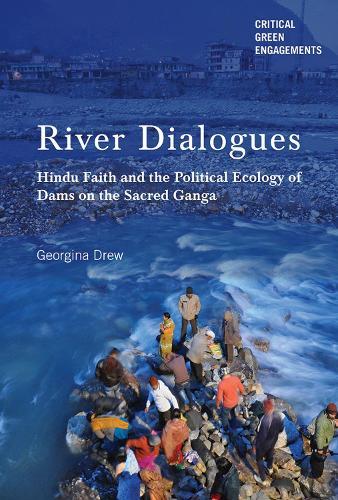
India’s sacred Ganga River is arguably one of the most iconic sites for worship, with a continuity of rituals for the living and the dead that span over two millennia. Along the river, from high in the Himalayas to the vast plains below, people gather daily to worship the Ganga through prayer and song. But large government-sponsored dams threatened to upend these practices.In River Dialogues, Georgina Drew offers a detailed ethnographic engagement with the social movements contesting hydroelectric development on the Ganga. The book examines the complexity of the cultural politics that, on the one hand, succeeded in influencing an unprecedented reversal of government plans for three contested hydroelectric projects, and how, on the other hand, this decision sparked ripples of discontent after being paired with the declaration of a conservation zone where the projects were situated. The book follows the work of women who were initially involved in efforts to stop the disputed projects. After looking to their discourses and actions, Drew argues for the use of a political ecology analysis that incorporates the everyday practice and everyday religious connections that animated the cultural politics of development. Drew offers a nuanced understanding of the struggles that communities enact to assert their ways of knowing and caring for resources that serves as an example for others critically engaging with the growing global advocacy of the “green economy” model for environmental stewardship.
Full Product Details
Author: Georgina Drew
Publisher: University of Arizona Press
Imprint: University of Arizona Press
Dimensions:
Width: 15.40cm
, Height: 2.50cm
, Length: 23.10cm
Weight: 0.528kg
ISBN: 9780816535101
ISBN 10: 0816535108
Pages: 264
Publication Date: 30 April 2017
Audience:
Professional and scholarly
,
Professional & Vocational
Format: Hardback
Publisher's Status: Active
Availability: Out of stock

The supplier is temporarily out of stock of this item. It will be ordered for you on backorder and shipped when it becomes available.
Reviews
“A remarkable book, combining rigorous analysis, original methodology, and insightful conclusions. Drew has woven the various arguments about damming the Ganges into an engaging narrative in this model of careful research and clear writing.”—Mary Evelyn Tucker, co-editor of the Routledge Handbook of Religion and Ecology“Based on years of ethnographic research, this breakthrough text, with its explicit focus on gendered dynamics and disparities, is a nuanced, insightful, and essential read. Highly recommended for students and scholars in the environmental social sciences and humanities.”—Barbara Rose Johnston, Center for Political Ecology “An exceptionally well documented and engaging account of the gendered and religious dimensions of social movements debating the Ganges’s natural and constructed future forms. Drew skillfully argues for more nuanced approaches to the anthropology of environmental social movements, as well as for greater inclusion of lay people in natural resources decision making.” — Mary M. Cameron, Professor of Anthropology, Florida Atlantic University
A remarkable book, combining rigorous analysis, original methodology, and insightful conclusions. Drew has woven the various arguments about damming the Ganges into an engaging narrative in this model of careful research and clear writing. -Mary Evelyn Tucker, co-editor of the Routledge Handbook of Religion and Ecology Based on years of ethnographic research, this breakthrough text, with its explicit focus on gendered dynamics and disparities, is a nuanced, insightful, and essential read. Highly recommended for students and scholars in the environmental social sciences and humanities. -Barbara Rose Johnston, Center for Political Ecology An exceptionally well documented and engaging account of the gendered and religious dimensions of social movements debating the Ganges's natural and constructed future forms. Drew skillfully argues for more nuanced approaches to the anthropology of environmental social movements, as well as for greater inclusion of lay people in natural resources decision making. - Mary M. Cameron, Professor of Anthropology, Florida Atlantic University
A remarkable book, combining rigorous analysis, original methodology, and insightful conclusions. Drew has woven the various arguments about damming the Ganges into an engaging narrative in this model of careful research and clear writing. -Mary Evelyn Tucker, co-editor of the Routledge Handbook of Religion and Ecology Based on years of ethnographic research, this breakthrough text, with its explicit focus on gendered dynamics and disparities, is a nuanced, insightful, and essential read. Highly recommended for students and scholars in the environmental social sciences and humanities. -Barbara Rose Johnston, Center for Political Ecology An exceptionally well documented and engaging account of the gendered and religious dimensions of social movements debating the Ganges's natural and constructed future forms. Drew skillfully argues for more nuanced approaches to the anthropology of environmental social movements, as well as for greater inclusion of lay people in natural resources decision making. - Mary M. Cameron, Professor of Anthropology, Florida Atlantic University
Author Information
Georgina Drew is an assistant professor in the Department of Anthropology and Development Studies at the University of Adelaide. She has been widely published in scholarly outlets, including American Anthropologist, Journal for the Study of Religion, Nature and Culture, and South Asia.