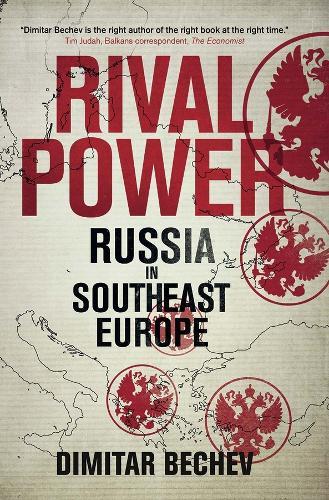
Full Product Details
Author: Dimitar Bechev
Publisher: Yale University Press
Imprint: Yale University Press
Dimensions:
Width: 14.00cm
, Height: 0.30cm
, Length: 21.00cm
Weight: 0.544kg
ISBN: 9780300219135
ISBN 10: 030021913
Pages: 320
Publication Date: 22 August 2017
Audience:
General/trade
,
General
Format: Hardback
Publisher's Status: Active
Availability: Out of stock

The supplier is temporarily out of stock of this item. It will be ordered for you on backorder and shipped when it becomes available.
Reviews
It would be good to say that this book is a valuable addition to the canon. It is not. When it comes to the issue of Russia, the Balkans and the wider region of south-eastern Europe it is the canon because no one else has written about it. Dimitar Bechev is the right author of the right book at the right time. His book covers an increasingly important topic. He is Bulgarian, speaks the relevant languages, has all the right credentials and has done everyone interested in both Russia and south-eastern Europe a huge service. Bechev has examined Russia's relations with the region both in terms of individual countries and by examining the key fields, such energy, soft power and the media. Until now it has been common in the west to use stereotypes and cliches to describe most of the relationships Russia has with the region. That means talking about traditional , historical or religious links. In fact, as Bechev deflty shows, those relationships have always been far more complex than the cliches would have outsiders believe. Likewise Bechev argues that we always need to remember that Balkan politicians make decisions framed by their own interests, not by ideology, Slavic brotherhood, nostalgia or anything else. They are in fact champion tails who know exactly how to wag the Russian and western dogs, in a constant bid to play one off against the other and so extract maximum gain. In the last few years Russian activity in south-eastern Europe has tended to elicit alarm from Western policymakers who exaggerate its potential, a point demonstrated with several examples by Bechev. However as he points out, Russia and Vladimir Putin remain popular amongst people in the Orthodox parts of the region but local experts often know very little about Russia and are often motivated by anti-western grudges. Still, Bechev's book is a salutary warning. Russia is not such a great threat today to Western interests in this soft underbelly of Europe which stretches from the shores of the Adriatic to the Black Sea, yet at this time of declining confidence in western institutions and beliefs such as liberal democracy, those of us who believe in them would ignore what Russia is up to here at our peril. Bechev's book tells us exactly what they are doing, where and how to interpret all of this. -- Tim Judah
A sophisticated and cool-headed corrective to the crude image of Russian foreign policy favored by much of the Western press. -Foreign Affairs Masterly and meticulous. . . Bechev's nuanced and detailed account unpacks some misleading stereotypes. -Edward Lucas, CEPA Bechev's book on Russia's influence in the region [. . .] provides a much needed chronology of Russia's relations with the states of Southeast Europe. - Hamza Karcic, Europe-Asia Studies It would be good to say that this book is a valuable addition to the canon. It is not. When it comes to the issue of Russia, the Balkans and the wider region of south-eastern Europe it is the canon because no one else has written about it. Dimitar Bechev is the right author of the right book at the right time. -Tim Judah, political analyst for the Economist For the new 'Great Game' of geopolitical competition, look above all to the Balkans, a region where the impact of Russian energy, soft power, and covert operations are all at their strongest, and which has too long been neglected by Western governments and scholars alike. This excellent book is the best primer yet to this unfolding struggle, a scholarly, sympathetic and realistic analysis of the present situation and likely future developments, which deserves to be read widely and carefully. -Dr Mark Galeotti, head of the Centre for European Security at the Institute of International Relations Prague. At the time when it is fashionable to sound alarmist on Russia's return to the Balkans, Dimitar Bechev's Rival Power: Russia's Influence in the Southeast Europe provides a clear-eyed assessment of the opportunities and significant limits for Russia's power in the region. While providing the rich historical context for the ambiguous relationship, Bechev correctly notes the instrumental and highly transactional nature of Moscow's engagement with the Balkan states as a tool of diplomatic leverage with the West and a source of lucrative economic deals. The book may also serve as a cautionary note to those in Moscow who may harbor illusions that the path to securing geopolitical concessions from the West lies through reigniting instability and even ethnic conflict in the Balkans. It has never worked before. -Vladimir Frolov, foreign affairs columnist, Republic This timely and insightful analysis takes the Russian challenge to the stability of Southeast Europe seriously - and shows its limitations, despite the abundant opportunities created by local miscreants. -Pavel Baev, Nonresident Senior Fellow, Brookings Institution and Research Professor, Peace Research Institute Oslo (PRIO) Russia is back in the Balkans and ideology has little to do with it. In this engaging book, Dimitar Bechev argues that revival of Russia's influence in the region was made possible due to its pragmatism and tough-minded pursuit of material gains. Those viewing Russia as the new ideological warrior will be challenged in their beliefs -Andrew P. Tsygankov, Professor of International Relations, San Francisco State University.
For the new 'Great Game' of geopolitical competition, look above all to the Balkans, a region where the impact of Russian energy, soft power, and covert operations are all at their strongest, and which has too long been neglected by Western governments and scholars alike. This excellent book is the best primer yet to this unfolding struggle, a scholarly, sympathetic and realistic analysis of the present situation and likely future developments, which deserves to be read widely and carefully. -- Dr Mark Galeotti, head of the Centre for European Security at the Institute of International Relations Prague. It would be good to say that this book is a valuable addition to the canon. It is not. When it comes to the issue of Russia, the Balkans and the wider region of south-eastern Europe it is the canon because no one else has written about it. Dimitar Bechev is the right author of the right book at the right time. -Tim Judah, political analyst for the Economist -- Tim Judah For the new 'Great Game' of geopolitical competition, look above all to the Balkans, a region where the impact of Russian energy, soft power, and covert operations are all at their strongest, and which has too long been neglected by Western governments and scholars alike. This excellent book is the best primer yet to this unfolding struggle, a scholarly, sympathetic and realistic analysis of the present situation and likely future developments, which deserves to be read widely and carefully. -- Dr Mark Galeotti, head of the Centre for European Security at the Institute of International Relations Prague. -- Dr. Mark Galeotti At the time when it is fashionable to sound alarmist on Russia's return to the Balkans, Dimitar Bechev's Rival Power: Russia's Influence in the Southeast Europe provides a clear-eyed assessment of the opportunities and significant limits for Russia's power in the region. While providing the rich historical context for the ambiguous relationship, Bechev correctly notes the instrumental and highly transactional nature of Moscow's engagement with the Balkan states as a tool of diplomatic leverage with the West and a source of lucrative economic deals. The book may also serve as a cautionary note to those in Moscow who may harbor illusions that the path to securing geopolitical concessions from the West lies through reigniting instability and even ethnic conflict in the Balkans. It has never worked before. -- Vladimir Frolov, foreign affairs columnist, Republic.ru -- Vladimir Frolov This timely and insightful analysis takes the Russian challenge to the stability of Southeast Europe seriously - and shows its limitations, despite the abundant opportunities created by local miscreants. -- Pavel Baev, Nonresident Senior Fellow, Brookings Institution and Research Professor, Peace Research Institute Oslo (PRIO) -- Pavel Baev Russia is back in the Balkans and ideology has little to do with it. In this engaging book, Dimitar Bechev argues that revival of Russia's influence in the region was made possible due to its pragmatism and tough-minded pursuit of material gains. Those viewing Russia as the new ideological warrior will be challenged in their beliefs - Andrew P. Tsygankov, Professor of International Relations, San Francisco State University. -- Andrew P. Tsygankov
It would be good to say that this book is a valuable addition to the canon. It is not. When it comes to the issue of Russia, the Balkans and the wider region of south-eastern Europe it is the canon because no one else has written about it. Dimitar Bechev is the right author of the right book at the right time. His book covers an increasingly important topic. He is Bulgarian, speaks the relevant languages, has all the right credentials and has done everyone interested in both Russia and south-eastern Europe a huge service. Bechev has examined Russia's relations with the region both in terms of individual countries and by examining the key fields, such energy, soft power and the media. Until now it has been common in the west to use stereotypes and cliches to describe most of the relationships Russia has with the region. That means talking about traditional , historical or religious links. In fact, as Bechev deflty shows, those relationships have always been far more complex than the cliches would have outsiders believe. Likewise Bechev argues that we always need to remember that Balkan politicians make decisions framed by their own interests, not by ideology, Slavic brotherhood, nostalgia or anything else. They are in fact champion tails who know exactly how to wag the Russian and western dogs, in a constant bid to play one off against the other and so extract maximum gain. In the last few years Russian activity in south-eastern Europe has tended to elicit alarm from Western policymakers who exaggerate its potential, a point demonstrated with several examples by Bechev. However as he points out, Russia and Vladimir Putin remain popular amongst people in the Orthodox parts of the region but local experts often know very little about Russia and are often motivated by anti-western grudges. Still, Bechev's book is a salutary warning. Russia is not such a great threat today to Western interests in this soft underbelly of Europe which stretches from the shores of the Adriatic to the Black Sea, yet at this time of declining confidence in western institutions and beliefs such as liberal democracy, those of us who believe in them would ignore what Russia is up to here at our peril. Bechev's book tells us exactly what they are doing, where and how to interpret all of this. -- Tim Judah For the new 'Great Game' of geopolitical competition, look above all to the Balkans, a region where the impact of Russian energy, soft power, and covert operations are all at their strongest, and which has too long been neglected by Western governments and scholars alike. This excellent book is the best primer yet to this unfolding struggle, a scholarly, sympathetic and realistic analysis of the present situation and likely future developments, which deserves to be read widely and carefully. -- Dr Mark Galeotti, head of the Centre for European Security at the Institute of International Relations Prague. -- Dr. Mark Galeotti At the time when it is fashionable to sound alarmist on Russia's return to the Balkans, Dimitar Bechev's Rival Power: Russia's Influence in the Southeast Europe provides a clear-eyed assessment of the opportunities and significant limits for Russia's power in the region. While providing the rich historical context for the ambiguous relationship, Bechev correctly notes the instrumental and highly transactional nature of Moscow's engagement with the Balkan states as a tool of diplomatic leverage with the West and a source of lucrative economic deals. The book may also serve as a cautionary note to those in Moscow who may harbor illusions that the path to securing geopolitical concessions from the West lies through reigniting instability and even ethnic conflict in the Balkans. It has never worked before. -- Vladimir Frolov, foreign affairs columnist, Republic.ru -- Vladimir Frolov
Author Information
Dimitar Bechev is a research fellow at the Center for Slavic, Eurasian, and East European Studies at the University of North Carolina at Chapel Hill and a nonresident senior fellow at the Atlantic Council.