Overview
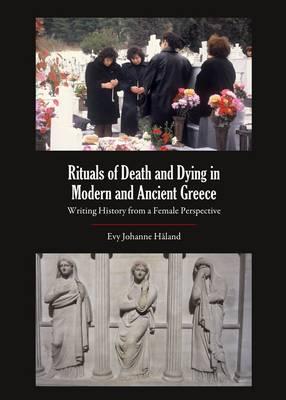
*Winner of the AFS Elli Köngäs-Maranda Prize 2016*Multidisciplinary or post-disciplinary research is what is needed when dealing with such complex subjects as ritual behaviour. This research, therefore, combines ethnography with historical sources to examine the relationship between modern Greek death rituals and ancient written and visual sources on the subject of death and gender.The central theme of this work is women's role in connection with the cult of the dead in ancient and modern Greece. The research is based on studies in ancient history combined with the author's fieldwork and anthropological analysis of today's Mediterranean societies. Since death rituals have a focal and lasting importance, and reflect the gender relations within a society, the institutions surrounding death may function as a critical vantage point from which to view society. The comparison is based on certain religious festivals that are dedicated to deceased persons and on other death rituals. Using laments, burials and the ensuing memorial rituals, the relationship between the cult dedicated to deceased mediators in both ancient and modern society is analysed. The research shows how the official ideological rituals are influenced by the domestic rituals people perform for their own dead, and vice versa, that the modern domestic rituals simultaneously reflect the public performances. As this cult has many parallels with the ancient official cult, the following questions are central: Can an analysis of modern public and domestic rituals in combination with ancient sources tell the reader more about the ancient death cult as a whole? What does such an analysis suggest about the relationship between the domestic death cult and the official? Since the practical performance of the domestic rituals was – and still remains – in the hands of women, it is crucial to discover the extent of their influence to elucidate the real power relations between women and men. This research represents a new contribution to earlier presentations of the Greek ""reality"", but mainly from the female perspective, which is highly significant since men produced most of the ancient sources. This means that the principal objective for this endeavour is to question the ways in which history has been written through the ages, to supplement the male with a female perspective, perhaps complementing an Olympian Zeus with a Chthonic Mother Earth. The research brings both ancient and modern worlds into mutual illumination; its relevance therefore transcends the Greek context both in time and space.
Full Product Details
Author: Evy Johanne Håland
Publisher: Cambridge Scholars Publishing
Imprint: Cambridge Scholars Publishing
Edition: Unabridged edition
Dimensions:
Width: 14.80cm
, Height: 4.80cm
, Length: 21.20cm
Weight: 1.043kg
ISBN: 9781443861274
ISBN 10: 1443861278
Pages: 690
Publication Date: 11 September 2014
Audience:
College/higher education
,
Professional and scholarly
,
Postgraduate, Research & Scholarly
,
Professional & Vocational
Format: Hardback
Publisher's Status: Active
Availability: Available To Order

We have confirmation that this item is in stock with the supplier. It will be ordered in for you and dispatched immediately.
Reviews
This is a very worthwhile book. In their broad thrust, the conclusions seem credible, illuminating, memorable even, and I am mostly convinced of the arguments. More importantly, potentially gendered roles in death rituals seem much more sharply focused. -John Manley, Sussex Archaeological Society; Journal of the Royal Anthropological Institute, 21: 3 (2015) The book is most valuable for its clear presentation of primary ethnographic research and careful, thought-provoking comparisons of modern and ancient Greek funerary rituals. [...] [It] is a substantial contribution to the burgeoning scholarship on Greek funerary rituals, gender studies, and ethnography in Greece. -Dr Carrie Sulosky Weaver, University of Pittsburgh; Classical Journal, 2015 Evy Johanne Haland's scholarship on women and death in Greece covers a broad temporal range, allowing her to draw comparisons between ancient texts and modern ritual practice. Her fieldwork in several different locations in Greece is impressive in its wealth of detailed observation, and extends beyond a study of women's role in death rituals to examine gender roles in religious pilgrimage and festivals. Although there has been extensive research carried out on Greek laments and women's prominence in death rituals, Haland broadens the discussion to an examination of the role of women in various religious practices. -Gail Holst-Warhaft, Cornell University This book considers in particular the role of gender in rites and rituals surrounding death and dying across time to the modern era. A comprehensive account, Haland takes historical, anthropological, and ethnographic approaches to understanding the significance of death and burial ritual behaviors. -Dr Cynthia Kosso, Northern Arizona University
The book is most valuable for its clear presentation of primary ethnographic research and careful, thought-provoking comparisons of modern and ancient Greek funerary rituals. [...] [It] is a substantial contribution to the burgeoning scholarship on Greek funerary rituals, gender studies, and ethnography in Greece. -Dr Carrie Sulosky Weaver, University of Pittsburgh; Classical Journal, 2015 Evy Johanne Haland's scholarship on women and death in Greece covers a broad temporal range, allowing her to draw comparisons between ancient texts and modern ritual practice. Her fieldwork in several different locations in Greece is impressive in its wealth of detailed observation, and extends beyond a study of women's role in death rituals to examine gender roles in religious pilgrimage and festivals. Although there has been extensive research carried out on Greek laments and women's prominence in death rituals, Haland broadens the discussion to an examination of the role of women in various religious practices. -Gail Holst-Warhaft, Cornell University This book considers in particular the role of gender in rites and rituals surrounding death and dying across time to the modern era. A comprehensive account, Haland takes historical, anthropological, and ethnographic approaches to understanding the significance of death and burial ritual behaviors. -Dr Cynthia Kosso, Northern Arizona University
Author Information
Dr Evy Johanne Håland is a Researcher in Bergen, Norway. Since 1983, she has conducted several periods of fieldwork in the Mediterranean, mainly in Greece and Italy, where she has also been conducting research on religious festivals since 1987. Her most important publications include, Greske fester, Moderne og Antikke: En sammenlignende undersøkelse av kvinnelige og mannlige verdier [Greek Festivals, Modern and Ancient: A Comparison of Female and Male Values]; Konkurrerende ideologier i gresk religion før og nå [Competing Ideologies in Greek Religion, Ancient and Modern]; and the edited book Women, Pain and Death: Rituals and Everyday-Life on the Margins of Europe and Beyond. Research for the completion of the present book has been funded via the EU's 7th framework programme, by a Marie Curie Intra-European Fellowship, hosted by the Department of Archaeology and History of Art, National and Kapodistrian University of Athens, Greece.