Overview
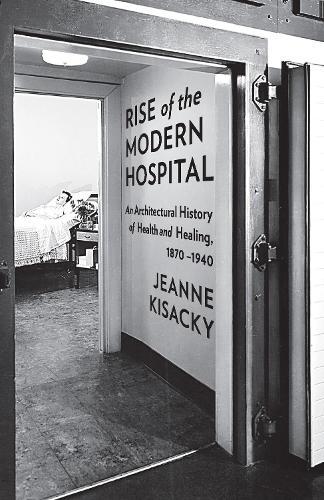
Rise of the Modern Hospital is a focused examination of hospital design in the United States from the 1870s through the 1940s. This understudied period witnessed profound changes in hospitals as they shifted from last charitable resorts for the sick poor to premier locations of cutting-edge medical treatment for all classes, and from low-rise decentralized facilities to high-rise centralized structures. Jeanne Kisacky reveals the changing role of the hospital within the city, the competing claims of doctors and architects for expertise in hospital design, and the influence of new medical theories and practices on established traditions. She traces the dilemma designers faced between creating an environment that could function as a therapy in and of itself and an environment that was essentially a tool for the facilitation of increasingly technologically assisted medical procedures. Heavily illustrated with floor plans, drawings, and photographs, this book considers the hospital building as both a cultural artifact, revelatory of external medical and social change, and a cultural determinant, actively shaping what could and did take place within hospitals.
Full Product Details
Author: Jeanne Kisacky
Publisher: University of Pittsburgh Press
Imprint: University of Pittsburgh Press
Dimensions:
Width: 17.80cm
, Height: 2.80cm
, Length: 25.40cm
Weight: 1.261kg
ISBN: 9780822944614
ISBN 10: 0822944618
Pages: 456
Publication Date: 21 November 2016
Audience:
Professional and scholarly
,
Professional & Vocational
Format: Hardback
Publisher's Status: Active
Availability: In Print

This item will be ordered in for you from one of our suppliers. Upon receipt, we will promptly dispatch it out to you. For in store availability, please contact us.
Reviews
“This is a monumental work on hospitals in the United States from the 1870s to World War II, an influential period that saw the end of the pavilion plan and the advent of the high-rise hospital. As the first book-length study to address the architectural implications of the germ theory, it is destined to become a classic in the history of hospitals.” —Annmarie Adams, author of Medicine by Design: The Architect and the Modern Hospital, 1893–1943 “In her meticulously researched history of modern American hospitals, Kisacky examines the frequently elusive purposes and consequences of architectural design. Forged at the confluence of shifting medical requirements and broader cultural, civic, and economic values, her hospitals mirror in form and function the collective understanding of human well-being.” —Guenter B. Risse, author of Mending Bodies, Saving Souls: A History of Hospitals.
This is a monumental work on hospitals in the United States from the 1870s to World War II, an influential period that saw the end of the pavilion plan and the advent of the high-rise hospital. As the first book-length study to address the architectural implications of the germ theory, it is destined to become a classic in the history of hospitals. -Annmarie Adams, author of Medicine by Design: The Architect and the Modern Hospital, 1893-1943 In her meticulously researched history of modern American hospitals, Kisacky examines the frequently elusive purposes and consequences of architectural design. Forged at the confluence of shifting medical requirements and broader cultural, civic, and economic values, her hospitals mirror in form and function the collective understanding of human well-being. -Guenter B. Risse, author of Mending Bodies, Saving Souls: A History of Hospitals.
This is a monumental work on hospitals in the United States from the 1870s to World War II, an influential period that saw the end of the pavilion plan and the advent of the high-rise hospital. As the first book-length study to address the architectural implications of the germ theory, it is destined to become a classic in the history of hospitals. -Annmarie Adams, author of Medicine by Design: The Architect and the Modern Hospital, 1893-1943 In her meticulously researched history of modern American hospitals, Kisacky examines the frequently elusive purposes and consequences of architectural design. Forged at the confluence of shifting medical requirements and broader cultural, civic, and economic values, her hospitals mirror in form and function the collective understanding of human well-being. -Guenter B. Risse, author of Mending Bodies, Saving Souls: A History of Hospitals.
Author Information
Jeanne Kisacky is an independent scholar. She has taught classes on the topic of health and architecture as an adjunct instructor at Cornell University, Binghamton University, and Syracuse University.