Overview
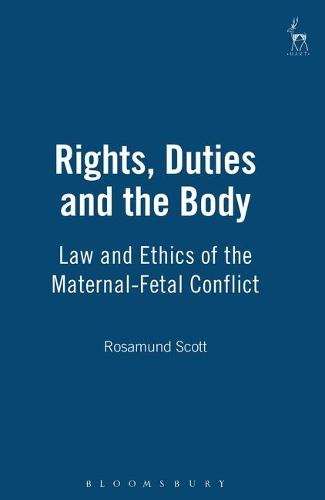
If a pregnant woman refuses medical treatment needed by the fetus - for instance for religious reasons - or conducts some aspect of her life in a way which risks fetal harm, there may arise an instance of ""maternal-fetal conflict"". This is an unfortunate term, since pregant women are generally renowned for their self-sacrificing behaviour, but it may well reflect the reality of certain maternal choices and actions. Should a pregnant woman have the legal right to refuse medical treatment needed by the fetus, or should she owe it a legal duty of care which precludes her acting in ways which may harm it? Does the debate hinge simply upon the appropriateness, or otherwise, of legally compelling presumed moral obligations, or is it more complex than this? Indeed, what are a pregnant woman't moral obligations towards her fetus? In England and in some US states, courts have held that a pregnant woman has the right to refuse medical treatment needed by the fetus. In similar fashion, the idea of a general maternal legal duty of care toward the fetus has been rejected, most recently in Canada. The cases, however, leave the impression of an uncomfortable split between the ethics and the law, as if the problem were entirely one of not legally enforcing presumed moral duties. The effect is both puzzling and polarising: puzzling in that the cases leave unanswered - as largely they must - the huge question of a pregnant woman's moral rights and duties; polarising in that the cases leave troubling tensions about a pregnant woman's rights in the face of fetal harm or death. The tendency is to deny these by ever more strongly asserting a woman's rights. In turn this encourages a reaction in favour of fetal rights, one which is unlikely to attend to a woman's interests and difficulties in pregnancy. This could have serious legal repercussions for various instances of maternal-fetal conflict, including in those US states or other jurisdictions which have yet to address these issues. It might also increase the pressures on the issue of abortion. This book, which seeks a way between these polarised positions, tries to explain and justify a woman's moral and legal rights in pregnancy and, at the same time, to explore the extent of her moral duties toward the fetus. The aim is to resolve, as far as possible, the ethical, legal and social tensions which undoubtedly surround this area. Innovatively in work on this issue (and unusually in the field of medical law and ethics) the author adopts a joint philosophical and legal approach directed to issues both of principle and policy, revealing strong conceptual links between the ethics and the law. In addition to an ethical exploration of the maternal-fetal relationship, the author explores and analyses the relevant English, American, Canadian (and sometimes Australian) arguments from the law of treatment refusal, abortion, tort and rescue, as well as relevant jurisprudence from the European Court of Human Rights. This important book breaks new ground and will be of great interest to academics in law and philosophy, lawyers, health professionals, policy-makers and students of medical law and ethics. ""It is rare to find a book which so skilfully combines legal and moral analysis of a controversial medical issue. Rosamund Scott has produced what is undoubtedly one of the finest pieces of medico-legal writing of recent years. This is a clever, human and immensely readable work."" Alexander McCall Smith, Professor of Medical Law, University of Edinburgh ""This book concerns one of the most personally agonizing and morally complex issues in medical ethics. It is a work of great philosophical sophistication, combining breadth of vision with acute sensitivity to the nuances of women's experiences. It will soon become the standard work in philosophical, legal and political debate on maternal-fetal conflicts."" Roger Crisp, Uehiro Fellow and Tutor in Philosophy, St Anne's College, Oxford
Full Product Details
Author: Rosamund Scott
Publisher: Bloomsbury Publishing PLC
Imprint: Hart Publishing
Dimensions:
Width: 15.60cm
, Height: 3.70cm
, Length: 23.40cm
Weight: 0.930kg
ISBN: 9781841131344
ISBN 10: 1841131342
Pages: 480
Publication Date: 05 August 2002
Audience:
College/higher education
,
Professional and scholarly
,
Undergraduate
,
Postgraduate, Research & Scholarly
Format: Hardback
Publisher's Status: Active
Availability: Manufactured on demand 
We will order this item for you from a manufactured on demand supplier.
Table of Contents
General introduction - the problem and the issues raised: what is the maternal-fetal conflict ?; the relationship between the ethics and the law of the maternal-fetal conflict; the structure of the book. Part 1 The moral relationship between a pregnant woman and her fetus - exploring a woman's moral rights and duties: the relation of the fetus to the pregnant woman - autonomy, rights and duties - some brief theoretical groundwork, the fetus of the future child?, the moral status of the fetus, conclusions; the relation of the pregnant woman to the fetus - the interface between her moral rights and duties - introduction, the argument from rights, the argument from duty, conclusions; conclusions to part 1. Part 2 The legal arguments from rights: introduction to the maternal-fetal cases and the law of treatment refusal - setting the scene, the law of treatment refusal, the most recent caesarean cases, conclusions; understanding the values underlying and justifying a pregnant woman's legal right to refuse treatment - introduction, the development of the ordinary competent patient's right to refuse treatment, setting Casey in context, the relationship between a woman's right to refuse treatment (or abort) and her responsibility toward the fetus, postscript - first thoughts on denying a pregnant woman the legal right to refuse treatment, conclusions; conclusions to part 2. Part 3 The legal arguments from duty: technical arguments from abortion law - introduction, the relevance of further aspects of abortion law to the maternal-fetal conflict, conclusions; arguments from tort law; - introduction, third-party liability for prenatal harm, the idea of maternal liability; arguments from rescue law - introduction, the law of rescue, moral and policy reasons against the compelled caesarean section; moral, policy and legal reasons against compelled ingestion of the beneficial pill , postscript - reflections on cases concerning incompetents, conclusions; conclusions to part 3. Concluding the arguments.
Reviews
This is an insightful exploration of a difficult issue, and will be of interest to academics in law and philosophy, lawyers, policy makers, health professionals and students of medical law and ethics. The Review Editor ChildRIGHT November 2002 Scott is to be congratulated on a book that makes a valuable and original contribution on an important subject. Her approach is thoughtful and thorough. She identifies and confronts the issues in an honest and open-minded manner. In an area that has all too often been dominated by assertions rather than arguments, Scott offers a sophisticated approach and close and careful analysis. Her book is a rich resource. John Seymour Modern Law Review January 2004
This is an insightful exploration of a difficult issue, and will be of interest to academics in law and philosophy, lawyers, policy makers, health professionals and students of medical law and ethics. -- The Review Editor * ChildRIGHT * Scott is to be congratulated on a book that makes a valuable and original contribution on an important subject. Her approach is thoughtful and thorough. She identifies and confronts the issues in an honest and open-minded manner. In an area that has all too often been dominated by assertions rather than arguments, Scott offers a sophisticated approach and close and careful analysis. Her book is a rich resource. -- John Seymour * Modern Law Review *
Author Information
Rosamund Scott is Professor of Medical Law and Ethics at King's College, London and a barrister.
Tab Content 6
Author Website:
Countries Available
All regions
|