Overview
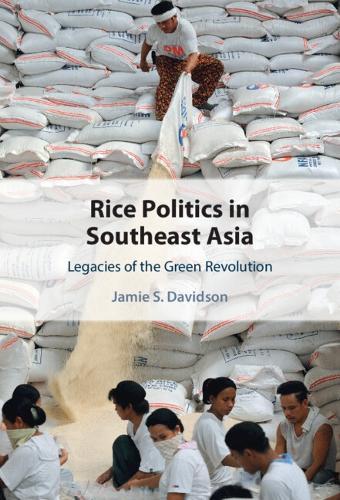
Rice is the foremost foodstuff in terms of caloric intake for Southeast Asians and for bolstering national food security, yet writings on the region's politics have overlooked the crucial role rice production programs have played in shaping signal political and development outcomes. In this comparative historical analysis, Jamie S. Davidson argues that the performance legitimacy stemming from the Green Revolution of the 1960s and 1970s, along with the formation of rice import regimes, best explain durable rice protectionism in the Philippines, Malaysia, and Indonesia, the region's large rice importers. Even though the direct effects of the Green Revolution eventually faded, he demonstrates that past policy success can inform policymaking for decades after remarkable sectoral performance subsides. This innovative account and its conclusions will be of interest to scholars and students of development studies, comparative political economy and Asian studies.
Full Product Details
Author: Jamie S. Davidson (National University of Singapore)
Publisher: Cambridge University Press
Imprint: Cambridge University Press
Weight: 0.649kg
ISBN: 9781009624640
ISBN 10: 1009624644
Pages: 332
Publication Date: 19 February 2026
Audience:
General/trade
,
General
Format: Hardback
Publisher's Status: Active
Availability: Manufactured on demand

We will order this item for you from a manufactured on demand supplier.
Reviews
'The author deeply narrates the historical footprint of the transformative Green Revolution in three rice-importing nations — Malaysia, the Philippines, and Indonesia. Unlike their successful neighbours, Thailand and Vietnam, they adopted protectionist policies to preserve 'rice sovereignty and security,' but this came at the cost of inefficiencies, market distortions, and long-term structural weaknesses.' Fatimah Mohamed Arshad, Universiti Putra Malaysia 'Rice Politics in Southeast Asia provides a comparative political economy analysis across Indonesia, Malaysia, and the Philippines which is unparalleled in its breadth, depth, intricacy, and insight. Not since Richard Doner's 1991 study of the automobile industry has any scholar produced a study combining such fine-grained treatment of a single sector with such breadth of coverage. This is a landmark contribution to the study of Southeast Asia.' John Sidel, London School of Economics and Political Science 'This important book explains why rice politics have been so fraught in key Southeast Asian countries. Placing the Green Revolution and its legacy at the center of the story, it explains why, despite fierce criticism and obvious policy failures, rice protectionism has endured so long in Indonesia and Malaysia, and, until very recently, in the Philippines as well. An essential read for any self-respecting comparativist of Southeast Asia and beyond.' Mark R. Thompson, City University of Hong Kong
Author Information
Jamie S. Davidson teaches political science at the National University of Singapore where he also heads the Asia Research Institute's Food Politics and Society cluster.