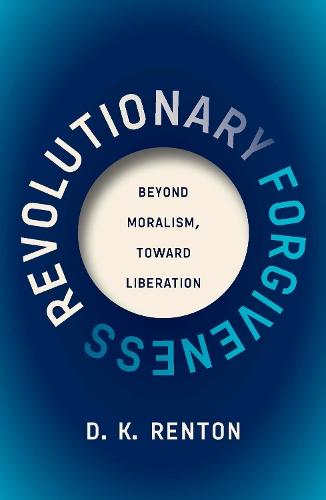
Full Product Details
Author: D. K. Renton
Publisher: Haymarket Books
Imprint: Haymarket Books
ISBN: 9798888905982
Pages: 304
Publication Date: 12 May 2026
Audience:
General/trade
,
General
Format: Paperback
Publisher's Status: Forthcoming
Availability: Not yet available

This item is yet to be released. You can pre-order this item and we will dispatch it to you upon its release.
Reviews
""Renton rescues ‘forgiveness' from the pulpit and returns it, bloodied but lucid, to history. With a barrister’s intolerance for cant and a socialist’s contempt for vicarious absolution, he searches the historical archives from Eleanor Marx to the South African compromise, from Javert’s chilly legalism to Fanon’s revolutionary humanism, and shows that mercy without justice is merely the alibi of the strong — but forgiveness with justice is radical realpolitik."" —Richard Seymour, author of Disaster Nationalism: The Downfall of Liberal Civilization “How can the oppressed of the world forgive while colonial capitalism continues to kill? In this excellent book, David Renton shows that many theorists have failed in their thinking by placing forgiveness first. Instead, revolution must come first. Using compelling examples from apartheid South Africa, the Shoah, Israel-Palestine, and key touchpoints in socialist history, Renton explores what it would take for oppressed people to forgive their persecutors. What emerges is a portrait of the possibilities of healing, and a vision of forgiveness underpinned by radical social change.” —Rabbi Lev Taylor, educator for the Queer Yeshiva “Reading Renton will always teach you something new and valuable about the world.” —Daniel Trilling, author of If We Tolerate This: How The British Establishment Made the Far Right Respectable “This book is at once an insightful exploration of the politics of forgiveness and a passionate case for the interdependence of personal and social revolution. Too often, forgiveness becomes a substitute for social transformation; David Renton instead convinces us to recognise it as a necessary part of the repertoire and vocabulary of revolution.” —Dan Swain, author of None So Fit to Break the Chains: Marx’s Ethics of Self-Emancipation Praise for The New Authoritarians ""Renton is a stalwart of the anti-racist movement and his book is essential reading for anyone who wants to understand the changing nature of the right"" —Sasha Das Gupta, organiser, Momentum
""Renton rescues ‘forgiveness' from the pulpit and returns it, bloodied but lucid, to history. With a barrister’s intolerance for cant and a socialist’s contempt for vicarious absolution, he searches the historical archives from Eleanor Marx to the South African compromise, from Javert’s chilly legalism to Fanon’s revolutionary humanism, and shows that mercy without justice is merely the alibi of the strong — but forgiveness with justice is radical realpolitik."" —Richard Seymour, author of Disaster Nationalism: The Downfall of Liberal Civilization “How can the oppressed of the world forgive while colonial capitalism continues to kill? In this excellent book, David Renton shows that many theorists have failed in their thinking by placing forgiveness first. Instead, revolution must come first. Using compelling examples from apartheid South Africa, the Shoah, Israel-Palestine, and key touchpoints in socialist history, Renton explores what it would take for oppressed people to forgive their persecutors. What emerges is a portrait of the possibilities of healing, and a vision of forgiveness underpinned by radical social change.” —Rabbi Lev Taylor, educator for the Queer Yeshiva “This book is at once an insightful exploration of the politics of forgiveness and a passionate case for the interdependence of personal and social revolution. Too often, forgiveness becomes a substitute for social transformation; David Renton instead convinces us to recognise it as a necessary part of the repertoire and vocabulary of revolution.” —Dan Swain, author of None So Fit to Break the Chains: Marx’s Ethics of Self-Emancipation Praise for The New Authoritarians ""A essential intervention that helps us understand the political shifts taking place on the right, and points a way for the left to halt an unfolding disaster"" —Dan Trilling, Bloody Nasty People: The Rise of Britain's Far Right ""Renton is a stalwart of the anti-racist movement and his book is essential reading for anyone who wants to understand the changing nature of the right"" —Sasha Das Gupta, organiser, Momentum
“How can the oppressed of the world forgive while colonial capitalism continues to kill? In this excellent book, David Renton shows that many theorists have failed in their thinking by placing forgiveness first. Instead, revolution must come first. Using compelling examples from apartheid South Africa, the Shoah, Israel-Palestine, and key touchpoints in socialist history, Renton explores what it would take for oppressed people to forgive their persecutors. What emerges is a portrait of the possibilities of healing, and a vision of forgiveness underpinned by radical social change.” —Rabbi Lev Taylor, educator for the Queer Yeshiva “This book is at once an insightful exploration of the politics of forgiveness and a passionate case for the interdependence of personal and social revolution. Too often, forgiveness becomes a substitute for social transformation; David Renton instead convinces us to recognise it as a necessary part of the repertoire and vocabulary of revolution.” —Dan Swain, author of None So Fit to Break the Chains: Marx’s Ethics of Self-Emancipation Praise for The New Authoritarians ""A essential intervention that helps us understand the political shifts taking place on the right, and points a way for the left to halt an unfolding disaster"" —Dan Trilling, Bloody Nasty People: The Rise of Britain's Far Right ""Renton is a stalwart of the anti-racist movement and his book is essential reading for anyone who wants to understand the changing nature of the right"" —Sasha Das Gupta, organiser, Momentum
Author Information
D. K. Renton is a barrister and historian. His work has appeared in The London Review of Books, The Guardian, Jacobin, Spectre, and Tempest. Renton is a member of rs21. His books include The New Authoritarians: Convergence on the Right and Fascism: History and Theory. He is based in London.