Overview
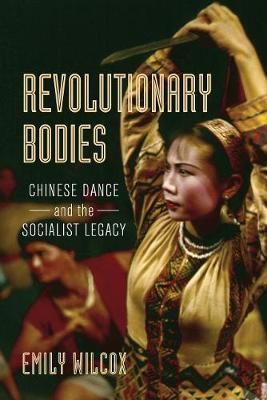
A free ebook version of this title is available through Luminos, University of California Press’s Open Access publishing program. Visit www.luminosoa.org to learn more. This book is freely available in an open access edition thanks to TOME (Toward an Open Monograph Ecosystem)—a collaboration of the Association of American Universities, the Association of University Presses, and the Association of Research Libraries. Learn more at the TOME website, available at: openmonographs.org. Revolutionary Bodies is the first English-language primary source–based history of concert dance in the People’s Republic of China. Combining over a decade of ethnographic and archival research, Emily Wilcox analyzes major dance works by Chinese choreographers staged over an eighty-year period from 1935 to 2015. Using previously unexamined film footage, photographic documentation, performance programs, and other historical and contemporary sources, Wilcox challenges the commonly accepted view that Soviet-inspired revolutionary ballets are the primary legacy of the socialist era in China’s dance field. The digital edition of this title includes nineteen embedded videos of selected dance works discussed by the author.
Full Product Details
Author: Emily Wilcox
Publisher: University of California Press
Imprint: University of California Press
Dimensions:
Width: 15.20cm
, Height: 1.80cm
, Length: 22.90cm
Weight: 0.454kg
ISBN: 9780520300576
ISBN 10: 0520300572
Pages: 322
Publication Date: 23 October 2018
Audience:
Professional and scholarly
,
Professional & Vocational
Format: Paperback
Publisher's Status: Active
Availability: Out of stock

The supplier is temporarily out of stock of this item. It will be ordered for you on backorder and shipped when it becomes available.
Reviews
Revolutionary Bodies promises to be an important reference in the fields of dance, performance, and Chinese studies. . . . [and] stands out for its critical insights. * TDR: The Drama Review * . . . provides a significant introduction of Chinese dance to English readers. * Dance Research Journal *
Provides a significant introduction of Chinese dance to English readers. * Dance Research Journal * Revolutionary Bodies promises to be an important reference in the fields of dance, performance, and Chinese studies. . . . [and] stands out for its critical insights. * TDR: The Drama Review * Provides new insights into the interactions among ethnographic forms of knowledge, artistic modes of representation, and the changing political imperatives of the past century. * Modern Chinese Literature and Culture * A wonderfully rich source about the development of dance in China and lays a very strong foundations for future research on the topic. * Dance Research * Keen observation and critical analysis of various dance productions unveil a diverse landscape of socialist dance and reaffirm the multiplicity of Chinese socialist culture. * Asian Theatre Journal * Ultimately, Revolutionary Bodies makes an incredible mark on the disciplines of dance studies and Chinese cultural studies. Wilcox's scholarship is a model of thorough research, accessible writing, and sharp argumentation. More important, it introduces us to the field of Chinese dance by following its birth and growth in concert with the dynamics of contemporary Chinese history and offering us a complex picture of an important world genre. * Theater Survey * Wilcox's extensive survey leaves room for reflecting on contentions emerging from the role of Chinese dance in promoting state interests both nationally and abroad. . . . In lieu of directly addressing the political tension, Wilcox's conclusion remains open for readers to consider the socialist legacy that has transformed the artists' worldview and the need to reinvigorate the radical possibility of pluralism espoused by it for twenty-first-century post-socialist China. * University of Michigan Law Library *
Author Information
Emily Wilcox is Assistant Professor of Modern Chinese Studies in the Department of Asian Languages and Cultures at the University of Michigan, Ann Arbor.