|
|
|||
|
||||
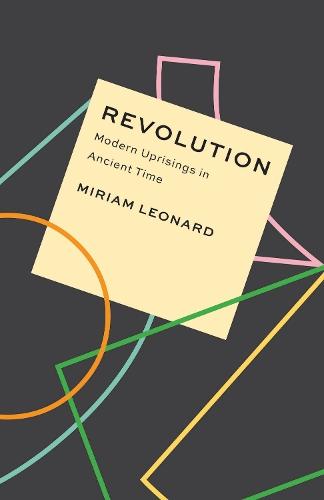
OverviewA consideration of how modern revolutions have employed tropes of classical antiquity. Despite its Latin etymology, ""revolution"" in its modern understanding arguably did not exist in antiquity, and revolution as we know it today is considered by many theorists to be a term born in modernity. While they certainly had times of momentous political upheaval, the Greeks and Romans tended to understand such events as part of a narrative of political continuity rather than novelty or rupture. Nevertheless, modern revolutions have repeatedly appropriated tropes of classical discourse, such as freedom, tyranny, tragedy, and fraternity. With this book, Miriam Leonard offers a conceptual history of revolution, unraveling modernity's yearning for the new and questioning why ancient concepts continue to play such an important role in political uprisings. Leonard looks at examples of appeals to antiquity during the French and Haitian Revolutions, in anticolonial struggles, and feminist and queer movements and considers works of theorists such as Karl Marx, Hannah Arendt, and Sigmund Freud that foreground an engagement with antiquity. Full Product DetailsAuthor: Miriam LeonardPublisher: The University of Chicago Press Imprint: University of Chicago Press Dimensions: Width: 14.00cm , Height: 1.30cm , Length: 21.60cm Weight: 0.141kg ISBN: 9780226843056ISBN 10: 022684305 Pages: 112 Publication Date: 28 November 2025 Audience: College/higher education , Postgraduate, Research & Scholarly Format: Paperback Publisher's Status: Active Availability: Manufactured on demand We will order this item for you from a manufactured on demand supplier. Table of ContentsList of Illustrations Introduction Time Genre Fraternity Epilogue Acknowledgments Notes Works Cited IndexReviews“Leonard is a wonderful guide to the thinking that grounds the violent and transformative politics of revolution, and, above all, its obsession with antiquity. Her incisive, revelatory and engaging account brilliantly analyses how an image of the past feeds the heady thrill and self-deceptive failures at the heart of modern desires to change the world.” -- Simon Goldhill, University of Cambridge Author InformationMiriam Leonard is professor of Greek literature and its reception at University College London. She is the author of Athens in Paris, How to Read Ancient Philosophy, Socrates and the Jews, and Tragic Modernities. She is the editor of Derrida and Antiquity and coeditor of Tragedy and the Idea of Modernity (with Joshua Billings) and Laughing with Medusa: Classical Myth and Feminist Thought (with Vanda Zajko). Tab Content 6Author Website:Countries AvailableAll regions |
||||