Overview
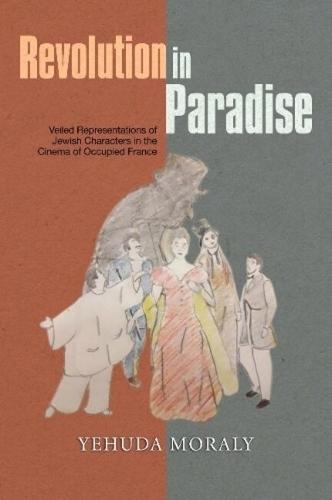
The era of the German Occupation of France constituted, surprisingly, a golden age for the arts: literature, theater, popular music and cinema. These works of art seem to be devoid of political impact. The widespread trend of unrealistic and fantastic art during this period is explained by some scholars as the artists escape from the omnipotent eye of German censorship. The purpose of the book is to show that, contrary to the accepted view, some of these films were intimately linked to the political situation. They convey the demonization of characters that, while not specifically presented as Jews nevertheless manifested anti-Semitic stereotypes of the Jew as ugly, rootless, low, hypocritical, immoral, cruel and power hungry. All five movies analysed (Les Inconnus dans la maison, dir. Henri Decoin, 1942; Les Visiteurs du Soir, dir. Marcel Carne, 1942; L'Eternel retour, dir. Jean Delannoy, 1943; Les Enfants du Paradis, dir. Marcel Carne, 1943) present characters not identified as Jews but who exhibit negative Jewish traits, in contrast to the aristocratic characters whom they aspire to emulate. They demonstrate, implicitly, central themes of explicit anti-Semitic propaganda. Yehuda Moraly addresses two current major misconceptions regarding the Cinema of Occupied France: (1) that the accepted view that there were almost no explicitly Jewish characters in the cinema of that time and place is patently incorrect; and (2) that the feature films of Occupied France were not as it is commonly thought free of the propaganda messages that permeated the press, the radio and documentary films. Analysis of these films brings out the contradictory nature of European anti-Semitism. On one hand, the Jew is the anti-Christ, throttling the world with disgusting materialism while on the other hand, he is representative of an ancestral stifling morality, which it is time to abolish.
Full Product Details
Author: Yehuda Moraly
Publisher: Liverpool University Press
Imprint: Liverpool University Press
Weight: 0.540kg
ISBN: 9781845197193
ISBN 10: 1845197194
Pages: 272
Publication Date: 01 November 2019
Audience:
General/trade
,
General
Format: Hardback
Publisher's Status: Active
Availability: In Print

This item will be ordered in for you from one of our suppliers. Upon receipt, we will promptly dispatch it out to you. For in store availability, please contact us.
Reviews
Revolution in Paradise is a strange mixture. Moraly has an enviably deep knowledge of cinema, and his fluency with the films of the period, meticulously researched from genesis to finished product, and beyond, since films were edited beyond their original release, can only evoke praise. He is also a very talented writer, revealing his own creative abilities, weaving myriad of pointilist detailsincluding the amount of food promised to a film doginto a highly informative whole, while raising significant questions about art and politics. But to reprise the original metaphor of the detective story, real life does not have the systematicity of a plot in which all the facts lead inevitably to one grand conclusion. This is the major flaw of an otherwise impressive book. Annette Aronowicz, Historical Journal of Film, Radio and Television, 2021 Vol. 41, No. 3, 578639
Revolution in Paradise is a strange mixture. Moraly has an enviably deep knowledge of cinema, and his fluency with the films of the period, meticulously researched from genesis to finished product, and beyond, since films were edited beyond their original release, can only evoke praise. He is also a very talented writer, revealing his own creative abilities, weaving myriad of pointilist detailsincluding the amount of food promised to a film doginto a highly informative whole, while raising significant questions about art and politics. But to reprise the original metaphor of the detective story, real life does not have the systematicity of a plot in which all the facts lead inevitably to one grand conclusion. This is the major flaw of an otherwise impressive book. Annette Aronowicz, Historical Journal of Film, Radio and Television, 2021 Vol. 41, No. 3, 578639
Revolution in Paradise is a strange mixture. Moraly has an enviably deep knowledge of cinema, and his fluency with the films of the period, meticulously researched from genesis to finished product, and beyond, since films were edited beyond their original release, can only evoke praise. He is also a very talented writer, revealing his own creative abilities, weaving myriad of pointilist detailsincluding the amount of food promised to a film doginto a highly informative whole, while raising significant questions about art and politics. But to reprise the original metaphor of the detective story, real life does not have the systematicity of a plot in which all the facts lead inevitably to one grand conclusion. This is the major flaw of an otherwise impressive book. Annette Aronowicz, Historical Journal of Film, Radio and Television, 2021 Vol. 41, No. 3, 578639 An in-depth look at the world of French filmmaking during the German Occupation (1940-44), this study seeks to demonstrate how extensively anti-Semitic prejudice permeated not only French society as a whole at the time of the Nazi takeover but also the mentalities and actions of film producers, directors, screenwriters, and actors. James P. Gilroy, University of Denver The golden age of French cinema, which paradoxically saw its apogee during the years of occupation, takes on a completely different meaning in the study of Moraly, and in this it deserves attention. Indeed, in a very well documented book, Moraly profoundly questions the hypothesis that the golden age of French cinema constituted a space of freedom in which certain films...would have succeeded in conveying messages of disobedience towards the Nazi occupier. Eric Touya, Dalhousie French Studies This high-minded book gives scholars of French artistic activity during the German Occupation much to consider and debate, especially regarding the methodological issue of how the slippery relations of perceived context, text, and subtext feed into our ability to proffer retrospective ethical assessments. Edward Baron Turk, Holocaust and Genocide Studies
Author Information
Yehuda (Jean-Bernard) Moraly is an associate professor at the Hebrew University, Jerusalem. His fields of research are mainly French theatre and film: Jean Genet, la vie ecrite (Editions de la Difference, 1988); Claudel metteur en scene (Presses Universitaires de Franche Comte, 1998); Le Maitre fou, Genet theoricien du theatre, Nizet, 2009). His L'uvre impossible: Claudel, Genet, Fellini (Le Manuscrit, 2013) deals mostly with Fellinis cinema. He is also a play-wright and his plays are published and produced in France and Israel.