|
|
|||
|
||||
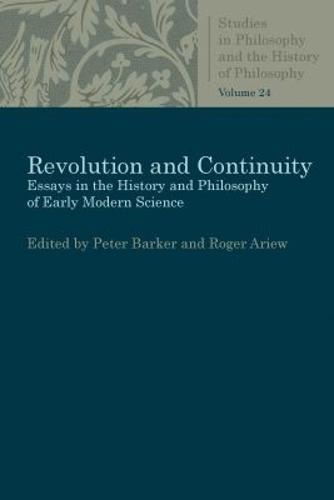
OverviewThis volume presents new work in history and historiography to the increasingly broad audience for studies of the history and philosophy of science. These essays are linked by a concern to understand the context of early modern science in its own context. The papers presented in this volume form four goups. The first two essays address historiographical questions concerning the role of institutions such as universities and scientific academies in the founding of modern science. Mordecahi Feingold substantially qualifies the thesis that universities were the centers of resistance to the new science. David Lux examines the pervasive influence of Martha Ornstein's work concerning 17th-century scientific societies. The second group of essays extends the range of historical studies into generally neglected areas of science. Harold Cook's essay provides an entry into a range of issues connecting medicine and other sciences. Roger Ariew's paper reminds us that astronomy and physics were by no means the exclusive interests of those now remembered as founders of modern physics. The third section of essays is in more traditional areas of interest to historicans and philosophers of science but offers distinctly novel conclusions. Alan Gabbey provides the first modern treatment of a central problem in heliocentric astronomy and cosmology - the nature of the moon's motion. Jospeh Pitt offers a unique picture of the relationship between Bellarmine and Galileo. Bernard Goldstein punctures one of the great myths of the Copernican revolution: Alfonso of Castile's supposed dissatisfaction with the Ptolemaic tradition. Finally, the last group presents papers on early modern mathematics. Francois de Gandt examines Cavalieri's mathematical practice during the period of the development of calculus. Emily Grosholz considers the mathematical practice of Descartes and demonstrates that Descartes' own mathematical ideals were an impediment to the full utilization of the mathematical resources exploited by his successors. Full Product DetailsAuthor: Peter Barker , Roger AriewPublisher: The Catholic University of America Press Imprint: The Catholic University of America Press Dimensions: Width: 15.10cm , Height: 1.30cm , Length: 22.90cm Weight: 0.385kg ISBN: 9780813230689ISBN 10: 0813230683 Pages: 277 Publication Date: 31 March 2018 Audience: Professional and scholarly , Professional & Vocational Format: Paperback Publisher's Status: Active Availability: Out of stock The supplier is temporarily out of stock of this item. It will be ordered for you on backorder and shipped when it becomes available. Table of ContentsReviewsAuthor InformationTab Content 6Author Website:Countries AvailableAll regions |
||||