Overview
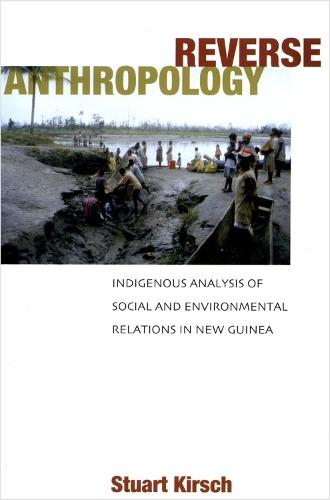
While ethnography ordinarily privileges anthropological interpretations, this book attempts the reciprocal process of describing indigenous modes of analysis. Drawing on long-term ethnographic research with the Yonggom people of New Guinea, the author examines how indigenous analysis organizes local knowledge and provides a framework for interpreting events, from first contact and colonial rule to contemporary interactions with a multinational mining company and the Indonesian state. This book highlights Yonggom participation in two political movements: an international campaign against the Ok Tedi mine, which is responsible for extensive deforestation and environmental problems, and the opposition to Indonesian control over West Papua, including Yonggom experiences as political refugees in Papua New Guinea. The author challenges a prevailing homogenization in current representations of indigenous peoples, showing how Yonggom modes of analysis specifically have shaped these political movements.
Full Product Details
Author: Stuart Kirsch
Publisher: Stanford University Press
Imprint: Stanford University Press
Edition: New edition
Dimensions:
Width: 15.20cm
, Height: 2.10cm
, Length: 22.90cm
Weight: 0.517kg
ISBN: 9780804753418
ISBN 10: 0804753415
Pages: 296
Publication Date: 03 August 2006
Audience:
College/higher education
,
Professional and scholarly
,
Undergraduate
,
Postgraduate, Research & Scholarly
Format: Hardback
Publisher's Status: Active
Availability: In Print

This item will be ordered in for you from one of our suppliers. Upon receipt, we will promptly dispatch it out to you. For in store availability, please contact us.
Reviews
Reverse Anthropology is an uncommonly sophisticated work of engaged ethnography. With patience, insight, and brilliant attention to Yonggom subjectivity, Stuart Kirsch reveals what it means to turn anthropology inside out. - Steven Feld, University of New Mexico
Kirsch deserves recognition for this refreshing and intellectually stimulating monograph... That this work combines such an emancipatory potential for anthropology with descriptive, theoretically compelling, and well-written ethnography is a testament to Kirsch's scholarship and activism. -Anthropos Kirsch's ethnography is compelling on several levels. It is an excellent example of using indigenous frames of reference for understanding contemporary issues of globalization, colonialism and modernization. It is also a groundbreaking approach to the study of indigenous movements that yields alternative interpretations of political relationships and historical events going back to the first contact between European explorers and Melanesian indigenous groups. Finally, for students of anthropology, it is a highly personal account of the multiple roles of the anthropologist as analyst, participant and advocate for an indigenous group in a precedent-setting legal case against a powerful multinational mining corporation. -Canadian Review of Sociology What is masterful about this... book is that the author, all the while telling the stories of these contemporary environmental and political struggles, contextualizes them in deeply indigenous ways of knowing and understanding history and the natural and social world. -Journal of Anthropological Research Kirsch's ethnographic passages sing with the immediacy of deep and vibrant experience... Because of its rich detail and moral clarity, Reverse Anthropology is a productive contribution to anthropological understandings of indigenous social analysis and it deserves a wide readership. -Expedition
Author Information
Stuart Kirsch is Assistant Professor of Anthropology at the University of Michigan.