Overview
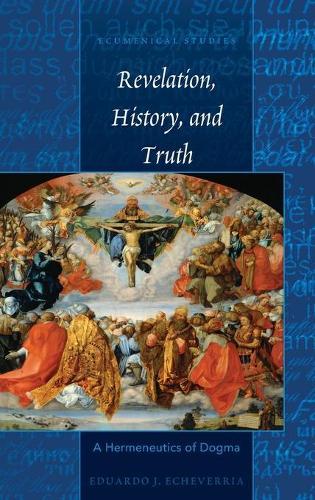
The general topic of this book concerns the ontology, epistemology, and teleology of the hermeneutics of dogma. In particular, the author addresses contemporary challenges faced by the necessity of maintaining the integrity of dogmatic truth of the Christian faith, of divine revelation and its transmission through tradition, particularly with respect to the relationship between history and doctrinal truth. The author integrates a theological hermeneutics, namely, the Lérinian hermeneutics of Vatican II, with a historically conscious hermeneutics. His aim is to show how we can consider the historical and contextual nature of dogmas, creeds and confessions while at the same time honoring their assertions of dogmatic truth that are permanent, valid and binding for all times.
Full Product Details
Author: Christopher A. Stephenson ,
Eduardo J. Echeverria
Publisher: Peter Lang Publishing Inc
Imprint: Peter Lang Publishing Inc
Edition: New edition
Volume: 2
Weight: 0.420kg
ISBN: 9781433132858
ISBN 10: 1433132850
Pages: 200
Publication Date: 30 November 2017
Audience:
Professional and scholarly
,
Professional and scholarly
,
Professional & Vocational
,
Professional & Vocational
Format: Hardback
Publisher's Status: Active
Availability: Manufactured on demand

We will order this item for you from a manufactured on demand supplier.
Reviews
The qualities of coherence, cogency, and consistency that this book brings to the study of the truth of Christian revelation have rarely been more needed than in the Catholic Church of Pope Francis' pontificate. -Aidan Nichols, O. P., Blackfriars Cambridge In this book Eduardo J. Echeverria addresses an issue of pressing urgency in post-Vatican II theology: What is the nature of revelation and how can it be reliably transmitted through propositional statements into different historical and cultural situations? His response, in illuminating dialogue with both Protestant and Catholic theologians, offers a nuanced account of how the inexhaustible Mystery of God in Jesus Christ is ever ancient and ever new. Revelation's objective content and its ongoing subjective appropriation are gifts of the Spirit in the Church, whose magisterium is charged to discern true development of doctrine and dogma. Thus both continuity and newness are ingredients to Revelation's authentic reception. Echeverria's book is at once irenic and insightful: an important contribution to a crucial conversation. -Father Robert Imbelli, Boston College Emeritus Eduardo J. Echeverria is a rare theologian: conversant even with confessional Reformed and Lutheran figures outside the usual roster of modern Protestant theologians. So he talks to us, not just about us, on matters that concern us all. This is an important book for exploring the nature of truth, revelation, and dogmatic formulation as well as the relation of Scripture and tradition, Vatican II and its aftermath, and responses to Protestant critiques. It rewards patient and careful reading. -Michael Horton, J. G. Machen Professor of Systematic Theology and Apologetics, Westminster Seminary California Eduardo J. Echeverria's study is noteworthy for its robust defense of objective truth against traditionalist and modern subjectivist and relativistic attitudes. As such, it is of value to those who uphold a traditional doctrine of revelation, whether Roman Catholic or Protestant. While the theological detail of the author's argument will be principally relevant to Roman Catholics, its central claim is also crucial for those who rely on the propositions of Scripture as foundational of God's special revelation. The book is a 'must read' for those who are interested in the ways in which original Christian revelation may still bear down on the present. -Paul Helm, Emeritus Professor of the History and Philosophy of Religion, King's College, London As a Protestant theologian I have been surprised to see how, in the best modern accounts of the doctrine of revelation, all roads lead, if not to Rome, at least to Vatican II's Dei Verbum. On display in that document are all the crucial issues relevant for a constructive Christian account of divine revelation. Eduardo J. Echeverria's book is an interpretation of Dei Verbum, but not the kind that remains satisfied with just parsing the text. He places the council's Lerinian hermeneutics of retrieval in dialogue with historical consciousness, traces its connection to the nouvelle theologie, and draws the conclusions for an account of the development of doctrine. There is much here to inform and stimulate theologians of any confession. I especially appreciated how conversant Echeverria is with Protestant thinkers like Berkouwer and Vanhoozer; how nimbly he dismantles the false dichotomy between personal and propositional revelation; and how well he illuminates the distinction between the deposit of faith and the mode in which it is expressed. -Fred Sanders, Professor of Theology, Torrey Honors Institute, Biola University
Eduardo J. Echeverria is a rare theologian: conversant even with confessional Reformed and Lutheran figures outside the usual roster of modern Protestant theologians. So he talks to us, not just about us, on matters that concern us all. This is an important book for exploring the nature of truth, revelation, and dogmatic formulation as well as the relation of Scripture and tradition, Vatican II and its aftermath, and responses to Protestant critiques. It rewards patient and careful reading. -Michael Horton, J. G. Machen Professor of Systematic Theology and Apologetics, Westminster Seminary California In this book Eduardo J. Echeverria addresses an issue of pressing urgency in post-Vatican II theology: What is the nature of revelation and how can it be reliably transmitted through propositional statements into different historical and cultural situations? His response, in illuminating dialogue with both Protestant and Catholic theologians, offers a nuanced account of how the inexhaustible Mystery of God in Jesus Christ is ever ancient and ever new. Revelation's objective content and its ongoing subjective appropriation are gifts of the Spirit in the Church, whose magisterium is charged to discern true development of doctrine and dogma. Thus both continuity and newness are ingredients to Revelation's authentic reception. Echeverria's book is at once irenic and insightful: an important contribution to a crucial conversation. -Father Robert Imbelli, Boston College Emeritus The qualities of coherence, cogency, and consistency that this book brings to the study of the truth of Christian revelation have rarely been more needed than in the Catholic Church of Pope Francis' pontificate. -Aidan Nichols, O. P., Blackfriars Cambridge Eduardo J. Echeverria's study is noteworthy for its robust defense of objective truth against traditionalist and modern subjectivist and relativistic attitudes. As such, it is of value to those who uphold a traditional doctrine of revelation, whether Roman Catholic or Protestant. While the theological detail of the author's argument will be principally relevant to Roman Catholics, its central claim is also crucial for those who rely on the propositions of Scripture as foundational of God's special revelation. The book is a `must read' for those who are interested in the ways in which original Christian revelation may still bear down on the present. -Paul Helm, Emeritus Professor of the History and Philosophy of Religion, King's College, London As a Protestant theologian I have been surprised to see how, in the best modern accounts of the doctrine of revelation, all roads lead, if not to Rome, at least to Vatican II's Dei Verbum. On display in that document are all the crucial issues relevant for a constructive Christian account of divine revelation. Eduardo J. Echeverria's book is an interpretation of Dei Verbum, but not the kind that remains satisfied with just parsing the text. He places the council's Lerinian hermeneutics of retrieval in dialogue with historical consciousness, traces its connection to the nouvelle theologie, and draws the conclusions for an account of the development of doctrine. There is much here to inform and stimulate theologians of any confession. I especially appreciated how conversant Echeverria is with Protestant thinkers like Berkouwer and Vanhoozer; how nimbly he dismantles the false dichotomy between personal and propositional revelation; and how well he illuminates the distinction between the deposit of faith and the mode in which it is expressed. -Fred Sanders, Professor of Theology, Torrey Honors Institute, Biola University
Eduardo J. Echeverria's study is noteworthy for its robust defense of objective truth against traditionalist and modern subjectivist and relativistic attitudes. As such, it is of value to those who uphold a traditional doctrine of revelation, whether Roman Catholic or Protestant. While the theological detail of the author's argument will be principally relevant to Roman Catholics, its central claim is also crucial for those who rely on the propositions of Scripture as foundational of God's special revelation. The book is a `must read' for those who are interested in the ways in which original Christian revelation may still bear down on the present. -Paul Helm, Emeritus Professor of the History and Philosophy of Religion, King's College, London Eduardo J. Echeverria is a rare theologian: conversant even with confessional Reformed and Lutheran figures outside the usual roster of modern Protestant theologians. So he talks to us, not just about us, on matters that concern us all. This is an important book for exploring the nature of truth, revelation, and dogmatic formulation as well as the relation of Scripture and tradition, Vatican II and its aftermath, and responses to Protestant critiques. It rewards patient and careful reading. -Michael Horton, J. G. Machen Professor of Systematic Theology and Apologetics, Westminster Seminary California The qualities of coherence, cogency, and consistency that this book brings to the study of the truth of Christian revelation have rarely been more needed than in the Catholic Church of Pope Francis' pontificate. -Aidan Nichols, O. P., Blackfriars Cambridge In this book Eduardo J. Echeverria addresses an issue of pressing urgency in post-Vatican II theology: What is the nature of revelation and how can it be reliably transmitted through propositional statements into different historical and cultural situations? His response, in illuminating dialogue with both Protestant and Catholic theologians, offers a nuanced account of how the inexhaustible Mystery of God in Jesus Christ is ever ancient and ever new. Revelation's objective content and its ongoing subjective appropriation are gifts of the Spirit in the Church, whose magisterium is charged to discern true development of doctrine and dogma. Thus both continuity and newness are ingredients to Revelation's authentic reception. Echeverria's book is at once irenic and insightful: an important contribution to a crucial conversation. -Father Robert Imbelli, Boston College Emeritus As a Protestant theologian I have been surprised to see how, in the best modern accounts of the doctrine of revelation, all roads lead, if not to Rome, at least to Vatican II's Dei Verbum. On display in that document are all the crucial issues relevant for a constructive Christian account of divine revelation. Eduardo J. Echeverria's book is an interpretation of Dei Verbum, but not the kind that remains satisfied with just parsing the text. He places the council's Lerinian hermeneutics of retrieval in dialogue with historical consciousness, traces its connection to the nouvelle theologie, and draws the conclusions for an account of the development of doctrine. There is much here to inform and stimulate theologians of any confession. I especially appreciated how conversant Echeverria is with Protestant thinkers like Berkouwer and Vanhoozer; how nimbly he dismantles the false dichotomy between personal and propositional revelation; and how well he illuminates the distinction between the deposit of faith and the mode in which it is expressed. -Fred Sanders, Professor of Theology, Torrey Honors Institute, Biola University
“The qualities of coherence, cogency, and consistency that this book brings to the study of the truth of Christian revelation have rarely been more needed than in the Catholic Church of Pope Francis’ pontificate.” —Aidan Nichols, O. P., Blackfriars Cambridge “Eduardo J. Echeverria is a rare theologian: conversant even with confessional Reformed and Lutheran figures outside the usual roster of modern Protestant theologians. So he talks to us, not just about us, on matters that concern us all. This is an important book for exploring the nature of truth, revelation, and dogmatic formulation as well as the relation of Scripture and tradition, Vatican II and its aftermath, and responses to Protestant critiques. It rewards patient and careful reading.” —Michael Horton, J. G. Machen Professor of Systematic Theology and Apologetics, Westminster Seminary California “Eduardo J. Echeverria’s study is noteworthy for its robust defense of objective truth against traditionalist and modern subjectivist and relativistic attitudes. As such, it is of value to those who uphold a traditional doctrine of revelation, whether Roman Catholic or Protestant. While the theological detail of the author’s argument will be principally relevant to Roman Catholics, its central claim is also crucial for those who rely on the propositions of Scripture as foundational of God’s special revelation. The book is a ‘must read’ for those who are interested in the ways in which original Christian revelation may still bear down on the present.” —Paul Helm, Emeritus Professor of the History and Philosophy of Religion, King’s College, London “In this book Eduardo J. Echeverria addresses an issue of pressing urgency in post-Vatican II theology: What is the nature of revelation and how can it be reliably transmitted through propositional statements into different historical and cultural situations? His response, in illuminating dialogue with both Protestant and Catholic theologians, offers a nuanced account of how the inexhaustible Mystery of God in Jesus Christ is ever ancient and ever new. Revelation’s objective content and its ongoing subjective appropriation are gifts of the Spirit in the Church, whose magisterium is charged to discern true development of doctrine and dogma. Thus both continuity and newness are ingredients to Revelation’s authentic reception. Echeverria’s book is at once irenic and insightful: an important contribution to a crucial conversation.” —Father Robert Imbelli, Boston College Emeritus “As a Protestant theologian I have been surprised to see how, in the best modern accounts of the doctrine of revelation, all roads lead, if not to Rome, at least to Vatican II’s Dei Verbum. On display in that document are all the crucial issues relevant for a constructive Christian account of divine revelation. Eduardo J. Echeverria’s book is an interpretation of Dei Verbum, but not the kind that remains satisfied with just parsing the text. He places the council’s Lérinian hermeneutics of retrieval in dialogue with historical consciousness, traces its connection to the nouvelle théologie, and draws the conclusions for an account of the development of doctrine. There is much here to inform and stimulate theologians of any confession. I especially appreciated how conversant Echeverria is with Protestant thinkers like Berkouwer and Vanhoozer; how nimbly he dismantles the false dichotomy between personal and propositional revelation; and how well he illuminates the distinction between the deposit of faith and the mode in which it is expressed.” —Fred Sanders, Professor of Theology, Torrey Honors Institute, Biola University
Eduardo J. Echeverria's study is noteworthy for its robust defense of objective truth against traditionalist and modern subjectivist and relativistic attitudes. As such, it is of value to those who uphold a traditional doctrine of revelation, whether Roman Catholic or Protestant. While the theological detail of the author's argument will be principally relevant to Roman Catholics, its central claim is also crucial for those who rely on the propositions of Scripture as foundational of God's special revelation. The book is a `must read' for those who are interested in the ways in which original Christian revelation may still bear down on the present. -Paul Helm, Emeritus Professor of the History and Philosophy of Religion, King's College, London The qualities of coherence, cogency, and consistency that this book brings to the study of the truth of Christian revelation have rarely been more needed than in the Catholic Church of Pope Francis' pontificate. -Aidan Nichols, O. P., Blackfriars Cambridge In this book Eduardo J. Echeverria addresses an issue of pressing urgency in post-Vatican II theology: What is the nature of revelation and how can it be reliably transmitted through propositional statements into different historical and cultural situations? His response, in illuminating dialogue with both Protestant and Catholic theologians, offers a nuanced account of how the inexhaustible Mystery of God in Jesus Christ is ever ancient and ever new. Revelation's objective content and its ongoing subjective appropriation are gifts of the Spirit in the Church, whose magisterium is charged to discern true development of doctrine and dogma. Thus both continuity and newness are ingredients to Revelation's authentic reception. Echeverria's book is at once irenic and insightful: an important contribution to a crucial conversation. -Father Robert Imbelli, Boston College Emeritus Eduardo J. Echeverria is a rare theologian: conversant even with confessional Reformed and Lutheran figures outside the usual roster of modern Protestant theologians. So he talks to us, not just about us, on matters that concern us all. This is an important book for exploring the nature of truth, revelation, and dogmatic formulation as well as the relation of Scripture and tradition, Vatican II and its aftermath, and responses to Protestant critiques. It rewards patient and careful reading. -Michael Horton, J. G. Machen Professor of Systematic Theology and Apologetics, Westminster Seminary California As a Protestant theologian I have been surprised to see how, in the best modern accounts of the doctrine of revelation, all roads lead, if not to Rome, at least to Vatican II's Dei Verbum. On display in that document are all the crucial issues relevant for a constructive Christian account of divine revelation. Eduardo J. Echeverria's book is an interpretation of Dei Verbum, but not the kind that remains satisfied with just parsing the text. He places the council's Lerinian hermeneutics of retrieval in dialogue with historical consciousness, traces its connection to the nouvelle theologie, and draws the conclusions for an account of the development of doctrine. There is much here to inform and stimulate theologians of any confession. I especially appreciated how conversant Echeverria is with Protestant thinkers like Berkouwer and Vanhoozer; how nimbly he dismantles the false dichotomy between personal and propositional revelation; and how well he illuminates the distinction between the deposit of faith and the mode in which it is expressed. -Fred Sanders, Professor of Theology, Torrey Honors Institute, Biola University
Author Information
Eduardo J. Echeverria is Professor of Philosophy and Systematic Theology, Sacred Heart Major Seminary, Detroit. He earned his doctorate in philosophy from the Free University in Amsterdam and his Licentiate in Sacred Theology (S.T.L.) from the University of St. Thomas Aquinas (Angelicum) in Rome. His publications include Berkouwer and Catholicism: Disputed Questions (2013), Pope Francis: The Legacy of Vatican II (2015), and Divine Election: A Catholic Orientation in Dogmatic and Ecumenical Perspective (2016).