|
|
|||
|
||||
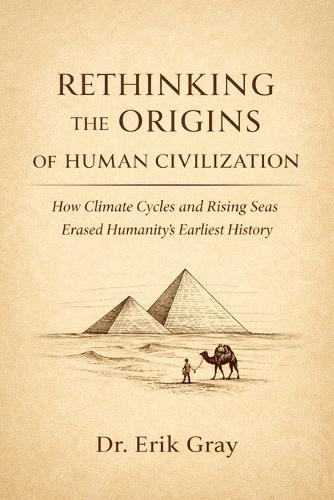
OverviewSince its inception, the story of human civilization has been told almost entirely from places where evidence survived. River valleys, plateaus, and arid landscapes dominate our understanding of early complexity-not necessarily because they were the only places it emerged, but because they were the places most accessible and least altered by ice and rising seas. Rethinking the Origins of Human Civilization asks what happens when preservation bias is taken seriously. Focusing on the late Pleistocene and early Holocene, the book explores how long-adapted northern populations could have developed complex, non-urban systems during periods of climatic stability, only to see those systems fragmented by abrupt environmental disruption. What survives in the archaeological record, the author argues, may reflect where evidence endured-not where human complexity began. Rather than proposing a lost civilization or a technological golden age, this work advances a constrained and falsifiable hypothesis for investigating erased landscapes-glaciated regions, submerged continental shelves, and environments where long-term human activity is least likely to leave durable traces. It integrates geological change as an active variable rather than a fixed backdrop, while drawing cautiously on genetics, archaeology, comparative myth, and cultural memory as complementary lines of inquiry. This is an argument for expanding inquiry by treating geology not as a fixed point, but as a dynamic variable, consistent with current scientific understanding. Full Product DetailsAuthor: Erik GrayPublisher: Independently Published Imprint: Independently Published Dimensions: Width: 15.20cm , Height: 1.00cm , Length: 22.90cm Weight: 0.245kg ISBN: 9798245883199Pages: 176 Publication Date: 27 January 2026 Audience: General/trade , General Format: Paperback Publisher's Status: Active Availability: Available To Order We have confirmation that this item is in stock with the supplier. It will be ordered in for you and dispatched immediately. Table of ContentsReviewsAuthor InformationTab Content 6Author Website:Countries AvailableAll regions |
||||