|
|
|||
|
||||
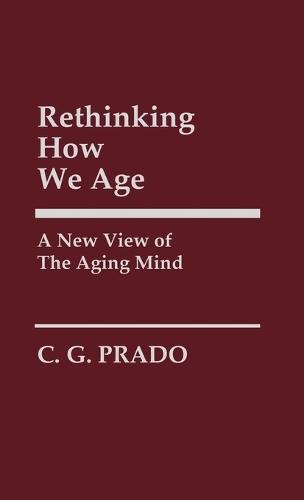
OverviewFull Product DetailsAuthor: C.G. PradoPublisher: Bloomsbury Publishing Plc Imprint: Praeger Publishers Inc Dimensions: Width: 14.00cm , Height: 1.20cm , Length: 21.60cm Weight: 0.367kg ISBN: 9780313247859ISBN 10: 0313247854 Pages: 185 Publication Date: 22 January 1986 Recommended Age: From 7 to 17 years Audience: College/higher education , General/trade , Postgraduate, Research & Scholarly , General Format: Hardback Publisher's Status: Active Availability: Manufactured on demand We will order this item for you from a manufactured on demand supplier. Table of ContentsReviews?Using a crisp and economical style, Prado (Queen's University, Ontario) argues for a new way of conceptualizing aging and a revised vocabulary in speaking about aging. In the spirit of R. Rorty--bypassing the correspondists and referentialists--Prado suggests not a new theory but an innovative pragmatic approach. He challenges as prejudicial--and empirically unfounded--the assumptions that the adaptive capacity of the aged necessarily decreases and that their perspective narrows. In the tradition of H. Gadamar, Prado argues that a self-creative process of narrative is used in organizing experience; expectations and interpretations are set up that constitute understanding and are manifest in behavior. Thus, in coming to grips with one's role in shaping one's own perceptions it becomes evident that the negative model of chronological aging--as leading to inevitable deterioration and inflexibility--is at least partly a perception of one's own creation. Prado denies the possibility of the perspectiveless' articulation of truth while acknowledging the philosophical difficulties its advocates will find with his position. This is a basic book in an important new school of thinking on aging, an important work for professionals and college students in a wide range of disciplines extending beyond the fields of gerontology and geriatrics.?-Choice Author InformationTab Content 6Author Website:Countries AvailableAll regions |
||||