Overview
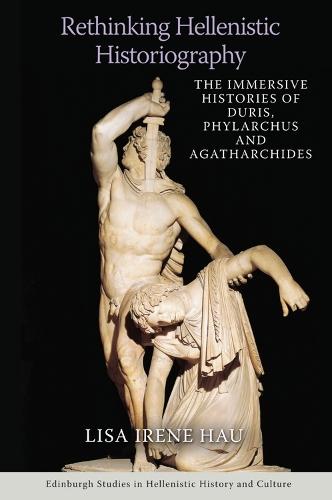
This book offers a new examination of the so-called tragic historiographers Duris and Phylarchus, as well as the 2nd century BCE historiographer Agatharchides, using Polybius as a foil throughout. Lisa Irene Hau investigates the fragments and discusses the characteristics of each historical work in terms of themes, style and historiographical method. The analysis shows that these three historiographers deliberately wrote a different type of history from Ephorus and Theopompus, aiming to engage the reader sensually and emotionally in the historical narrative. Hau suggests 'immersive historiography' as a more fitting term than 'tragic history', and argues that the purpose of this experiential engagement of the readers was didactic: to teach them what it had been like to live through events of the past. In the second half of the book, immersive historiography is placed in the context of ancient literary theory, Peripatetic philosophy and Hellenistic poetry and visual art. Applying the theory of immersion to ancient texts and placing these 'tragic' historians in their contemporary cultural context provides a new and innovative way of understanding of Hellenistic historiography.
Full Product Details
Author: Lisa Irene Hau (Senior Lecturer, University of Glasgow)
Publisher: Edinburgh University Press
Imprint: Edinburgh University Press
ISBN: 9781474475600
ISBN 10: 1474475604
Pages: 296
Publication Date: 31 March 2025
Audience:
General/trade
,
General
Format: Hardback
Publisher's Status: Active
Availability: Manufactured on demand

We will order this item for you from a manufactured on demand supplier.
Reviews
In clear and engaging prose, Hau tackles the problematic notion of 'tragic history' among the Hellenistic historians. She reconfigures its characteristic elements as 'immersive historiography', which aimed to teach readers about the human experience as seen through past events. Along the way, she provides thought-provoking connections between historical practice in the ancient world and the twenty-first century.--Christopher Baron, University of Notre Dame Lisa Hau re-examines the now-lost works of 'tragic history' (traditionally dismissed as an inferior sub-genre of Hellenistic historiography). In this groundbreaking study, she demonstrates that these historians composed innovative works of immersive history intended to provide an intense emotional connection to the events narrated, revealing them to be not only representative of the zeitgeist of their times, but surprisingly modern in their experiential approach to the past.--Frances Pownall, University of Alberta
Author Information
Lisa Irene Hau is Senior Lecturer in Classics at the University of Glasgow. She holds a PhD from Royal Holloway, University of London, and studied for her first two degrees at the University of Aarhus, Denmark. She is the author of Moral History from Herodotus to Diodorus Siculus (EUP 2016) and co-editor of Diodoros of Sicily. Historiographical Theory and Practice in the Bibliotheke, (Peeters 2018) and Truth and History in the Ancient World. Pluralising the Past (Routledge 2016). She has also published articles on numerous topics related to ancient historiography. In 2017-18 she held an Alexander von Humboldt Research Fellowship for experienced researchers at the University of Heidelberg.