Overview
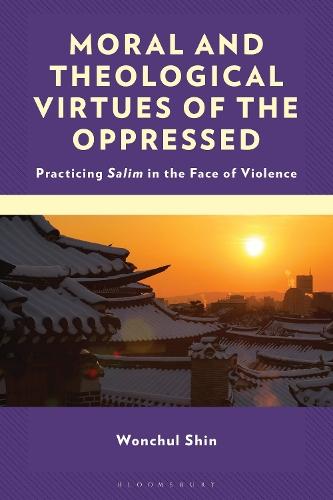
This book focuses on discovering particular moral and theological virtues of the oppressed, embodied in their daily practices of survival, resistance, and flourishing. Wonchul Shin calls for a holistic vision of flourishing, including both individual and social flourishing, from an explicitly Korean cultural and historical context. Specifically, Shin considers the victims of political violence during the Korean regimes under Park Chung-hee and Chun Doo-hwan in the 1970s and 1980s and concurrent “family” resistance movements. In questioning virtues of sacrifice for a greater cause, this book argues that conventional Christian virtue discourse, which uplifts Jesus’ total sacrifice unto death, can reinforce unjust sociocultural structures that sustain structural and cultural violence against the oppressed. Shin uses the sacrifice and resistance of these Korean mothers and wives to suggest an alternative moral virtue, “the virtue of salim,” which envisions a particular virtue of the oppressed through resistance against oppression and celebrates the virtue of daily practices of survival, resistance, and flourishing
Full Product Details
Author: Wonchul Shin
Publisher: Bloomsbury Publishing Plc
Imprint: Lexington Books/Fortress Academic
Dimensions:
Width: 15.20cm
, Height: 1.80cm
, Length: 23.20cm
Weight: 0.451kg
ISBN: 9781978710986
ISBN 10: 1978710984
Pages: 208
Publication Date: 02 April 2026
Audience:
Professional and scholarly
,
Professional & Vocational
Format: Hardback
Publisher's Status: Active
Availability: Manufactured on demand

We will order this item for you from a manufactured on demand supplier.
Reviews
Dr. Wonchul Shin makes an important contribution to the literatures on virtue ethics and Christian social movements. This book, one of the few in English to examine South Korean social resistance movements of the 1960s to the 1980s, informs readers about this specific crucible of political experience and how it sheds light on the implementation of Christian virtues in social movements. I especially enjoyed the book’s well-told history and its use of poetry and novels. These features, plus the author’s interviews and use of archival materials, keeps the narrative humane and urgent. In light of the troubling rise of authoritarian regimes around the globe, it is more important than ever to learn from the quiet courage of the families, wives, and mothers who resisted the autocrats of this era. * Brian Stiltner, Professor of Theology and Religious Studies, Sacred Heart University * Moral and Theological Virtues of the Oppressed: Practicing Salim in the Face of Violence is a powerful testament to Korea’s silenced others who turned sorrow into resistance. The dialectic of sacrifice, family, prayer, salim, and resurrection reveals the resilience of an oppressed community claiming their moral agency. In place of destructive self-sacrifice, they embodied life-giving virtues through care, lament, protest, and hope. This uniquely Korean ethic of salim speaks beyond its context, offering a global vision of resilience, justice, and life. A must-read Asian voice in theological ethics. * Jea Sophia Oh, Professor of Philosophy at West Chester University of Pennsylvania * In this book, Wonchul Shin shows himself to be a careful and compassionate social ethicist. Deeply attentive to the Korean context, Shin brings needed nuance to his analysis of social movements that grow out of, but resist glorifying, suffering. In our age of growing authoritarianism, Shin offers us inspiring stories of resistance. * Vincent Lloyd, Villanova University * This is an exemplary work in Christian virtue ethics and political theology, but that hardly captures the achievement of Shin’s book and why it must be read now, with urgency. By unmasking the sacrificial logic at the heart of political oppression, and by elevating the moral work of moms and wives in South Korea under military dictatorship in the 1970s and 1980s, Shin deftly demonstrates how God’s resurrecting power can lead ordinary persons to resist the tides of authoritarianism. A testament of courage and hope, I cannot think of a more relevant book today. * Ki Joo Choi, Kyung-Chik Han Professor of Asian American Theology, Princeton Theological Seminary *
Dr. Wonchul Shin makes an important contribution to the literatures on virtue ethics and Christian social movements. This book, one of the few in English to examine South Korean social resistance movements of the 1960s to the 1980s, informs readers about this specific crucible of political experience and how it sheds light on the implementation of Christian virtues in social movements. I especially enjoyed the book’s well-told history and its use of poetry and novels. These features, plus the author’s interviews and use of archival materials, keeps the narrative humane and urgent. In light of the troubling rise of authoritarian regimes around the globe, it is more important than ever to learn from the quiet courage of the families, wives, and mothers who resisted the autocrats of this era. * Brian Stiltner, Professor of Theology and Religious Studies, Sacred Heart University *
Author Information
Wonchul Shin is Catherine of Siena Teaching Scholar in the ethics program at Villanova University.