|
|
|||
|
||||
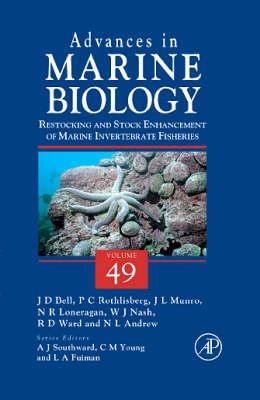
OverviewMany of the world's fisheries are in trouble - they no longer yield the catches, and potential profits, they once did. The habitats that support fisheries have been damaged by pollution and other irresponsible use of coastal land. Destructive fishing methods like trawling and blast fishing have also changed fish habitats resulting in support of fewer fish. The authors draw on more than 1000 scientific papers covering 11 groups/species of marine invertebrates. From this large literature, they distill 20 lessons for assessing and guiding the use of restocking and stock enhancement in the management of invertebrate fisheries. * Written by 7 expert authors * Covers 11 groups/species of marine invertebrates * Reviews over 1000 scientific papers * Identifies 20 lessons that can be learned from past restocking and stock enhancement initiatives * Proposes a new approach to assess the potential value of hatchery releases to complement other forms of management * Assesses progress of disciple against the blueprint for a responsible approach Full Product DetailsAuthor: Johann D. Bell (WorldFisher Center, Penang, Malaysia) , P. C. Rothlisberg (CSIRO Marine Research, Cleveland, Australia) , J. L. Munro (WorldFish Center, Penang, Malaysia) , N. R. Loneragan (CSIRO Marine Research, Cleveland, Australia)Publisher: Elsevier Science Publishing Co Inc Imprint: Academic Press Inc Volume: 49 Dimensions: Width: 15.20cm , Height: 2.60cm , Length: 22.90cm Weight: 0.850kg ISBN: 9780120261499ISBN 10: 0120261499 Pages: 392 Publication Date: 12 December 2005 Audience: Professional and scholarly , Professional & Vocational Format: Hardback Publisher's Status: Active Availability: Out of stock The supplier is temporarily out of stock of this item. It will be ordered for you on backorder and shipped when it becomes available. Table of Contents1. Introduction 2. Restocking Initiatives 2.1 Giant Clams 2.2 Topshell 2.3 Sea Cucumbers 3. Stock Enhancement Initiatives 3.1 Scallops 3.2 Other Bivalves 3.3 Abalone 3.4 Queen Conch 3.5 Shrimps 3.6 Spiny Lobsters 3.7 Lobsters 3.8 Sea Urchins 4. Overview and Progress Towards a Responsible Approach 4.1 Restocking Initiatives 4.2 Stock Enhancement Initiatives 5. Lessons Learned 5.1 Lessons for Restocking 5.2 Lessons for Stock Enhancement 5.3 Lessons for both Restocking and Stock Enhancement 6. Management of Restocking and Stock Enhancement 6.1 Information to Evaluate the Need for Restocking 6.2 Management of Restocking 6.3 Information to Evaluate the Need for Stock Enhancement 6.4 Management of Stock Enhancement 6.5 Measures to Optimize Social and Financial Benefits of Restocking and Stock Enhancement 6.6 Independent Assessments 7. Other Important Considerations for all Initiatives 7.1 Measuring Success 7.2 Genetic Considerations 7.3 Disease risks 7.4 Other Environmental Impacts Conclusions 8.1 Achievements 8.2 The Responsible Approach 8.3 The Way Forward 8.4 Future Research 8.5 Summary Remarks Acknowledgements References AppendixReviewsAuthor InformationTab Content 6Author Website:Countries AvailableAll regions |
||||