Overview
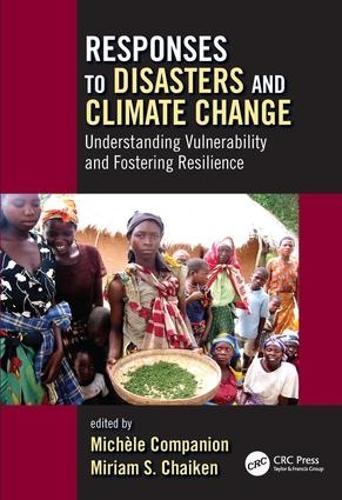
As the global climate shifts, communities are faced with a myriad of mitigation and adaptation challenges. These highlight the political, cultural, economic, social, and physical vulnerability of social groups, communities, families, and individuals. They also foster resilience and creative responses. Research in hazard management, humanitarian response, food security programming, and other areas seeks to identify and understand factors that create vulnerability and strategies that enhance resilience at all levels of social organization. This book uses case studies from around the globe to demonstrate ways that communities have fostered resilience to mitigate the impacts of climate change.
Full Product Details
Author: Michele Companion (University of Colorado, Colorado Springs, USA) ,
Miriam S. Chaiken (New Mexico State University, Las Cruces, USA)
Publisher: Taylor & Francis Inc
Imprint: CRC Press Inc
Dimensions:
Width: 17.80cm
, Height: 2.30cm
, Length: 25.40cm
Weight: 0.730kg
ISBN: 9781498760966
ISBN 10: 1498760961
Pages: 264
Publication Date: 20 December 2016
Audience:
Professional and scholarly
,
College/higher education
,
Professional & Vocational
,
Tertiary & Higher Education
Format: Hardback
Publisher's Status: Active
Availability: In Print

This item will be ordered in for you from one of our suppliers. Upon receipt, we will promptly dispatch it out to you. For in store availability, please contact us.
Author Information
Michèle Companion is a Professor of Sociology at the University of Colorado - Colorado Springs, U.S.A. She is a food and livelihood security specialist, working in countries across Africa with international NGOs. This work focuses on the expansion of market-based food security indicators to increase local sensitivity to food crisis triggers and on population displacement, migration, and resettlement. She also researches Native American nutritional dynamics, including impacts of low income diets on overall health and food security and tribal participation in the food sovereignty movement. She has recently been looking at cultural barriers to healthy eating among low-income urban Indian populations. Her recent publications include Disaster’s Impact on Livelihood and Cultural Survival: Losses, Opportunities, and Mitigation. Miriam S. Chaiken currently holds the position of Dean of the William Conroy Honors College at New Mexico State University and Distinguished Professor of Anthropology. She is a cultural anthropologist with decades of experience in international economic development, having conducted field research on issues of population resettlement and migration, food security and hunger, livelihoods and agricultural production, and maternal and child health. Most of this work was done in collaboration with humanitarian NGOs such as UNICEF and Save the Children. Her earliest long-term field work was on Palawan Island in the Philippines, followed by extensive work in Kenya, Ethiopia, and Mozambique.