Overview
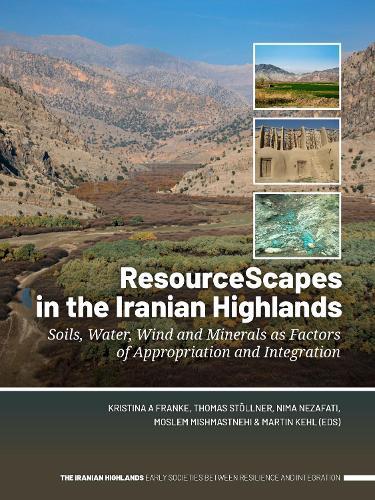
The Iranian highlands are characterized by very special resource conditions: although being dominated in large parts by aridity, the presence of ecological niches and specific weather phenomena, along with rich deposits of minerals and raw materials, provide livelihoods for pre-modern societies. These conditions have favoured the development of different but also specific practices based on intricate knowledge of individual resources. Ancient communities in this region have developed very special strategies that utilise the originally unfavourable circumstances to their advantage and have thus similarly shaped the landscape accordingly. Everyday practices of resource acquisition and utilisation can thus be understood as culturally integrating latent factors, which in turn have to be examined diachronically in regards to their particular appearance, their temporal representation as well as their effects on subsistence and exchange systems. Unfavourable soil conditions were exploited, as were extreme winds, and the development of resilience strategies led to the development of new technologies that can also be helpful today in times of extreme climate conditions. Furthermore, resources are not only experienced as mere materials to support physical existence but are often also deeply interwoven with cosmic ideas and the spiritual well-being of humans and communities. This volume represents the contributions of the international workshop on ‘ResourceScapes in the Iranian Highlands – Water, Wind and Minerals as Factors of Appropriation and Integration’ held on the 12th and 13th September 2022 at the Institute of Archaeological Studies, Ruhr-University Bochum in cooperation with the German Mining Museum. This book is the third volume of a series published by the German-Iranian research cooperation The Iranian Highlands: Resiliences and Integration in Premodern Societies. The goal of the research project it is to shine a new light on communities and societies that populated the Iranian highlands and their more or less successful strategies to cope with the many vagaries, the constant changes and risks of their natural and humanly shaped environments.
Full Product Details
Author: Kristina A Franke ,
Thomas Stöllner ,
Nima Nezafati ,
Moslem Mishmastnehi
Publisher: Sidestone Press
Imprint: Sidestone Press
ISBN: 9789464271393
ISBN 10: 9464271396
Pages: 234
Publication Date: 28 February 2026
Audience:
Professional and scholarly
,
Professional & Vocational
Format: Hardback
Publisher's Status: Active
Availability: In Print

This item will be ordered in for you from one of our suppliers. Upon receipt, we will promptly dispatch it out to you. For in store availability, please contact us.
Author Information
Kristina A Franke is a postdoctoral researcher at the Ruhr-University Bochum, Institute of Archaeological Sciences, and an associate of the Deutsches Bergbau-Museum Bochum and the University of New England, Australia. She received her doctorate in archaeology and archaeometallurgy at UCL, London, having studied Near Eastern Archaeology, Semitic Languages, and Prehistory and Early History at the Ludwig Maximilian Universität, München and The Technology and Analysis of Archaeological Materials at UCL, London. She took part in excavations and surveys in Anatolia, Syria, Yemen, Iran, and Germany. Her current research focuses on ancient metallurgy in Iran as part of the Mining Regions of the Central Plateau project, which is part of the DFG Priority Programme 2176 The Iranian Highlands. Her major interests are pyrotechnologies and production processes, modes and patterns of exchange, the significance of craft in ancient societies and methods in archaeometry. Her research focuses predominantly on ancient south-west Asia. ORCID: https://orcid.org/0000-0002-2397-1462 Thomas Stöllner holds the Chair for Pre- and Protohistory at the Ruhr University Bochum in Germany and directs the Research Department and the Department of Mining Archaeology at the Deutsches Bergbau-Museum Bochum (DBM). His main area of research is the social and economic development of mining communities throughout pre- and protohistory with a focus on mining, the archaeometry of mining, and the archaeology of technology and social interrelations with the aid of studies in settlements and graveyards. His research spans from Old World archaeology, including Central and Eastern Europe, to the Caucasus, the Middle East, and Central Asia, as well as South America. ORCID: https://orcid.org/0000-0001-8681-3632 Nima Nezafati studied geology and mineralogy at the University of Shahid Beheshti and the Research Institute for Earth Sciences in Tehran, as well as mineralogy at the TU Bergakademie Freiberg. He received his doctorate from the Faculty of Geosciences at the University of Tübingen on the Deh Hossein ore deposit. He has been Deputy Head of the Archaeometallurgy Research Department at the Deutsches Bergbau-Museum Bochum since the end of 2020, while he has been appointed as Honorary Professor at Ruhr University Bochum since 2023. He specialises in the deposits of Iran and West Asia, and their role in the development of early raw material extraction and metallurgy. He is the author of Au-Sn-W-Cu-Mineralization in the Astaneh-Sarband Area, West Central Iran (2006, https://publikationen.uni-tuebingen.de/xmlui/handle/10900/48972), and a co-author in: On Salt, Copper and Gold: The Origins of Early Mining and Metallurgy in the Caucasus (2021). Moslem Mishmastnehi is an archaeologist, with a background in cultural heritage conservation, working on various interdisciplinary topics. He has conducted extensive research on the history of Persian windmills and the production of their millstones, using both archaeological and archaeometric methods. ORCID: https://orcid.org/0000-0002-4219-6027