Overview
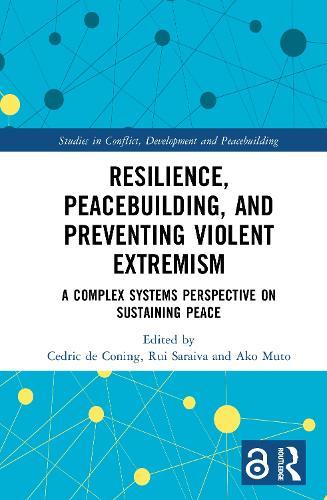
This book offers a comprehensive analysis of the complex drivers of violent extremism, along with recommendations for strengthening social and institutional resilience through peacebuilding and development efforts. By presenting a theoretical and empirical argument that places the emphasis on social cohesion, resilience, and adaptive peacebuilding, this book challenges the conventional security-led approach to countering violent extremism. Through a range of case studies from Africa, Asia, and the Middle East, including Syria, Iraq, Mozambique, Niger, Sri Lanka, and the Philippines, it explores the complex dynamics of violent extremism and the ways in which it can be prevented and countered. Drawing on complexity theory and adaptive peacebuilding, the volume provides insights into how complex social systems adapt and respond to stress, and how peacebuilders can support societies in uncertain, volatile, and unpredictable contexts by improving their resilience and their adaptive capacity to sustain peace. This book will be of much interest to students of peacebuilding, security studies and countering violent extremism, and professional practitioners. The Open Access version of this book, available at www.taylorfrancis.com, has been made available under a Creative Commons Attribution-Non Commercial-No Derivatives (CC-BY-NC-ND) 4.0 license.
Full Product Details
Author: Cedric de Coning (Norwegian Institute of International Affairs, Norway) , Rui Saraiva (Miyazaki International University, Japan) , Ako Muto
Publisher: Taylor & Francis Ltd
Imprint: Routledge
Weight: 0.540kg
ISBN: 9781032975184
ISBN 10: 1032975180
Pages: 248
Publication Date: 31 July 2025
Audience:
College/higher education
,
Professional and scholarly
,
Tertiary & Higher Education
,
Professional & Vocational
Format: Hardback
Publisher's Status: Active
Availability: Not yet available 
This item is yet to be released. You can pre-order this item and we will dispatch it to you upon its release.
Table of Contents
1 Introduction: Linking Resilience, Peacebuilding, and Preventing Violent Extremism 2 Preventing and Countering Violent Extremism by Strengthening Social Cohesion and Resilience: An Adaptive Peacebuilding Approach 3 Building Resilience amid Fear: From State to Community-Embedded Prevention in Cabo Delgado, Mozambique 4 Preventing and Countering Violent Extremism in the Complex Context of the Syrian Conflict 5 Reconciliation and Social Cohesion in the Prevention of Violent Extremism in Complex Systems: Iraq as a Case Study 6 Intersecting Gender in Community Resilience to Violent Extremism: Local Actors’ Perspectives in Niger 7 “When There Are Many Saying the Same Thing That I Am Saying, I Feel Less Afraid to Speak Up”: Emotions, Resilience, and Peacebuilding in Sri Lanka 8 The Role of Development Agencies in Fostering Resilience to Violent Extremism: The Case of Mindanao, the Philippines 9 Climate Change, Environmental Peacebuilding and Preventing and Countering Violent Extremism 10 Conclusion: Preventing Violent Extremism Requires Community-orientated, Holistic, Comprehensive and Adaptive Solutions
Reviews
“To build future stability and security in a polarised and a fragmented world, we need not only warfighters but peacemakers. At the heart of effective governance is educating and training far reaching leaders to harness smart power, the integration of hard and soft power. To secure nations, this invaluable and timely book calls governments and partners to invest in social harmony, political stability, and economic prosperity.” Rohan Gunaratna, Chairman, Global Peace Institute UK “In an age where the focus is on great power rivalries and geopolitics, this book serves as an excellent reminder that there are other tools and remedies to conflicts than militarization and military interventions, studying how local resilience and conflict-specific strategies can be an alternative to outright violence, this is a very important book!” Stig Jarle Hansen, International Environment and Development Studies, Norwegian University of Life Sciences “In a world that is increasingly afflicted by the scourge of violent extremism this is a timely and relevant book that interrogates the complexity of the phenomenon, and contributes significantly to enhancing our understanding of the transformative role of peacebuilding process in deeply divided societies.” Tim Murithi, Institute for Justice and Reconciliation and University of Cape Town, author of The Ethics of Peacebuilding “Violent extremism continues to spread amongst fragile polities in a fractured world. Traditional counter-terrorism efforts are too narrow, to effectively respond to the challenge. Theoretically anchored, empirically sound, this compelling book makes the case for a more comprehensive approach towards violent extremism. Given the multiple factors fuelling extremism, this is much needed. The chapters reflect this comprehensive approach covering such diverse topics as gender, climate change and social cohesion. A must read for academics and policy makers as they seek to respond to extremism.” Hussein Solomon, Senior Professor at the Centre for Gender and Africa Studies, University of the Free State, South Africa
Author Information
Cedric de Coning is a Research Professor with the Norwegian Institute of International Affairs (NUPI), based in Oslo, Norway. He is also a Senior Advisor for the African Centre for the Constructive Resolution of Disputes (ACCORD) in South Africa. Rui Saraiva is an Associate Professor at the School of International Liberal Arts, Miyazaki International University (Japan), and a Visiting Fellow at the Japan International Cooperation Agency (JICA) Ogata Sadako Research Institute for Peace and Development. His current research focuses on conflict resolution, peacebuilding, and preventing violent extremism in Africa. Ako Muto is a Specially Appointed Research Fellow at the Japan International Cooperation Agency (JICA) Ogata Sadako Research Institute for Peace and Development and Specially Appointed Professor at Rikkyo University, based in Tokyo. She has been involved in research for peacebuilding, humanitarian crises, and human security, bridging aid practices and academics.
Tab Content 6
Author Website:
Countries Available
All regions
|