Overview
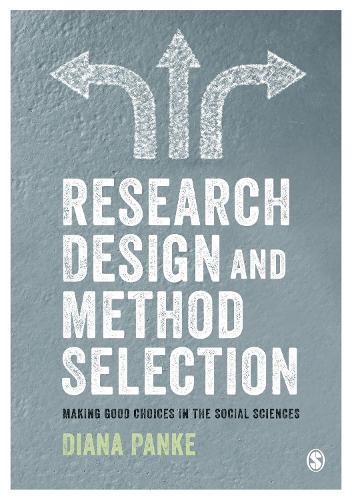
Heavily grounded in helping students make the best choices for their projects, this book explores how to develop and work with theory, research questions, and method selection to build solid, logical proposals and move from research concepts to fully realized designs. Rather than rushing initial planning stages or reverse engineering questions from preferred methods, it encourages students to challenge unconscious biases around method selection and analysis and provides step-by-step guidance on choosing a method that is in-line with the question being explored. Focused on the role of the researcher within research design, it stresses the need to consider the theoretical underpinnings of research and not just practical issues when designing a project. It provides a sophisticated toolkit to understand: - The critical issues associated with both qualitative and quantitative methods - The approach that works best for specific research questions - How design choices can affect practice. Perfect for upper undergraduate and postgraduate students, this book will instil confidence and good decision making to ensure constructively informed design and practice.
Full Product Details
Author: Diana Panke (University of Freiburg) ,
Author
Publisher: SAGE Publications Ltd
Imprint: SAGE Publications Ltd
Weight: 0.770kg
ISBN: 9781526438621
ISBN 10: 1526438623
Pages: 368
Publication Date: 03 October 2018
Audience:
College/higher education
,
Tertiary & Higher Education
Format: Hardback
Publisher's Status: Active
Availability: Manufactured on demand

We will order this item for you from a manufactured on demand supplier.
Reviews
An essential text to support graduate students and novice researchers think critically about the multiple decisions required in designing a rigorous research study. -- Susan Jack This textbook is a detailed guide on how to set up a research project. It is an excellent tool for students studying social research methods as well as for practitioners working with research in the government, NGO, and corporations. -- Mikhail Balaev This textbook provides graduate students with tools to make sound decisions while planning, conducting and analysing research. It guides students in asking appropriate research questions, applying theory, choosing among quantitative or qualitative methods through the analysis and writing the manuscript. -- GinaMarie Piane This text provides user friendly illustrations, exercises and practical research tips. It consolidates understanding by simplifying what can, at times, be deemed as complex methodological issues. -- Rachael Aplin
An essential text to support graduate students and novice researchers think critically about the multiple decisions required in designing a rigorous research study. -- Susan Jack This textbook is a detailed guide on how to set up a research project. It is an excellent tool for students studying social research methods as well as for practitioners working with research in the government, NGO, and corporations. -- Mikhail Balaev This textbook provides graduate students with tools to make sound decisions while planning, conducting and analysing research. It guides students in asking appropriate research questions, applying theory, choosing among quantitative or qualitative methods through the analysis and writing the manuscript. -- GinaMarie Piane This text provides user friendly illustrations, exercises and practical research tips. It consolidates understanding by simplifying what can, at times, be deemed as complex methodological issues. -- Rachael Aplin
Author Information
Since 2012 Diana Panke is Professor of Political Science and holds the Chair in ‘Multi-Level Governance’ at the University of Freiburg. Previously she worked at the University College Dublin, the Free University Berlin and the University of Heidelberg. She specialized in International Relations, Comparative Regionalism, and Social Science Research Methods. Her research interests include international negotiations, small states in international affairs, multilateral diplomacy, international norms, the design of international institutions, European Union politics as well as compliance and legalization. In these fields, she has published journal articles in a variety of outlets such as Review of International Organizations, International Political Science Review, European Journal of International Relations, British Journal of Politics and International Relations, Comparative Political Studies, Cooperation and Conflict, Journal of Common Market Studies, Journal of European Public Policy, Journal of European Integration, International Relations, or International Politics. Her books have appeared with Palgrave, ECPR Press, Manchester University Press, and Ashgate.