Overview
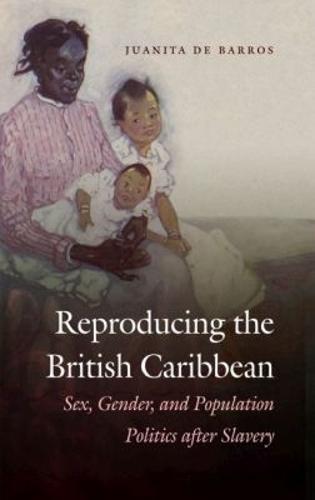
This innovative book traces the history of ideas and policymaking concerning population growth and infant and maternal welfare in Caribbean colonies wrestling with the aftermath of slavery. Focusing on Jamaica, Guyana, and Barbados from the nineteenth century through the 1930s, when violent labor protests swept the region, Juanita De Barros takes a comparative approach in analyzing the struggles among former slaves and masters attempting to determine the course of their societies after emancipation. Invested in the success of the ""great experiment"" of slave emancipation, colonial officials developed new social welfare and health policies. Concerns about the health and size of ex-slave populations were expressed throughout the colonial world during this period. In the Caribbean, an emergent black middle class, rapidly increasing immigration, and new attitudes toward medicine and society were crucial factors. While hemispheric and diasporic trends influenced the new policies, De Barros shows that local physicians, philanthropists, midwives, and the impoverished mothers who were the targets of this official concern helped shape and implement efforts to ensure the health and reproduction of Caribbean populations in the decades before independence.
Full Product Details
Author: Juanita De Barros
Publisher: The University of North Carolina Press
Imprint: The University of North Carolina Press
Dimensions:
Width: 15.20cm
, Height: 2.20cm
, Length: 23.10cm
Weight: 0.456kg
ISBN: 9781469616056
ISBN 10: 146961605
Pages: 296
Publication Date: 30 August 2014
Audience:
General/trade
,
General
Format: Paperback
Publisher's Status: Active
Availability: Manufactured on demand

We will order this item for you from a manufactured on demand supplier.
Reviews
Of urgent importance to the fields of Caribbean history and sociology, as well as a wide range of subfields.-- Canadian Journal of Latin American and Caribbean Studies
This highly original and well-researched text breaks new ground in investigating issues of population growth, maternal health practices, and infant mortality in the post-emancipation British Caribbean.-- Journal of Interdisciplinary History
This stimulating, challenging book makes an important contribution to the social, environmental and medical history of the British Caribbean colonies, and indeed of the wider British Empire, in the century following emancipation.--Cercles This highly original and well-researched text breaks new ground in investigating issues of population growth, maternal health practices, and infant mortality in the post-emancipation British Caribbean.--Journal of Interdisciplinary History Successfully elucidates the post-abolition global economic forces and labor anxieties that reverberated throughout the British Empire.--Journal of Women's History Reproducing the British Caribbean makes a useful contribution to an understanding of the social and historical factors that shaped the colonial policy of the early nineteenth century Caribbean.--Hispanic American Historical Review Of urgent importance to the fields of Caribbean history and sociology, as well as a wide range of subfields.--Canadian Journal of Latin American and Caribbean Studies Brilliantly argues, [that] this was neither the first, nor the last time that European and American health practitioners and population advocates, along with Carribean people, attempted to control reproducing bodies.--Social History of Medicine An intriguing portrait of the social history of the Caribbean's public health and makes an important and original contribution to the literature of the post-slavery period.--Slavery and Abolition An authoritative, detailed, and closely argued narrative that represents a worthy addition to the emergent scholarship on the gender, race, and class dynamics of colonial public health policy and practice.-- Journal of British Studies An all-around excellent, clearly written, engaging, and important book that represents a powerful contribution to the now well-established field of Caribbean and Latin American medical history.--Journal of the History of Medicine and Allied Sciences A very valuable contribution to Caribbean historical scholarship.--Journal of the History of Childhood and Youth A sophisticated study that highlights both the power and the limits of British imperial policy to shape the lives of colonial subjects in the Caribbean.--American Historical Review A highly significant contribution to our understanding of the role of public health initiatives in furthering the aims of the colonial state.--Bulletin of the History of Medicine An insightful and rigorous academic study that adds to our understanding of this very important period in British Caribbean history, as well as the history of the wider British Empire.-Journal of Colonialism and Colonial History
This stimulating, challenging book makes an important contribution to the social, environmental and medical history of the British Caribbean colonies, and indeed of the wider British Empire, in the century following emancipation.-- Cercles
Author Information
Juanita De Barros is associate professor of history at McMaster University.