Overview
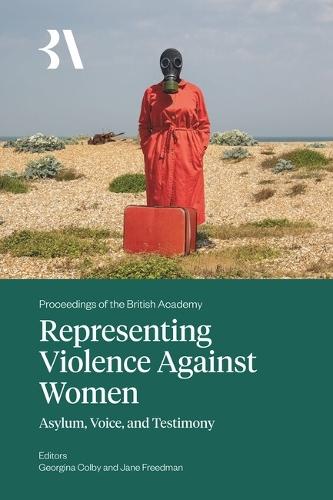
This timely interdisciplinary volume brings academic research into dialogue with women who have experienced the asylum process, activists, and NGOs. It reveals the obstacles that women are confronted with during asylum processes, when relaying their testimonies that involve violence. Women’s voices are marginalized and often erased because of multiple barriers within refugee status determination procedures and asylum and refugee reception systems. Conditions need to change so that women can voice their testimonies and know that they will be listened to and heard, and that their voices and experiences will “count” within asylum processes and lead to effective protection. This book is a site of knowledge exchange between women survivors and activists, and policy makers. It contains first-hand accounts of the asylum processes by women survivors and activists and offers examples of how the arts and humanities might open up avenues of expression and testimony for women seeking asylum through practices of co-production, creating safe spaces of representation for women to talk about their lived experiences of violence and exile but also, and crucially, resistance and resilience.
Full Product Details
Author: Georgina Colby ,
Jane Freedman ,
Zlakha Ahmed ,
Victoria Canning
Publisher: Liverpool University Press
Imprint: The British Academy
Volume: 276
ISBN: 9781836245650
ISBN 10: 1836245653
Pages: 216
Publication Date: 16 January 2026
Audience:
General/trade
,
General
Format: Hardback
Publisher's Status: Forthcoming
Availability: Not yet available

This item is yet to be released. You can pre-order this item and we will dispatch it to you upon its release.
Author Information
Georgina Colby is Reader in Modern and Contemporary Literature at the University of Westminster. Her research addresses the politics of avant-garde writing and aesthetic space in contemporary socio-political climates, in particular the relation between avant-garde poetics, activisms, and social justice. As PI she led the Feminist Representations: Asylum, Voice, and Testimony project (2018-2022), funded by the British Academy/Leverhulme Trust. Her publications include Kathy Acker: Writing the Impossible (Edinburgh University Press, 2016), and, as editor, Her Silver-Tongued Companion Reading: Reading Poems by Harryette Mullen (Edinburgh University Press, 2023) Reading Experimental Writing (Edinburgh University Press, 2019), The Contemporary Small Press: Making Publishing Visible (Palgrave, 2020), and Death and the Contemporary (a special issue of New Formations, Lawrence and Wishart, 2012). Her articles have appeared in journals such as Contemporary Literature, New Formations, Textual Practice, Journal of Narrative Theory, Women: A Cultural Review, and Comparative Critical Studies. She is the Series Editor of Edinburgh Critical Studies in Avant-Garde Writing and Edinburgh Foundations in Avant-Garde Writing (Edinburgh University Press). Jane Freedman is Professor at the Université Paris 8, France and member of the Paris Centre for Sociological and Political Research (CRESPPA). Her research focuses on an intersectional approach to asylum and migration, with particular regard to the production of gendered forms of violence by migration regimes. She was PI on a seven country study on gender-based violence in the context of migration (https://gbvmigration.cnrs.fr) funded by the EU’s GenderNet Plus, and is currently leading and ERC project entitled Growing Up Across Borders (GRABS), focusing on the experiences of young people in situations of forced migration and mobility across borders (https://erc-grabs.univ-paris8.fr). Recent publications include: Gender-Based Violence in Migration: Interdisciplinary, Feminist and Intersectional Approaches (Palgrave, 2022) and The Gender of Borders: Embodied Narratives of Migration, Violence and Agency (Routledge, 2023).