Overview
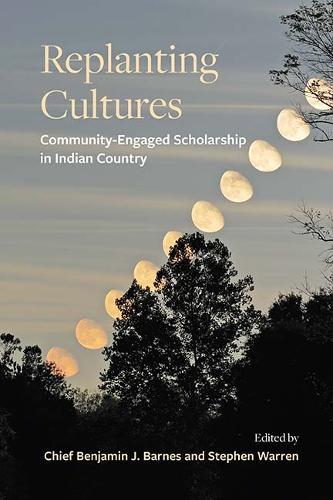
Provides a theoretical and practical guide to community-engaged scholarship with Indigenous peoples in the United States and Canada. Replanting Cultures provides a theoretical and practical guide to community-engaged scholarship with Indigenous communities in the United States and Canada. Chapters on the work of collaborative, respectful, and reciprocal research between Indigenous nations and colleges and universities, museums, archives, and research centers are designed to offer models of scholarship that build capacity in Indigenous communities. Replanting Cultures includes case studies of Indigenous nations from the Stó:lō of the Fraser River Valley to the Shawnee and Miami tribes of Oklahoma, Ohio, and Indiana. Native and non-Native authors provide frank assessments of the work that goes into establishing meaningful collaborations that result in the betterment of Native peoples. Despite the challenges, readers interested in better research outcomes for the world's Indigenous peoples will be inspired by these reflections on the practice of community engagement.
Full Product Details
Author: Benjamin J. Barnes , Stephen Warren
Publisher: State University of New York Press
Imprint: State University of New York Press
Dimensions:
Width: 15.20cm
, Height: 2.50cm
, Length: 22.90cm
Weight: 0.626kg
ISBN: 9781438489933
ISBN 10: 1438489935
Pages: 376
Publication Date: 01 September 2022
Audience:
Professional and scholarly
,
Professional & Vocational
Format: Hardback
Publisher's Status: Active
Availability: Manufactured on demand 
We will order this item for you from a manufactured on demand supplier.
Table of Contents
Acknowledgments Introduction: Toward “Hopeful” Research: Community-Engaged Scholarship and New Directions in Native American and Indigenous Studies Chief Benjamin J. Barnes and Stephen Warren Part I: Community-Engaged Scholarship with the Three Federally Recognized Shawnee Tribes 1. Fort Ancient/Shawnee Ceramics and the Revival of Shawnee Pottery Chief Benjamin J. Barnes 2. Community-Driven Research: From Indian Country to Classroom and Back Sandra L. Garner 3. Earthworks Rising: Emerging Roles within Collaborations for Indigenous Knowledge Christine Ballengee Morris, Marti L. Chaatsmith, and Glenna J. Wallace 4. New Paradigms of Integration: Historians and the Need for Community Engagement Stephen Warren Part II: The Myaamia Center: The History and Practice of Community Engagement 5. neepwaantiinki (Partners in Learning): The Miami Tribe of Oklahoma, Miami University, and the Myaamia Center George Ironstrack and Bobbe Burke 6. Community-Engaged Scholarship from the Perspective of an Early Career Academic Cameron Shriver 7. Community-Engaged Scholarship as a Restorative Action Daryl Baldwin, G. Susan Mosley-Howard, George Ironstrack, and Haley Shea Part III: Community Engagement beyond the US Settler Academy: Courts, Libraries, Laboratories, and Living History Museums 8. Historians as Expert Witnesses for Tribal Governments John P. Bowes 9. Looking Inward from 60 West Walton Street: Reflections on Community-Engaged Scholarship from the Perspective of the Newberry Library Brian Hosmer 10. The Return of Indian Nations to the Colonial Capital: Civic Engagement and the Production of Native Public History Buck Woodard 11. Repatriation as a Catalyst for Building Community-Engaged Curriculum April K. Sievert and Jessie Ryker-Crawford 12. The Collaboration Spectrum: Legendary Stories as Windows into Gendered Change in Sto:lō Understandings of Territoriality Keith Thor Carlson, Naxaxalhts’i (Albert “Sonny” McHalsie), Colin Murray Osmond, and Tsandlia Van Ry Afterword: Where Do We Go from Here? Jacki Thompson Rand Contributors Index
Reviews
Thoughtful, in-depth, and personal, this book is a must-read for any researcher interested in community-engaged scholarship. We are constantly looking for 'road maps' on how to create and execute these projects in a good way, and this book is a manual of best practices. - Kathryn Magee Labelle, author of Daughters of Aataentsic: Life Stories from Seven Generations
""Thoughtful, in-depth, and personal, this book is a must-read for any researcher interested in community-engaged scholarship. We are constantly looking for 'road maps' on how to create and execute these projects in a good way, and this book is a manual of best practices."" — Kathryn Magee Labelle, author of Daughters of Aataentsic: Life Stories from Seven Generations
Author Information
Benjamin J. Barnes is Chief of the Shawnee Tribe. Stephen Warren is Professor of History and American Studies and Chair of American Studies at the University of Iowa. He is the author of The Shawnees and Their Neighbors, 1795–1870 and The Worlds the Shawnees Made: Migration and Violence in Early America and the editor of The Eastern Shawnee Tribe of Oklahoma: Resilience through Adversity.
Tab Content 6
Author Website:
Countries Available
All regions
|