|
|
|||
|
||||
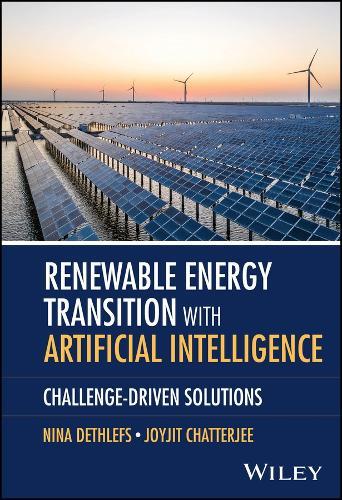
OverviewExplores harnessing AI to overcome strategic and operational challenges in renewable energy transition The urgent need to decarbonize global energy systems has propelled renewable energy into a position of unprecedented importance, yet this shift presents major technical, economic, and policy challenges. Increasing reliance on intermittent energy sources such as solar and wind demands more effective forecasting, grid coordination, and flexibility. Artificial Intelligence (AI) offers powerful tools to meet these challenges by learning from data, modeling complex interactions, and enabling real-time optimization across generation, transmission, and consumption. Renewable Energy Transition with Artificial Intelligence: Challenge-driven Solutions highlights successful pathways of knowledge transfer between academia and industry through case studies drawn from wind, solar, and emerging energy sources. Focusing on challenge-driven problem solving, the authors showcase transferable strategies that overcome pressing obstacles such as the lack of open datasets, the reluctance to adopt opaque predictive models, and insufficient performance benchmarks. Contributions by leading experts emphasize explainable AI, collaborative innovation, and the vital role of shared infrastructures for data and knowledge exchange. The book also draws from the authors’ international workshop with diverse stakeholders, underscoring the importance of cross-sector cooperation in ensuring sustainable and scalable impact. Adopting a challenge-driven framework linking AI innovation with renewable energy adoption, this title: Integrates perspectives from academia, industry, and the public sector to identify scalable solutions Demonstrates methods for bridging the “black box” problem in neural network–based energy forecasting Addresses data scarcity by proposing solutions for open access, standardization, and benchmarking in renewables AI Provides practical insights for distributed generation, storage, and demand-response management Explores future directions for explainable AI in energy system integration and resilience Both a roadmap and a reference point for integrating AI into renewable systems to accelerate global decarbonization, this book is designed for advanced students, researchers, and practitioners in engineering, computer science, and renewable energy. It is suitable for courses such as Renewable Energy Systems, Artificial Intelligence Applications in Engineering, and Energy Policy and Technology within graduate and postgraduate degree programs in engineering, data science, and environmental studies. Full Product DetailsAuthor: Nina Dethlefs (University of Hull, UK) , Joyjit Chatterjee (University of Hull, UK)Publisher: John Wiley & Sons Inc Imprint: John Wiley & Sons Inc ISBN: 9781394300037ISBN 10: 1394300034 Pages: 272 Publication Date: 20 December 2025 Audience: College/higher education , Postgraduate, Research & Scholarly Format: Hardback Publisher's Status: Active Availability: Out of stock The supplier is temporarily out of stock of this item. It will be ordered for you on backorder and shipped when it becomes available. Table of ContentsPreface ix List of Contributors xi 1 AI for Renewables: Addressing Operational, Engineering, and Socioeconomic Adoption Challenges 1 1.1 Introduction 1 1.2 Opportunities and Challenges 4 1.3 Current High-priority Areas 5 1.3.1 Explainability and Trust in AI for Renewables 5 1.3.2 Model Transferability and Generalization 7 1.3.3 Grounding AI Models to Domain-specific Operational and Engineering Knowledge 9 1.4 Nascent Areas in the AI and Renewables Domain 11 1.5 Conclusion 11 Bibliography 12 2 Techno-economic Analysis for Offshore Renewable Energy Technologies Incorporating a Holistic O&M Model 15 2.1 Challenge 15 2.2 Case Study 17 2.2.1 Before State-of-the-art 17 2.2.2 Methodology 18 2.2.3 Results 22 2.3 Discussion 23 2.4 Conclusion and Future Work 25 Bibliography 26 3 Making the Most of Data in Offshore Wind Energy: From Population to Physics-informed Modeling 29 3.1 Introduction 29 3.2 Autoregressive Gaussian Processes 31 3.3 Population Modeling of Wind Farm Wake Effects 31 3.3.1 A Switching GP-SPARX Model 33 3.3.2 A Case Study of a Simulated Wind Farm 34 3.3.3 Results 35 3.3.4 Discussion 37 3.4 Physics-informed Machine Learning for Wave Loading Prediction 37 3.4.1 Monopile Wave Tank Experiment 39 3.4.2 Model Structure 41 3.4.3 Results 42 3.5 Conclusions 44 Acknowledgments 44 Bibliography 45 4 Leveraging the Power of Informal Networks in Renewables 49 4.1 Challenge 49 4.2 Case Study 51 4.2.1 Before SOA: What Was the State-of-the-art/Accepted Solution in the Past? 52 4.2.2 Influencing and Educating Informal Networks 55 4.2.3 Methodology 55 4.2.4 Enabling Continuous Improvement Through ML and AI 59 4.2.5 Next Steps 60 4.2.6 Results 62 4.2.7 After: What Is the Accepted Solution Now? 64 4.3 Discussion 66 4.4 Conclusion and Future Work 68 4.4.1 Challenges and Opportunities 69 Acknowledgments 72 Bibliography 72 5 Relevance of AI in Addressing Barriers to Rooftop Solar Photovoltaic Adoption in Building Projects in Nigeria 73 5.1 Introduction 73 5.2 Literature Review 75 5.2.1 Overview of Rooftop Solar Photovoltaic Systems 75 5.2.2 Reluctance to Adopt Sustainable Energy Solutions in Nigeria 75 5.2.3 Barriers to Rooftop Solar Photovoltaic Adoption in Building Projects 77 5.2.4 Artificial Intelligence Solutions to Overcome Barriers to Rooftop Solar Photovoltaic Adoption 78 5.3 Research Methods 80 5.4 Results and Findings 82 5.4.1 Background of the Respondents 82 5.4.2 Background Information of the Respondents 83 5.4.3 Barriers to the Adoption of Rooftop Solar Photovoltaics and the Preferred AI-Solution 83 5.4.4 Mean Score (MIS) Analysis 83 5.4.5 Standard Deviation (S.D.) Analysis 85 5.4.6 Mann–Whitney Test Analysis 86 5.4.7 Exploratory Factor Analysis 86 5.4.8 Discussion and Implications of Findings 88 5.4.9 Mean Score 88 5.4.10 Exploratory Factor Analysis 89 5.4.11 Mann–Whitney U Test 90 5.4.12 Harnessing the Power of AI to Overcome Barriers to Rooftop Solar Photovoltaic Adoption 91 5.5 Conclusion and Perspectives 92 Bibliography 92 6 Predicting Comfort: AI-driven HVAC for Intelligent Energy Management 97 6.1 Challenge 97 6.2 Case Study 101 6.2.1 Dataset Overview 102 6.2.2 Methodology 106 6.2.3 Results 107 6.2.4 After 108 6.3 Discussion 109 6.4 Conclusion and Future Work 110 Bibliography 110 7 Leveraging Generative AI-Driven Digital Twins for Renewable Energy Systems 113 7.1 Data and Communication Barriers 113 7.2 Case Study: The NorthWind Project 116 7.2.1 Conventional Practices: Tackling Data Scarcity 117 7.2.2 Conventional Practices: Reliability of Critical Communication Infrastructure 118 7.2.3 Methodology: Generative AI-driven Digital Twin Framework 120 7.2.4 Results and Impact 128 7.3 Discussion 131 7.4 Conclusion and Future Work 133 Bibliography 135 8 Vision Transformer-based O&M Model for Condition Monitoring of Solar Panels 139 8.1 Challenges 139 8.1.1 Practical Issues 139 8.1.2 Computer Vision Approaches in Photovoltaic 140 8.1.3 Using Large Language Models for Interpreting Vision Transformer Results 143 8.2 Case Study 143 8.2.1 Model Description 144 8.2.2 Vision Transformer Applied to Photovoltaic Cells 146 8.2.3 Vision Transformer Comparison with Other Models 147 8.2.4 Attention Map Images 147 8.2.5 Confusion Matrices 150 8.2.6 Model Fine-tuning Process 150 8.3 Future Work 153 8.4 Conclusion 153 Bibliography 155 9 Artificial Intelligence Applications: Case Studies from Challenging Domains 157 9.1 Introduction 157 9.2 Urban Traffic Control 158 9.3 Textile Sorting 161 9.4 Power Distribution Networks 162 9.5 Discussion and Conclusion 164 Bibliography 165 10 Blockchain-enabled Digital Twins for Advancing Sustainable Reverse Logistics in Renewable Energy Systems 171 10.1 Introduction 171 10.1.1 Reverse Logistics Importance in Renewable Energy 172 10.1.2 Blockchain-enabled Digital Twins 173 10.1.3 Technical Architecture of BEDT 174 10.1.4 Chapter Objectives 176 10.2 Digital Twins and Blockchain in Reverse Logistics 176 10.2.1 Blockchain and Transparency and Traceability 177 10.2.2 Synergy of DTs with Blockchain 178 10.2.3 Additional Considerations for DTs and Blockchain 179 10.3 Role of AI and IoT in Reverse Logistics Optimization 179 10.3.1 Integration of AI into BEDT 180 10.3.2 IoT-enabled Data Collection 181 10.4 Case Studies and Applications 182 10.4.1 Industry Case Studies 182 10.4.2 Real-world Application to Renewable Energy 186 10.5 Smoothing the Transition to Renewable Energy 187 10.5.1 BEDT’s Role in Transitioning to Renewable Energy 187 10.5.2 Contributions to the Circular Economy and Sustainability 188 10.6 Conclusion and Way Forward 189 Bibliography 190 11 Pathways to AI Adoption in Offshore Wind Energy Operations and Maintenance 197 11.1 Introduction 197 11.1.1 Current Applications of AI in OSW O&M 198 11.1.2 Defining Stakeholders 200 11.2 Technical Challenges and Solutions 201 11.2.1 Setup and Running Costs of AI 201 11.2.2 O&M Costs 204 11.2.3 Environmental Factors 207 11.2.4 Deploying AI in the Field 209 11.2.5 Dependability/Trustworthiness 210 11.2.6 Human–AI Interaction 212 11.2.7 Cybersecurity 213 11.2.8 Data Availability 214 11.2.9 Collaboration Between Academia and Industry 215 11.3 Communication and Opinion 216 11.3.1 AI Winters 216 11.3.2 Search Trends 216 11.3.3 Gartner Hype Cycle 217 11.3.4 Conflicting Findings and Definitions 219 11.3.5 Overstated Benefits of Novel Methods 219 11.3.6 Recommendations 219 11.4 Conclusion 220 Bibliography 220 12 Incremental Drift-aware Learning in Renewable Energy Systems 227 12.1 Introduction 227 12.1.1 Context of PdM and Renewable Energy System Data 227 12.1.2 Challenges in PdM for Renewable Energy Systems 227 12.1.3 Incremental Drift-aware Learning for PdM 228 12.2 Fundamentals of Incremental Learning 228 12.2.1 Definition and Significance 228 12.2.2 Key Approaches in Incremental Learning 230 12.2.3 Incremental Learning Periods in MATLAB 232 12.2.4 Challenges in Incremental Learning 233 12.3 Concept Drift and Its Effect 233 12.3.1 What is Concept Drift? 233 12.3.2 Impact of Concept Drift in Renewable Energy 235 12.4 Drift-aware Learning: Approaches and Techniques 235 12.4.1 How to Detect Concept Drift and MATLAB Software Solutions 235 12.5 Case Study: Detection of Drift Using MATLAB Software Solutions 237 12.6 Conclusion 249 Acknowledgment 250 Bibliography 250 Index 251ReviewsAuthor InformationNINA DETHLEFS is Professor of Computer Science (Artificial Intelligence) at Loughborough University, where she leads the Language and Data Research Group and contributes to UK-based doctoral training in offshore wind energy. Her research lies at the intersection of AI, natural language processing, and sustainability, with a focus on developing ethical, interpretable, and data-efficient methods to address climate resilience and renewable energy challenges. She has published widely on applying AI to environmental and energy domains. JOYJIT CHATTERJEE is Lead Data Scientist at EPAM Systems, UK, and an invited visiting academic at Loughborough and Hull universities. His expertise bridges academic and industrial applications of AI in sustainability, manufacturing, and energy. His work has been featured in global outlets such as Forbes and the World Economic Forum, and he frequently engages with Fortune 500 leaders, European Commission projects, and international energy agencies on the future of AI-enabled renewables. Tab Content 6Author Website:Countries AvailableAll regions |
||||