Overview
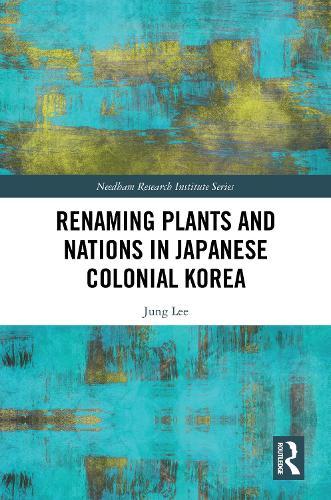
This book studies a striking example of intensely negotiated colonial scientific practice: the case of botanical practice in Korea during the Japanese colonization from 1910 to 1945. The shared aim of botanists who encountered one another in colonial Korea to practice “modern Western botany” is successfully revealed through analysis of their fieldwork and subsequent publications. By exploring the variations in what that term should mean and the politically charged nature of the interactions between both imperial and colonial players, it reveals how botanists of the region created a form of scientific practice that was neither clearly Western nor particularly modern. It shows how the botany that evolved in this context was a product of colonially resourced, globally connected practice, immersed in intertwined traditions, rather than simply a copy of “modern Western botany.” Utilizing extensive primary sources, this book will be of interest to students and scholars of the history of science, colonial Korean history, and environmental history.
Full Product Details
Author: Jung Lee
Publisher: Taylor & Francis Ltd
Imprint: Routledge
Weight: 0.580kg
ISBN: 9781032836256
ISBN 10: 1032836253
Pages: 210
Publication Date: 04 March 2025
Audience:
College/higher education
,
Professional and scholarly
,
Tertiary & Higher Education
,
Professional & Vocational
Format: Hardback
Publisher's Status: Active
Availability: In Print

This item will be ordered in for you from one of our suppliers. Upon receipt, we will promptly dispatch it out to you. For in store availability, please contact us.
Reviews
“How Japanese is cherry blossom? Jung Lee’s vivid and subtle tale of interdependence and rivalry between botanists in Japan and Korea is an outstanding contribution both to the transnational history of modern science, and to our understanding of the dynamics of imperialism and nationalism.” Francesca Bray, University of Edinburgh, UK “One of the most important books on modern East Asian science in recent years. Renaming Plants and Nations is an impressive examination of the entanglement of science (particularly botany), Japanese imperialism/colonialism, and Korean nationalism. This book also provides a fascinating case study in the global history of science. A must-read.” Fa-ti Fan, Binghamton University, USA “This book makes an incisive analysis of how the mundane yet connected multi-local practices of classifying and naming plants, such as Japanese cherry and rose of Sharon, in Japanese colonial Korea (1910-1945) simultaneously shaped Korean and Japanese botany while also changing 'Western' principles and practices of botany.” Geun Bae Kim, Jeonbuk National University, South Korea “This book provides a new view of the global history of botany from the local perspective of botanists in East Asia under Japanese imperialism. Lee sheds light on forgotten botanists, both colonizers and colonized, who tried their own practices under colonial culture and politics.” Akihisa Setoguchi, Kyoto University, Japan
“How Japanese is cherry blossom? Jung Lee’s vivid and subtle tale of interdependence and rivalry between botanists in Japan and Korea is an outstanding contribution both to the transnational history of modern science, and to our understanding of the dynamics of imperialism and nationalism.” Francesca Bray, University of Edinburgh, UK “One of the most important books on modern East Asian science in recent years. Renaming Plants and Nations is an impressive examination of the entanglement of science (particularly botany), Japanese imperialism/colonialism, and Korean nationalism. The book also provides a fascinating case study in the global history of science. A must-read.” Fa-ti Fan, Binghamton University, USA “This book makes an incisive analysis of how the mundane yet connected multi-local practices of classifying and naming plants, such as Japanese cherry and rose of Sharon, in Japanese colonial Korea (1910-1945) simultaneously shaped Korean and Japanese botany while also changing ""Western"" principles and practices of botany.” Geun Bae Kim, Jeonbuk National University, South Korea “This book provides a new view of the global history of botany from the local perspective of botanists in East Asia under Japanese imperialism. Lee sheds light on forgotten botanists, both colonizers and colonized, who tried their own practices under colonial culture and politics.” Akihisa Setoguchi, Kyoto University, Japan
Author Information
Jung Lee is an Assistant Professor in the Institute for the Humanities at Ewha Womans University in Seoul, South Korea.