Overview
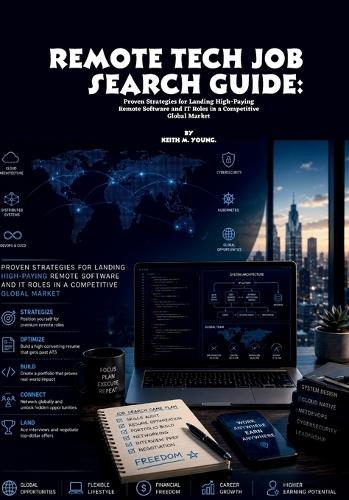
For years, I watched brilliant, hyper-competent software engineers make the exact same mistake. They would spend months mastering low-latency C++, building high-concurrency Go microservices, or securing enterprise-grade Kubernetes pipelines. Their code was beautiful. Their systems were bulletproof. Yet, when they tried to break into the elite global remote market, they were met with a wall of silent rejections. They sent out hundreds of resumes into the black box of Applicant Tracking Systems. They froze during silent, high-pressure live coding rounds. They accepted lowball offers because a recruiter told them their compensation was ""indexed to their local economy."" They were treating a premium, multi-billion-dollar global ecosystem like a local job board. I wrote this book because I wanted to end that cycle. I wanted to show you exactly what happens on the other side of the screen. I wanted to pull back the curtain on the exhausted engineering directors who are drowning in mediocre applications and show you how to look like an oasis of zero-friction competence. When you change how you communicate, how you present your environment, and how you defend your value, the power dynamic completely flips. You stop chasing employers. They start chasing you. What's inside The Reverse-Hiring Blueprint: Complete tactical breakdowns of how platforms like Toptal and Turing operate, and the exact strategies to survive their brutal four-stage vetting pipelines. Audiovisual Engineering: A step-by-step framework to optimize your physical studio-including microphone proximity effects, eye-level framing, and failover network redundancy-to project absolute authority. The ""Thinking Out Loud"" Framework: A chronological execution model to guide you through live coding screens without panicking, turning a stressful test into a collaborative architecture session. Whiteboard Dominance: How to tackle open-ended system design questions on digital canvases, handle database scaling, and confidently articulate high-concurrency architectural trade-offs. The Production-Grade Take-Home Strategy: How to turn boring coding assignments into undeniable releases using containerization, zero-trust security middleware, and atomic Git narratives. Asynchronous Communication Masterclass: The principles of concise over-communication, visual scannability, and the ""digital nod"" to prove you are zero-friction over Slack and email. The Global Negotiation Script Kit: Battle-tested email templates to reject geographic pay penalties, weaponize competing offers, and execute lateral pivots into high equity and sign-on bonuses. Cross-Border Legal Architecture: A comprehensive guide comparing EOR frameworks against B2B contractor setups, alongside high-level pipelines for international payment routing and local tax optimization. Who it's meant for Mid-to-Senior Software Engineers who are tired of local salary ceilings and want to transition their skills into the premium global remote marketplace. Backend, Cloud-Native, and DevOps Developers who possess deep technical knowledge but struggle to communicate their architectural choices to executive-level hiring managers. Frontend and Full-Stack Engineers who want to learn how to quantify their visual and client-side performance into undeniable, impact-driven business metrics. Independent Technical Consultants and Contractors looking to build a bulletproof international payment and tax infrastructure to protect their hard-earned wealth.
Full Product Details
Author: Keith M Young
Publisher: Independently Published
Imprint: Independently Published
Dimensions:
Width: 17.00cm
, Height: 1.10cm
, Length: 24.40cm
Weight: 0.322kg
ISBN: 9798197778529
Pages: 196
Publication Date: 20 May 2026
Audience:
General/trade
,
General
Format: Paperback
Publisher's Status: Active
Availability: Available To Order

We have confirmation that this item is in stock with the supplier. It will be ordered in for you and dispatched immediately.