Full Product Details
Author: Benjamin W. Porter ,
Alexis T. Boutin
Publisher: University Press of Colorado
Imprint: University Press of Colorado
Dimensions:
Width: 15.20cm
, Height: 3.00cm
, Length: 22.90cm
Weight: 0.568kg
ISBN: 9781607323242
ISBN 10: 1607323249
Pages: 272
Publication Date: 15 October 2014
Recommended Age: From 19 to 99 years
Audience:
Professional and scholarly
,
Professional & Vocational
Format: Hardback
Publisher's Status: Active
Availability: Available To Order

We have confirmation that this item is in stock with the supplier. It will be ordered in for you and dispatched immediately.
Reviews
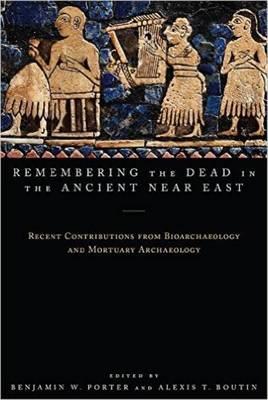
This important and innovative volume presents an unusual confluence of bioarchaeological, mortuary, and historical data analyses in order to provide an integrated approach to the study of the dead in the ancient Near East.Included are creative reconsiderations of the nature of burial, both for humans and nonhumans, the recognition of ethnicity in ancient Mesopotamia and Egypt, and genetic relations in Early Bronze Age Jordan.Other new ideas and approaches include consideration of disabled persons in antiquity (and in the present day) and a reinterpretation of grave robbing in ancient Egypt.The volume stands apart in its insistent focus on the nonelite, in contrast to the attention usually devoted to royal and elite burials in places like Egypt and Mesopotamia. As a signpost toward the directions Near Eastern bioarchaeology is taking, Remembering the Dead in the Ancient Near East will be extremely valuable for all interested in the archaeological study of the dead. Glenn Schwartz, The Johns Hopkins University This well-timed volume brings much-needed theoretical and methodological rigor to ancient Near Eastern mortuary archaeology. Remembering the Dead in the Ancient Near East demonstrates the power of exploring the material remains of mortuary rituals and uses an interdisciplinary approach to present ancient mortuary practices as ongoing commemorative acts, rather than material tableaus frozen in time. Megan A. Perry, East Carolina University
This important and innovative volume presents an unusual confluence of bioarchaeological, mortuary, and historical data analyses in order to provide an integrated approach to the study of the dead in the ancient Near East. Included are creative reconsiderations of the nature of burial, both for humans and nonhumans, the recognition of ethnicity in ancient Mesopotamia and Egypt, and genetic relations in Early Bronze Age Jordan. Other new ideas and approaches include consideration of disabled persons in antiquity (and in the present day) and a reinterpretation of grave robbing in ancient Egypt. The volume stands apart in its insistent focus on the nonelite, in contrast to the attention usually devoted to royal and elite burials in places like Egypt and Mesopotamia. As a signpost toward the directions Near Eastern bioarchaeology is taking, Remembering the Dead in the Ancient Near East will be extremely valuable for all interested in the archaeological study of the dead. --Glenn Schwartz, The Johns Hopkins University This well-timed volume brings much-needed theoretical and methodological rigor to ancient Near Eastern mortuary archaeology. Remembering the Dead in the Ancient Near East demonstrates the power of exploring the material remains of mortuary rituals and uses an interdisciplinary approach to present ancient mortuary practices as ongoing commemorative acts, rather than material tableaus frozen in time. --Megan A. Perry, East Carolina University
Author Information
Benjamin W. Porter is assistant professor of Near Eastern archaeology in the University of California, Berkeley's Near Eastern Studies Department and a curator of Near Eastern archaeology at the Phoebe A. Hearst Museum of Anthropology. He is a co-director of the Dhiban Excavation and Development Project and the Dilmun Bioarchaeology Project and the author of Complex Communities: The Archaeology of Early Iron Age West-Central Jordan. Alexis T. Boutin is associate professor of anthropology and coordinator of the Cultural Resources Management MA program at Sonoma State University. She is co-director of the Dilmun Bioarchaeology Project and recently completed work on the Tell en-Nasbeh Bioarchaeology Project. She is a co-editor of Breathing New Life into the Evidence of Death: Contemporary Approaches to Bioarchaeology.